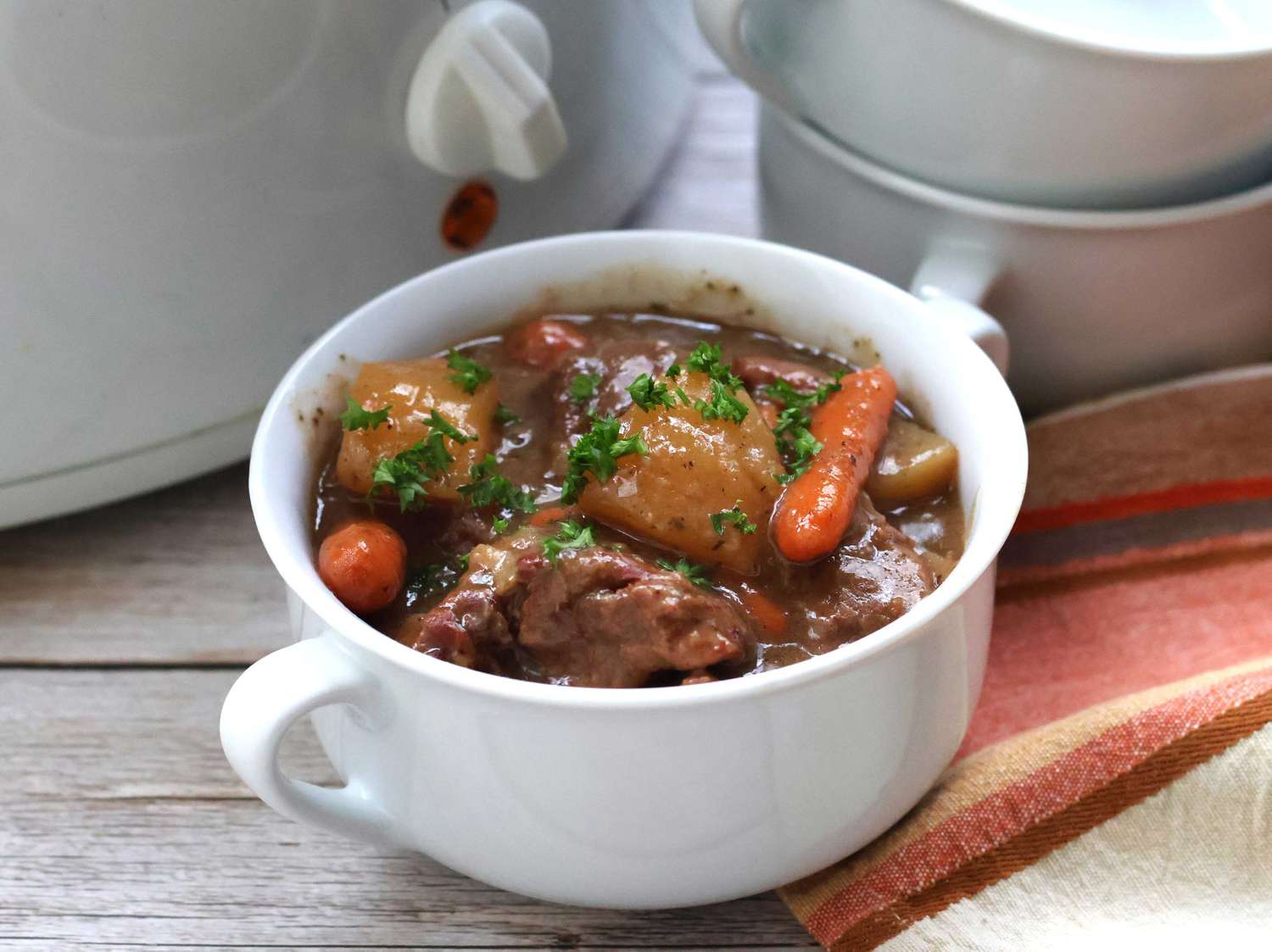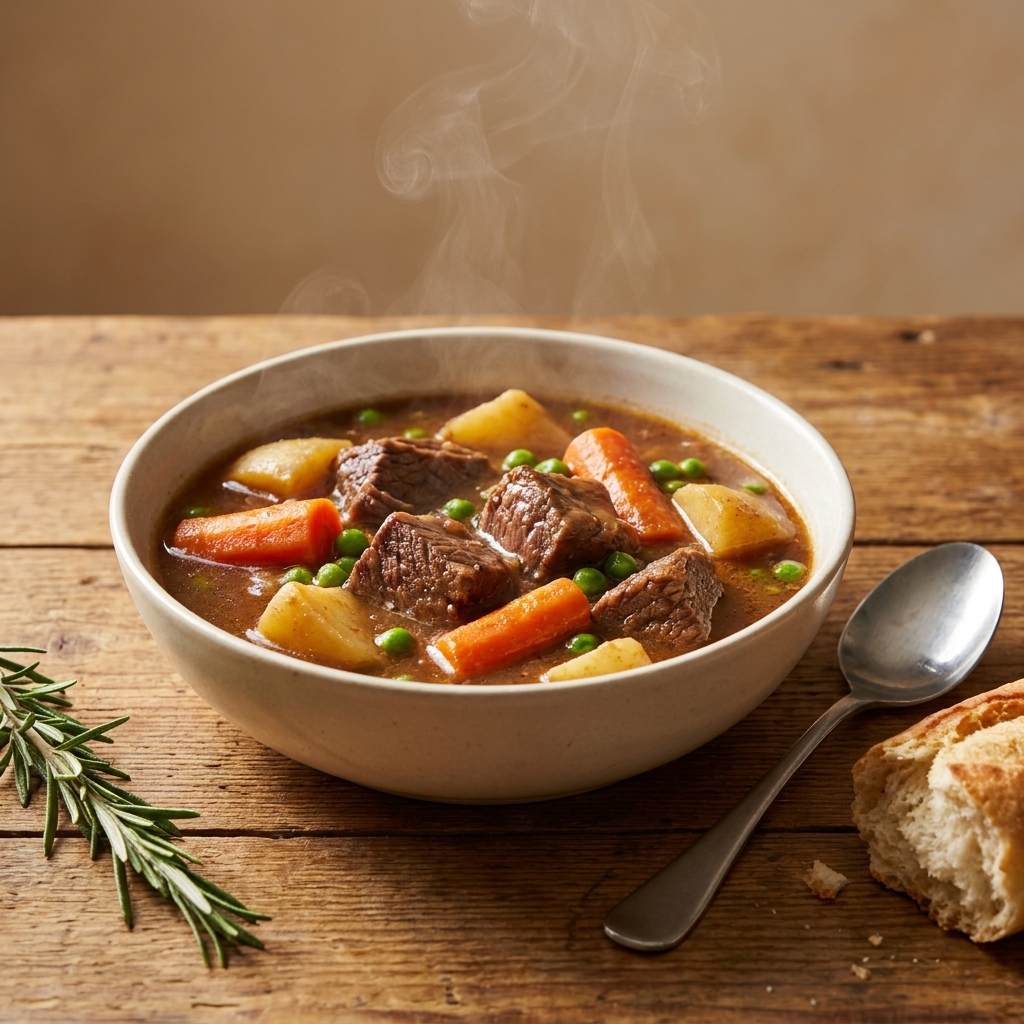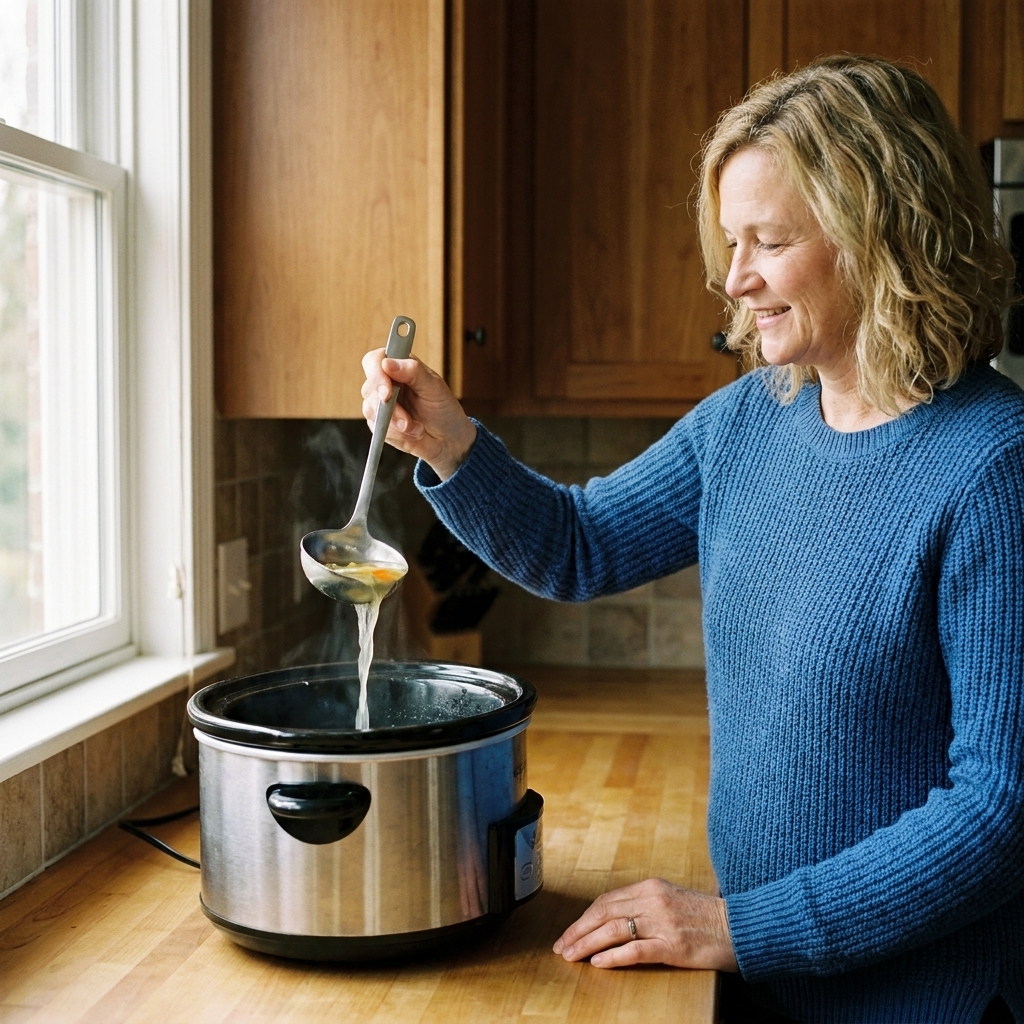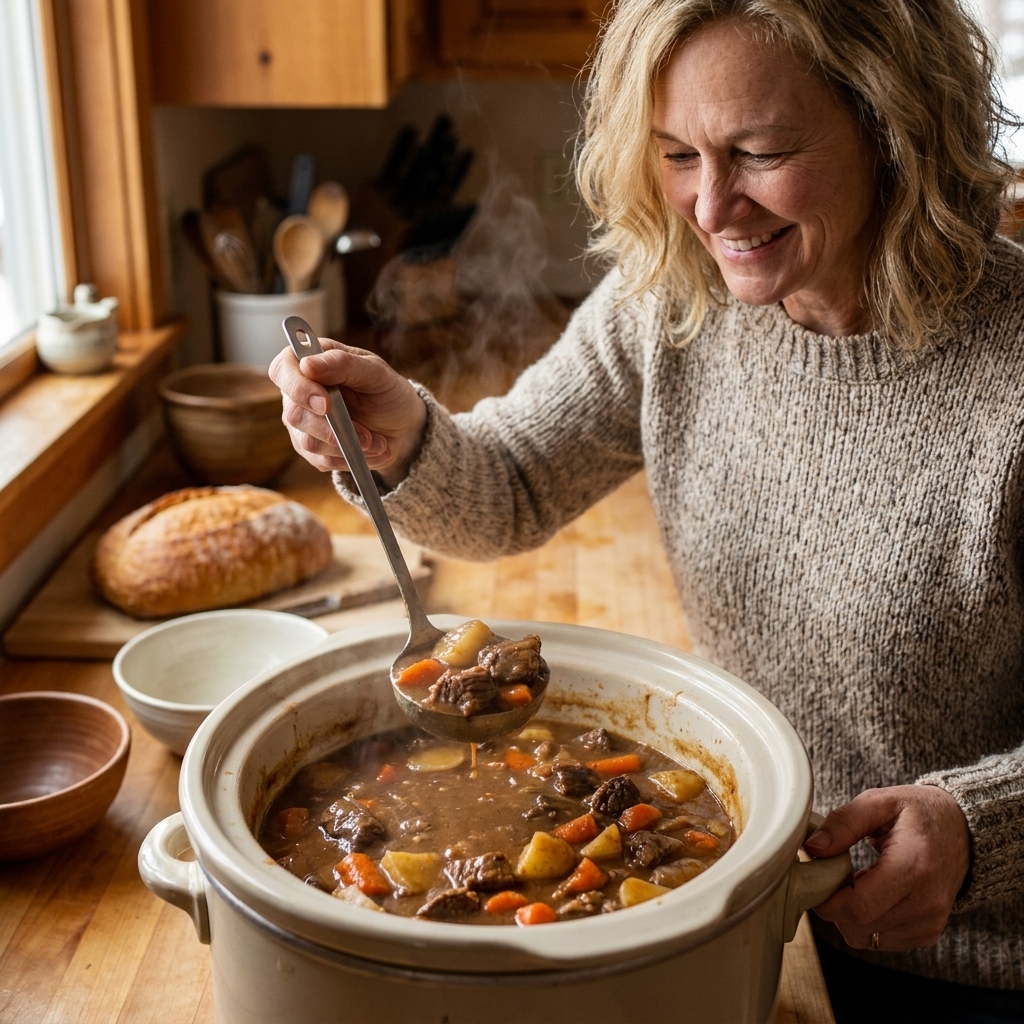
If your slow cooker beef stew tastes good but the gravy is thin and a little bland, you are not alone. Slow cookers are amazing at tender meat, but they also trap moisture. That extra liquid is the main reason stew can turn out soupy instead of spoon-coating.
Here are my go-to, weeknight-friendly hacks for beef stew meat that help you build deeper flavor and a thicker gravy without turning dinner into a science project. Pick 2 or 3 and you will notice a difference immediately.
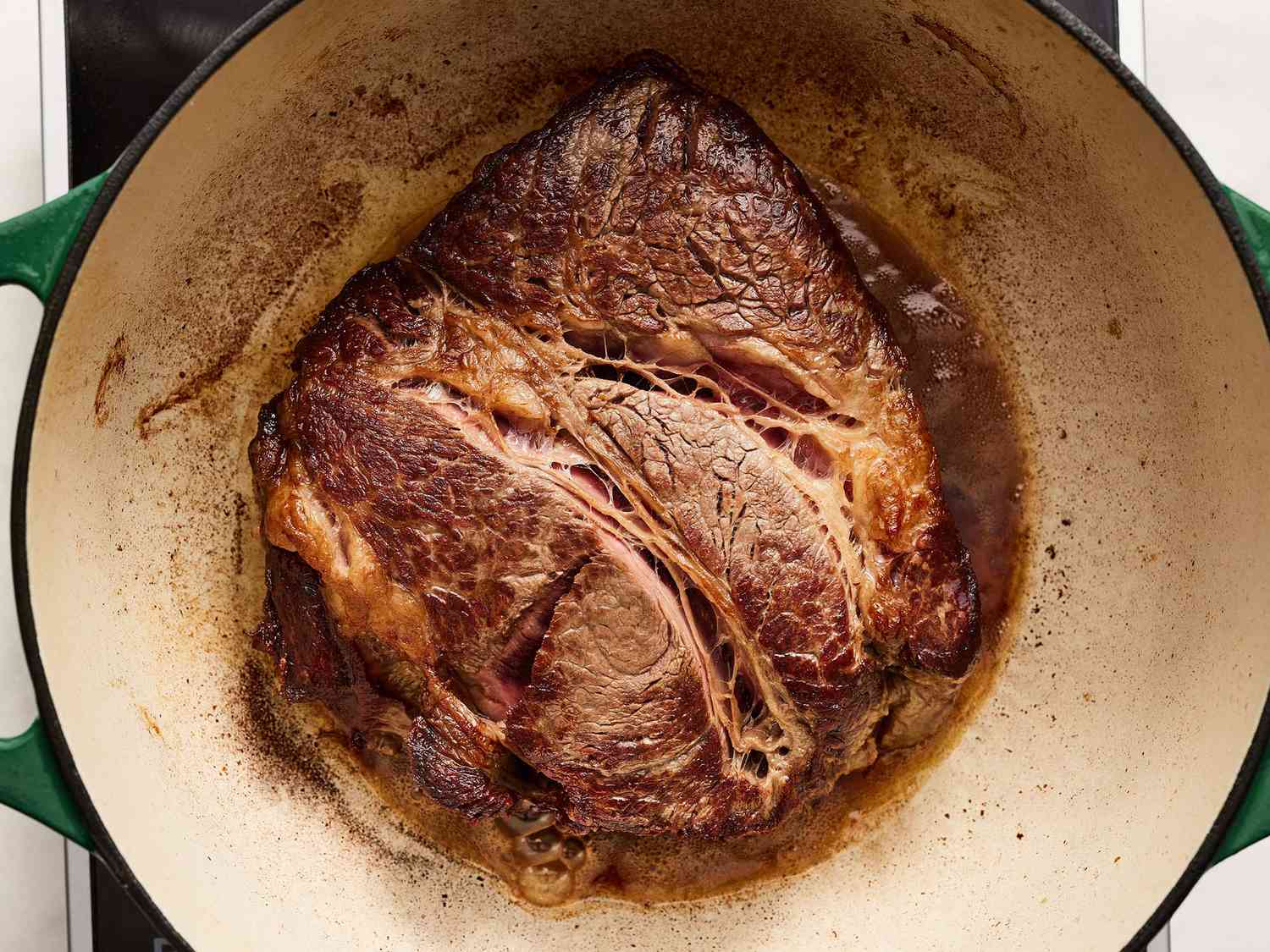
1) Brown the beef, then deglaze
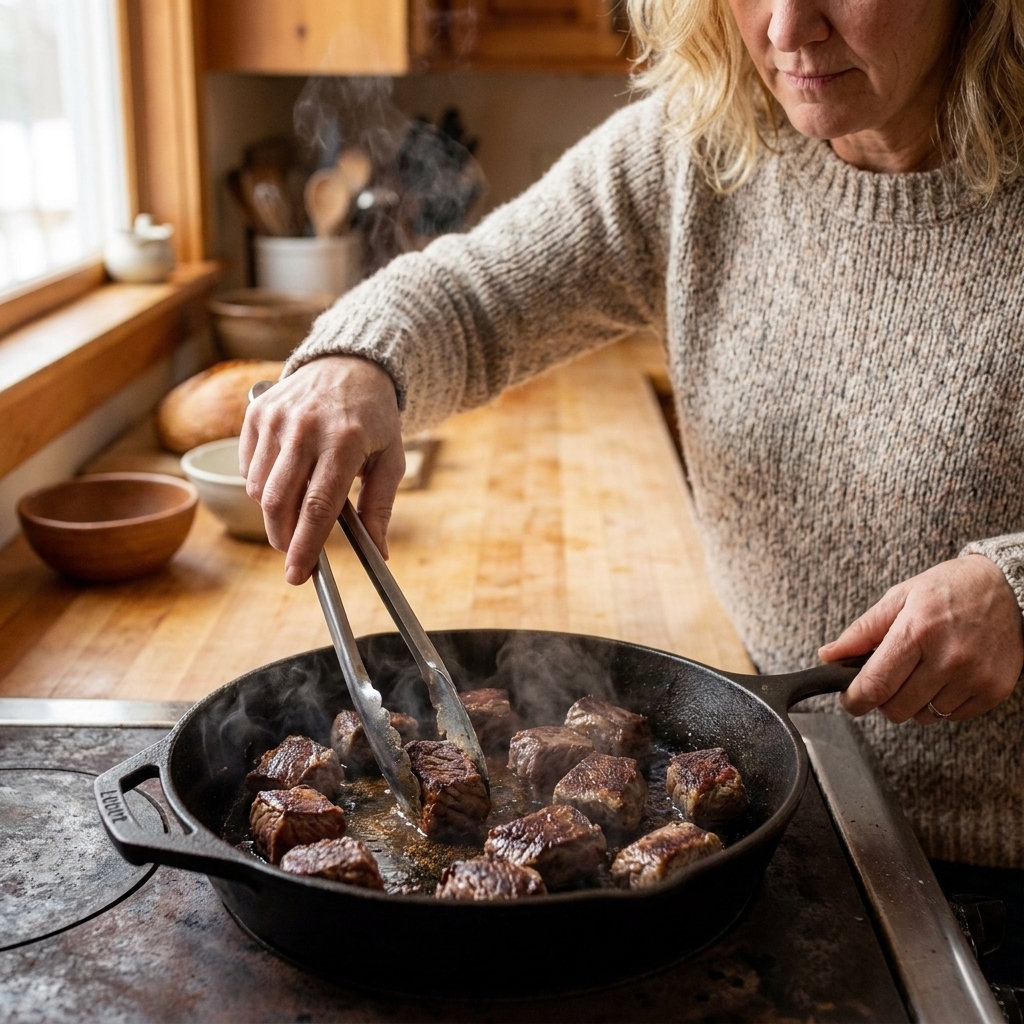
This is the single biggest flavor upgrade for stew meat. Browning creates deep, roasty notes that make the gravy taste like it cooked all day.
- How: Pat beef dry, season with salt, then sear in a hot skillet with a little oil until you get real browning.
- Don’t waste the pan: Pour in about 1 cup broth, wine, or water and scrape up every browned bit. Add that liquid to the slow cooker.
- Mom tip: If you are short on time, brown only half the beef. You still get a noticeable boost.
2) Salt early
Stew meat releases juices as it cooks, and those juices become part of your gravy. If the meat is under-seasoned, the whole pot tastes flat.
- Best practice: Salt the beef before browning or before it goes into the slow cooker.
- How much: A good starting point is 3/4 to 1 teaspoon kosher salt per pound of beef, then adjust at the end.
- Finish smart: Taste after thickening. Thickeners can mute salt a bit.
3) Flour-coat before browning
This is an old-school Midwestern trick for a reason. The flour does double duty: it helps browning happen faster and it thickens the gravy as it cooks.
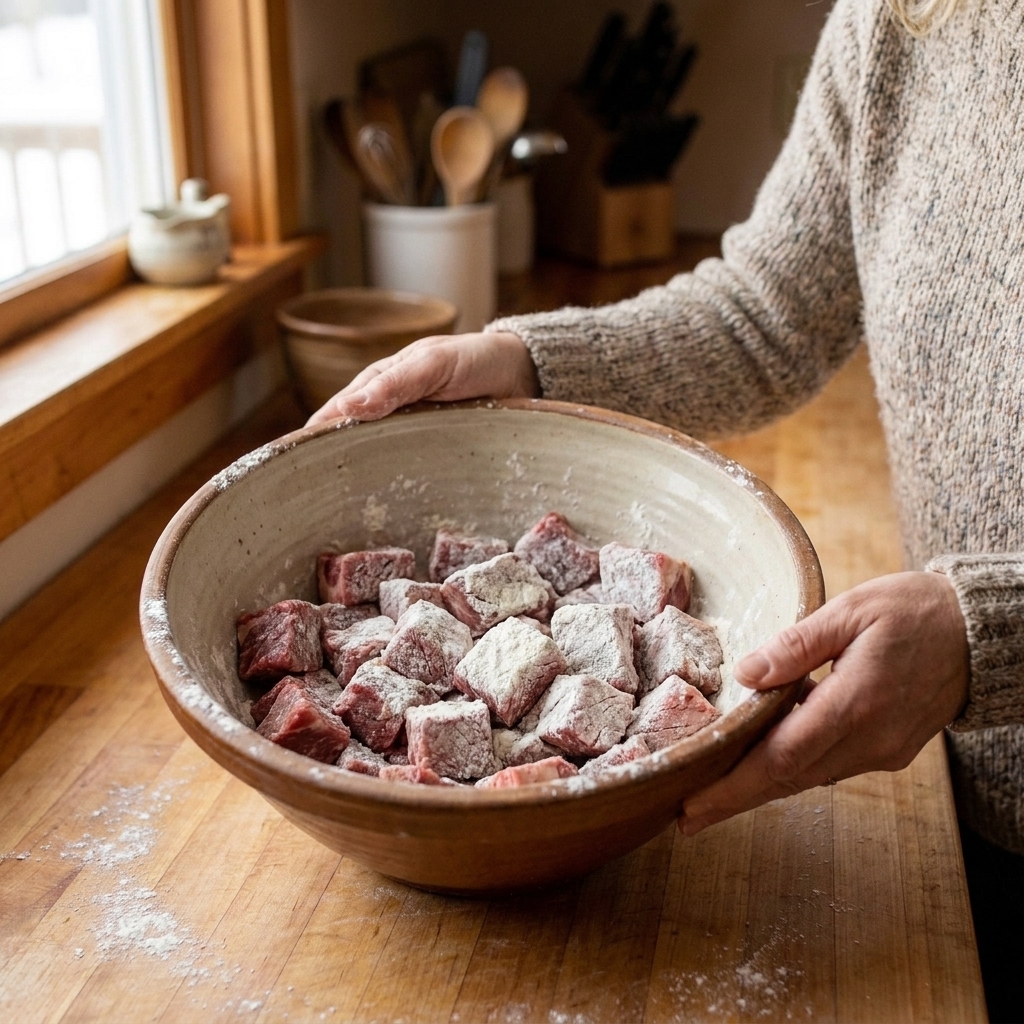
- How: Toss beef with 2 to 3 tablespoons all-purpose flour (for 2 pounds of meat), plus salt and pepper.
- Then: Brown in batches so the pan stays hot.
- Watch-outs: Flour can clump if it is dumped straight into liquid. Coating the meat first prevents that.
4) Cornstarch slurry at the end
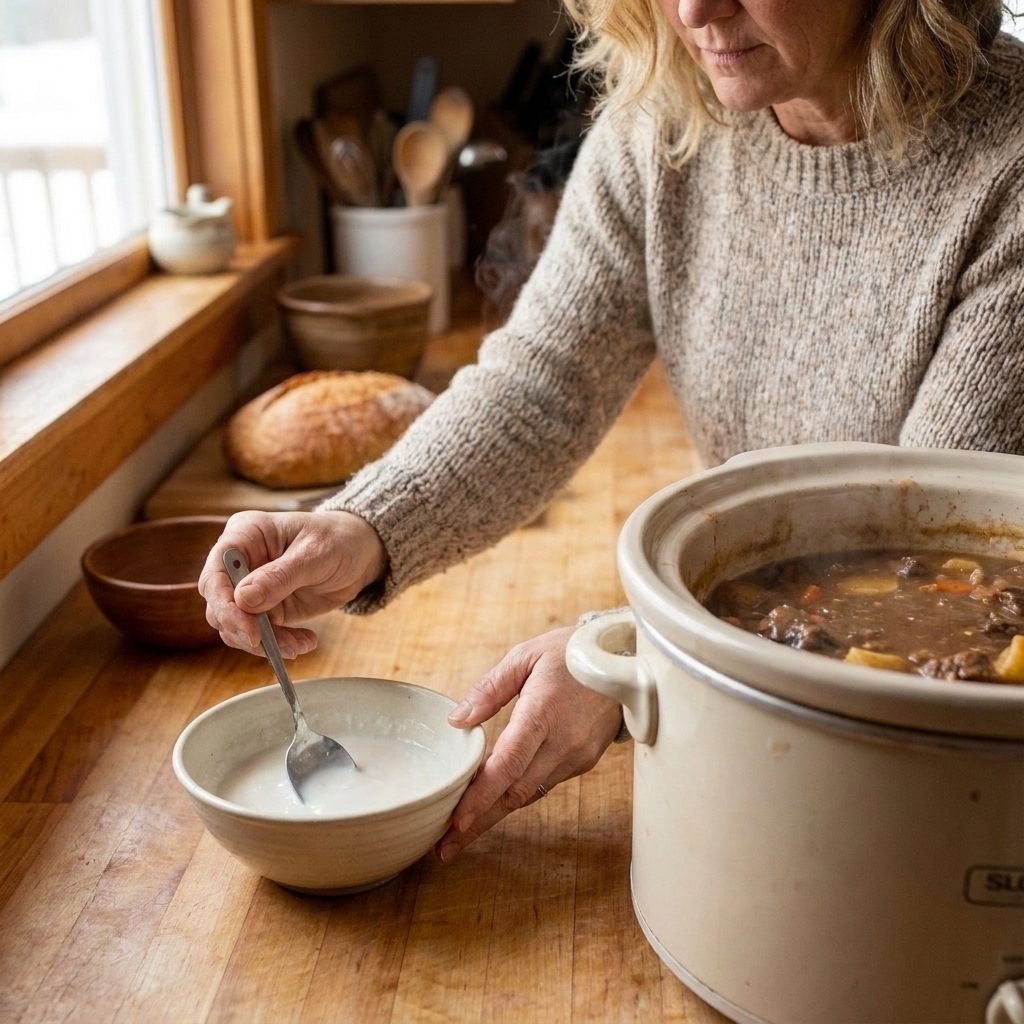
If you want thicker gravy tonight, this is your move. Cornstarch thickens fast and gives you a glossy finish when it is added near the end and gently simmered.
- Start small: Stir together 1 tablespoon cornstarch + 1 tablespoon cold water. This is a good starting point for most 6-quart batches.
- When: Stir it in during the last 20 to 30 minutes, then cook on HIGH until the stew returns to a steady simmer.
- Add more only if needed: If you still want it thicker, repeat with another small slurry. It is easier to add than to fix an over-thick pot.
- Do not boil hard: Cornstarch holds best with a gentle simmer. Long, hard boiling or repeated reheating can make it thin out.
5) Mash some potatoes
This is my favorite “no extra ingredients” thickener when the stew already has potatoes. The starch from the potatoes gives you a hearty, homey gravy.
- How: Scoop out 1 cup of cooked potatoes and a little broth, mash well, then stir back in.
- Shortcut: Use an immersion blender for 2 to 3 quick pulses. Do not over-blend or you can make the stew gluey.
- Best potatoes: Yukon Golds or russets thicken better than waxy reds.
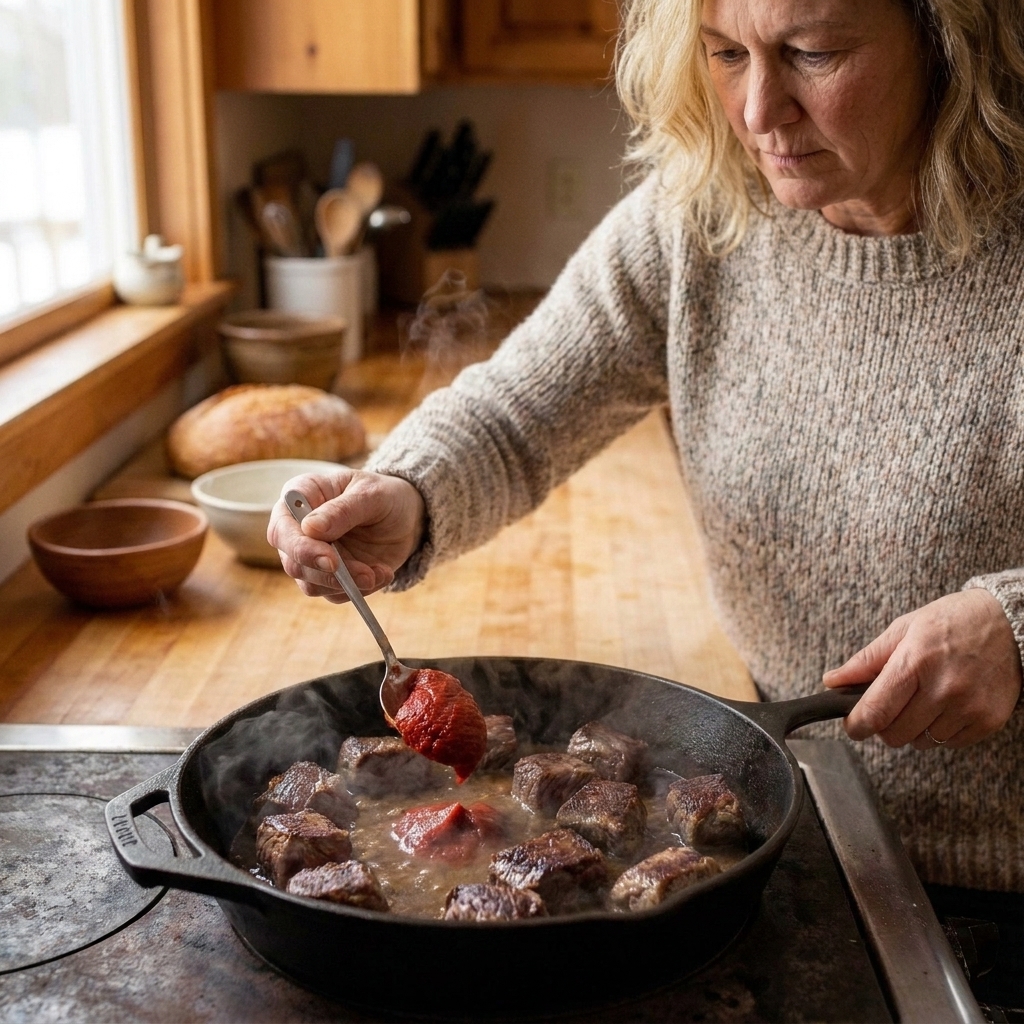
6) Add tomato paste
Tomato paste is a flavor concentrator. It adds umami, a darker color, and a roasty depth that makes gravy taste extra savory (the good kind of “restaurant” rich, not fussy).
- How much: 1 to 2 tablespoons for a standard 6-quart slow cooker batch.
- Best method: Stir it into the deglazing liquid from the browning pan so it dissolves smoothly.
- Bonus: Tomato paste can help the gravy feel a little thicker too.
7) Add gelatin for body
If you have ever wondered why some gravies feel velvety even when they are not super thick, it is often gelatin. Slow cooking breaks down connective tissue, but a little boost goes a long way.
- Option A: Add 1 packet unflavored gelatin (about 2 1/4 teaspoons) to 1/4 cup cold water, let it bloom for 5 minutes, then stir it into the hot stew near the end.
- Option B: Collagen peptides dissolve easily and can add a little body, but gelatin gives a more noticeable silky texture.
- Great with: Leaner stew meat that does not naturally release as much gelatin.
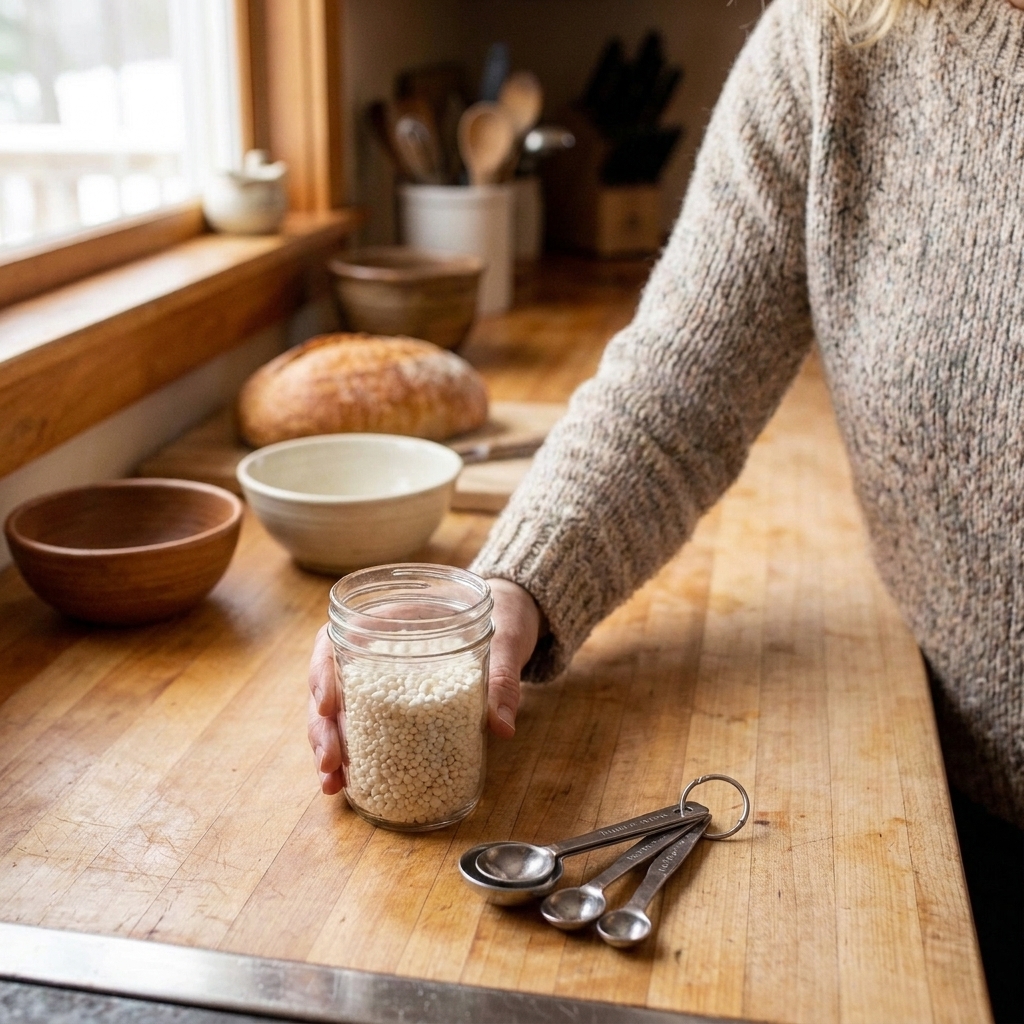
8) Tapioca or instant potatoes
If you prefer thick gravy without doing an end-of-cook slurry, use a thickener that can hold up to long, gentle heat.
- Quick-cooking tapioca: Start with 1 tablespoon for a typical 6-quart batch. It thickens as it cooks and stays stable.
- Instant potato flakes: Sprinkle in 1 to 2 tablespoons near the end, stir well, and let it sit 10 minutes. It thickens surprisingly fast.
- Tip: Add gradually. You can always add more, but you cannot un-thicken without extra broth.
9) Watch the liquid and veggies
Onions, mushrooms, and even carrots release a lot of moisture. That is not bad, but it can thin your gravy if you also add a lot of broth.
- Start with less liquid: Slow cookers do not evaporate much. For a typical 6-quart batch, you often only need about 2 to 3 cups total liquid, and sometimes less depending on how much meat and veg you add. You can always add more broth later.
- Brown mushrooms and onions: A quick sauté drives off water and adds flavor.
- Layer smart: Put onions on the bottom, then beef, then sturdier veggies. It helps everything cook more gently and keeps the meat from sitting in excess liquid.
10) Finish with a booster
This is my last-10-minutes trick when the stew tastes good but needs that final, spoon-licking richness.
- Butter swirl: Stir in 1 tablespoon cold butter right before serving for shine and a rounder mouthfeel.
- Umami drops: 1 to 2 teaspoons Worcestershire sauce or soy sauce deepens beef flavor without making it taste like either one.
- Acid check: If it tastes heavy, add 1 to 2 teaspoons red wine vinegar or lemon juice at the end. A tiny splash wakes up the whole pot.
Optional: Reduce the broth
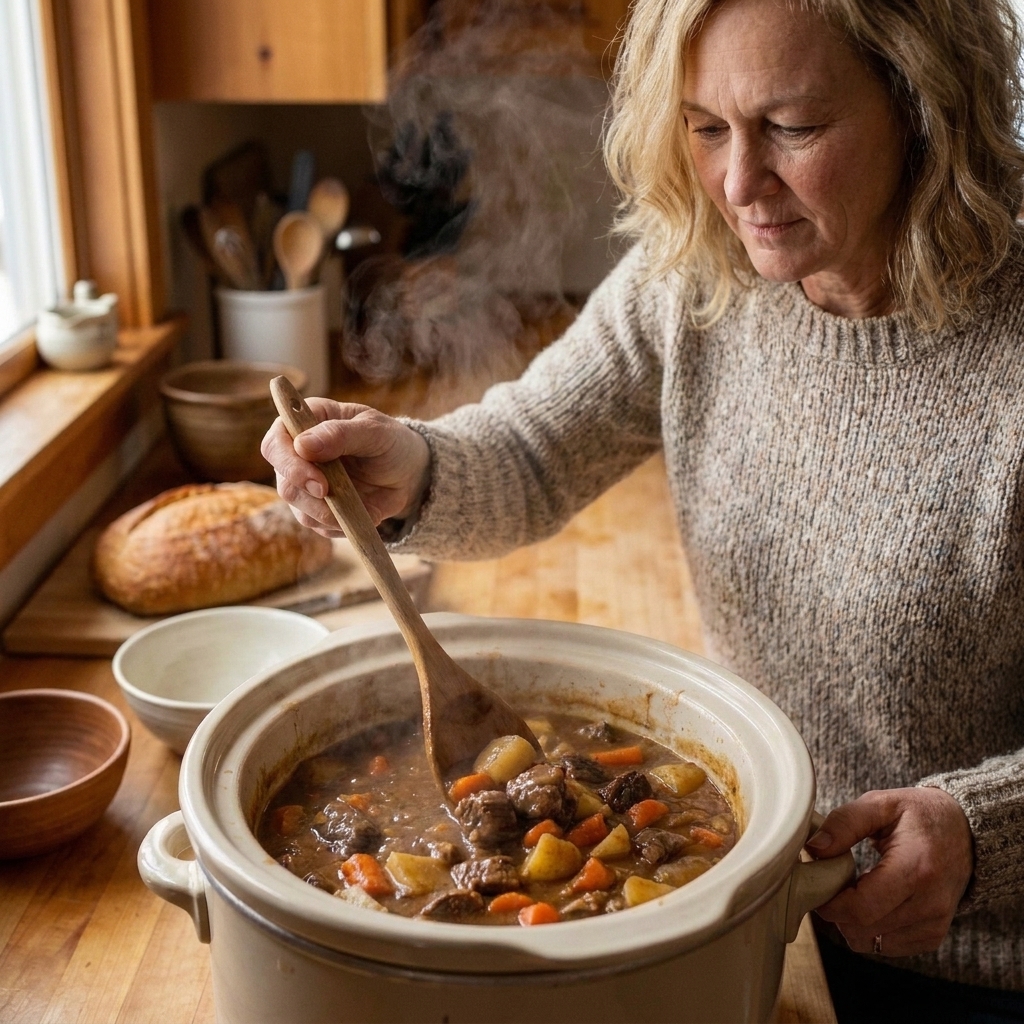
If the flavor is great but it is still too soupy, you can reduce the liquid.
- Best control: Ladle some broth into a saucepan and simmer it down on the stove, then stir it back into the slow cooker.
- Slow cooker method: Turn to HIGH for the last 30 to 60 minutes and vent the lid slightly to let steam escape. Keep an eye on it and do not walk away for hours.
My no-fail combo
If you just want the simple plan I use on busy school nights, do this:
- Coat beef in flour, then brown it.
- Deglaze the pan and add the liquid to the slow cooker.
- Cook as usual with a sensible amount of broth.
- At the end, add a small cornstarch slurry only if you want it thicker.
That combo gives you deep flavor and thick gravy without fuss.
Quick FAQ
Why is my slow cooker beef stew watery?
Slow cookers trap steam, so very little liquid evaporates. Meat and vegetables also release moisture as they cook. The fix is usually (1) start with less broth and (2) thicken near the end, or reduce some broth on the stove.
Can I thicken stew with flour at the end?
You can, but it is easier to avoid lumps by mixing flour with softened butter (a quick beurre manié) and whisking it in, or by coating the beef in flour before browning. For the smoothest last-minute thickening, cornstarch slurry is the most reliable.
How much cornstarch do I use?
Start with 1 tablespoon cornstarch mixed with 1 tablespoon cold water for the whole pot, then stir it into the hot stew. Let it simmer 20 minutes on HIGH and reassess. Repeat with another small slurry if you want it thicker.
Do I need wine for deglazing?
Nope. Wine adds depth, but broth or even water still lifts all those browned bits. If you do use wine, the stew needs time to cook for the alcohol to mellow, so do not judge the flavor right after you pour it in.
Do I need to brown stew meat?
No, it will still get tender. But browning adds a big layer of flavor and makes the gravy taste richer. If you can only do one extra step, make it browning and deglazing.
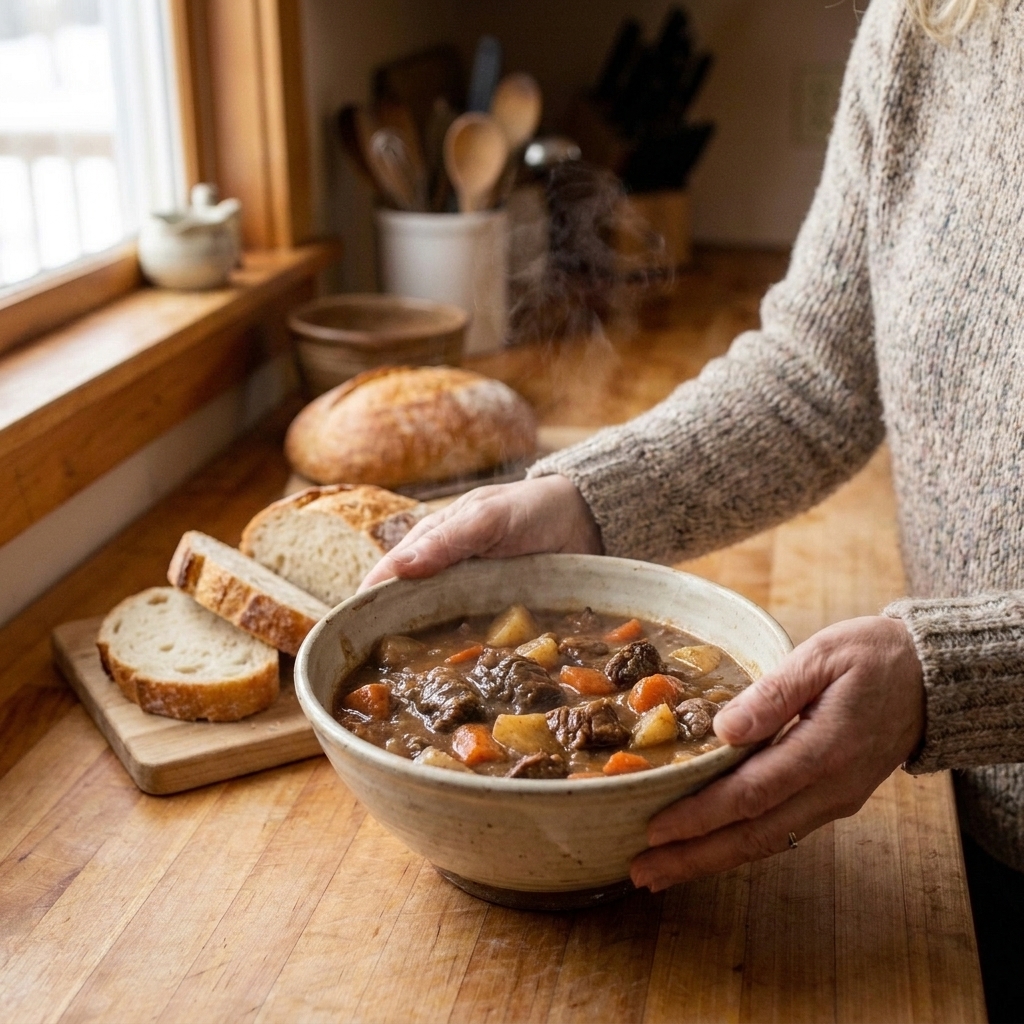
If you try one of these hacks and your gravy finally turns into that thick, cozy, stick-to-the-spoon goodness, I want to hear about it. That is the whole Slow Cook Joy mission: come home tired, open the lid, and dinner feels like a hug.