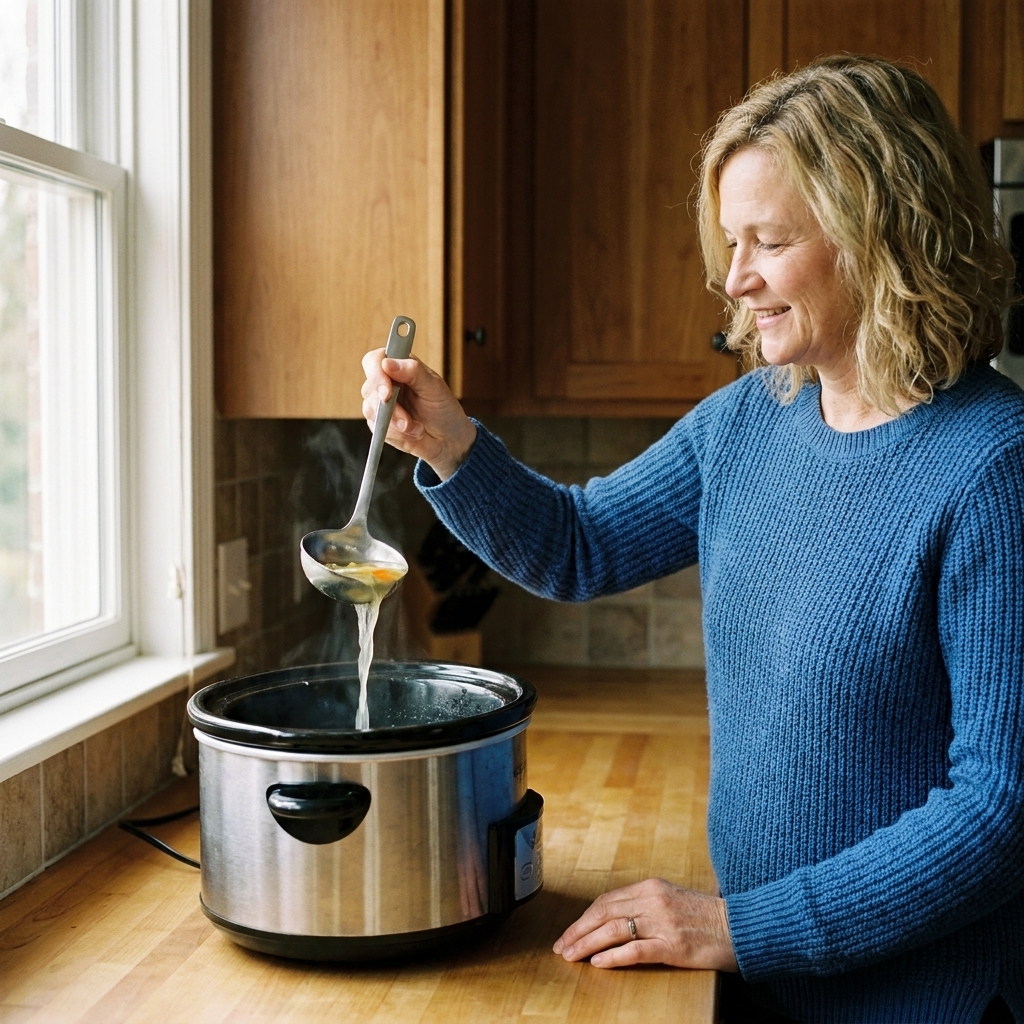
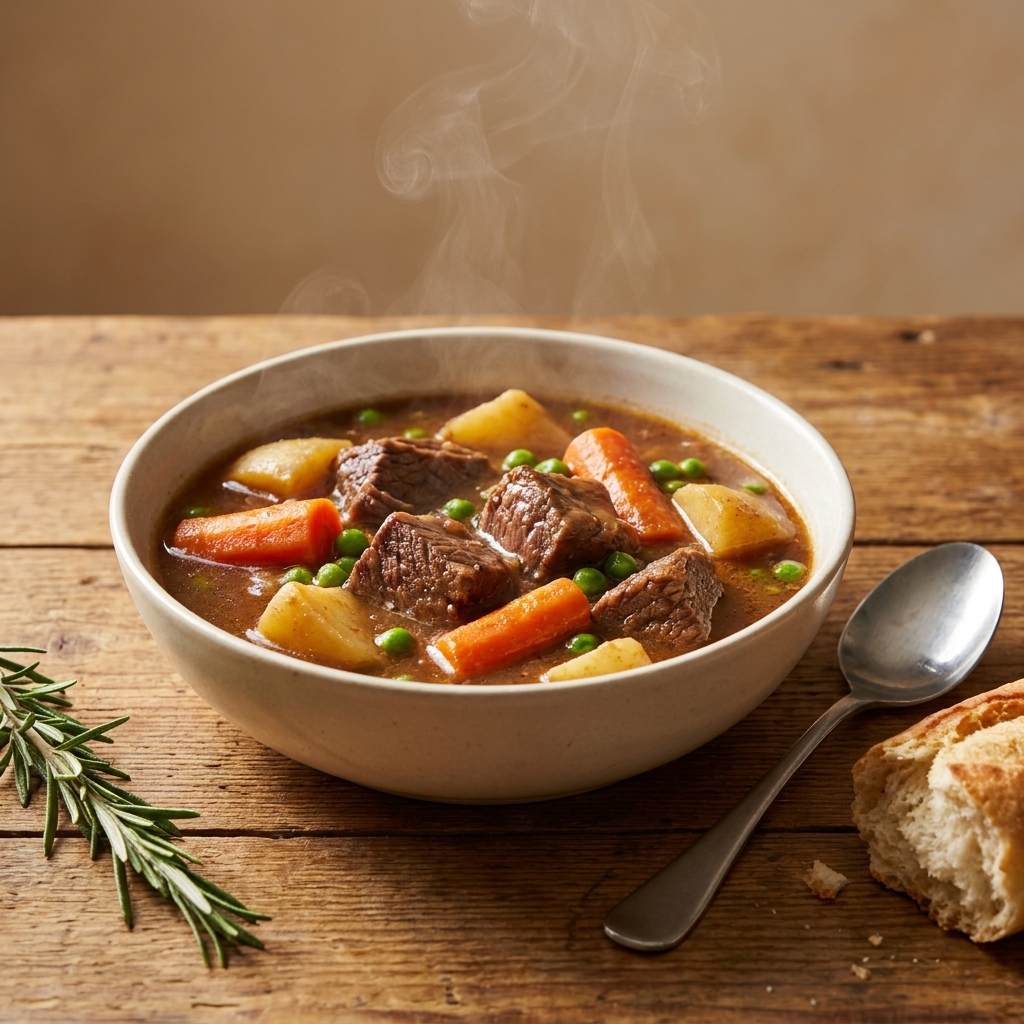
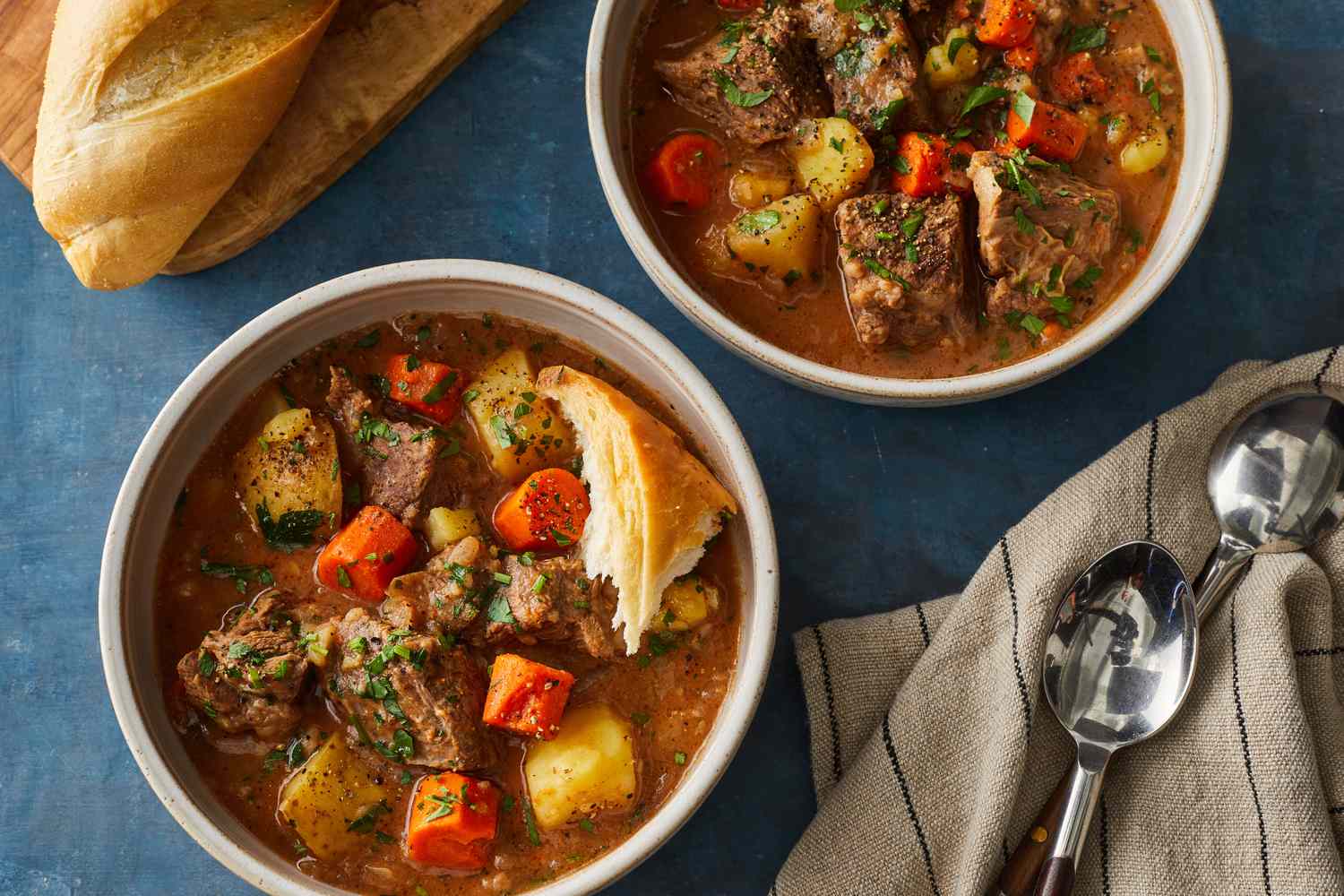
Few things are more heartbreaking than lifting the slow cooker lid at 5 PM and realizing your “stew” is basically soup. The good news is you did not ruin dinner. Slow cookers are amazing at building flavor, but they are not great at reducing liquid quickly because the lid keeps all that moisture trapped.
Below are five thickening methods I use on real weeknights, with the exact how-to, when to add them, and what to do if your stew still looks a little thin.
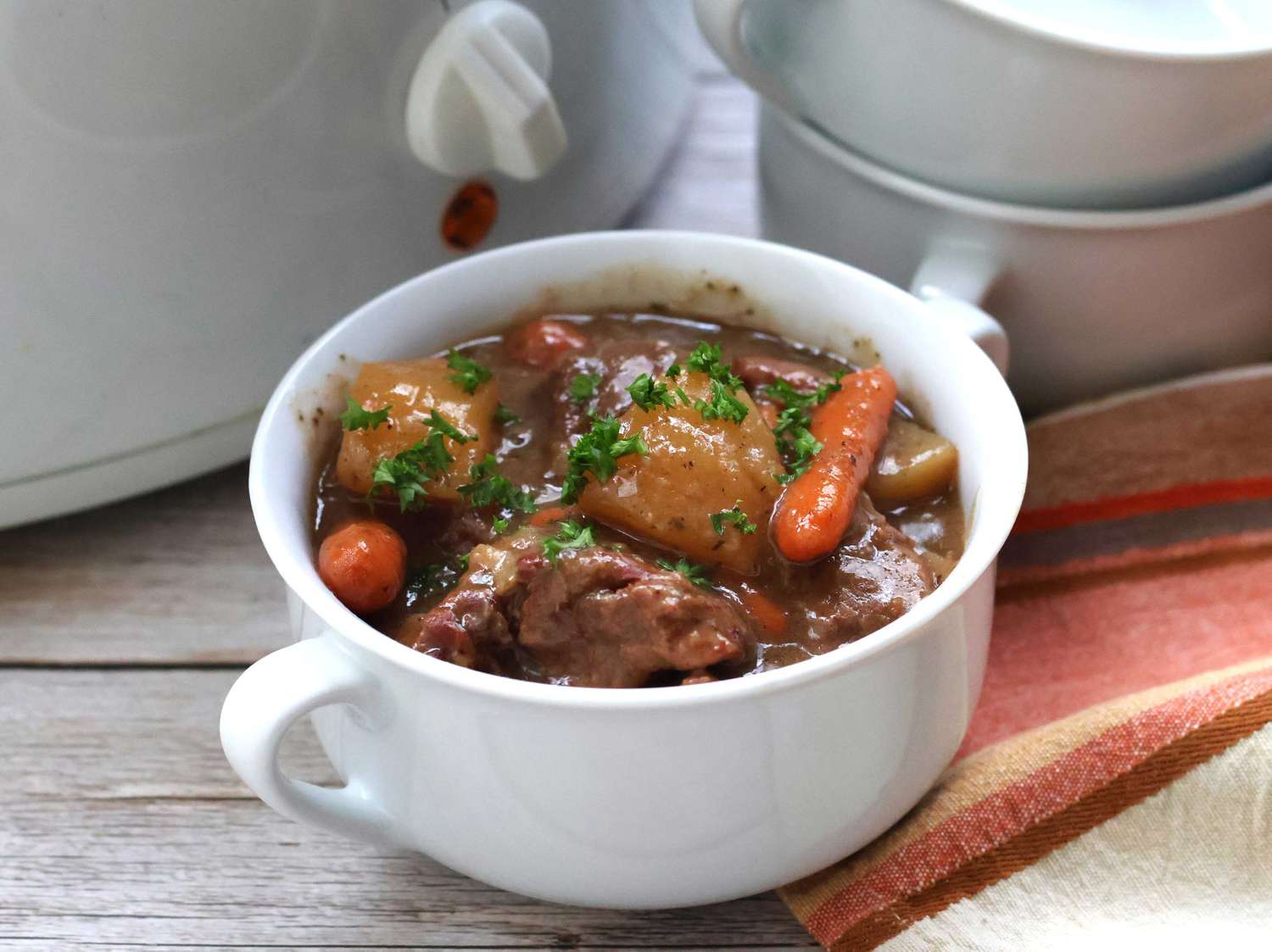
Before you thicken: do this quick check
These tiny adjustments can save you an extra step.
- Stir, then wait 5 minutes. Stew thickens slightly as it settles, especially if it contains potatoes or beans.
- Remove the lid for the last 20 to 40 minutes on HIGH. This lets some moisture escape. It will not reduce like a stovetop pot, but it can help.
- Make sure it is actually hot. Thickeners work best once the stew is very hot and gently bubbling. Some slow cookers need a little time to get there, especially if you have been on LOW.
- Scoop out excess liquid. If your stew is very brothy, remove 1 cup of liquid first. You can always add it back.
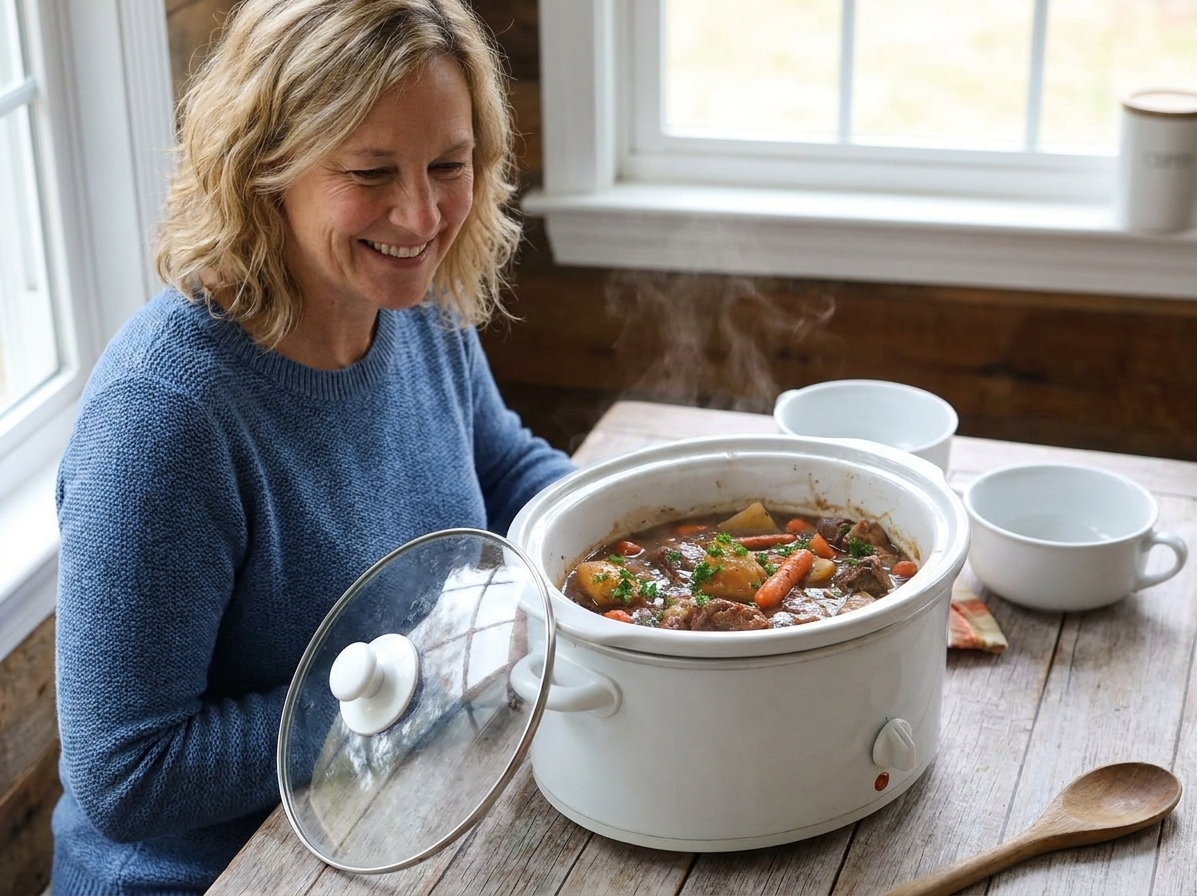
Method 1: Cornstarch slurry (fastest, most reliable)
If I need a guaranteed fix in under 15 minutes, this is it. Cornstarch thickens quickly and stays neutral in flavor.
How to do it
- In a small bowl, whisk 1 tablespoon cornstarch with 1 tablespoon cold water (or broth) until perfectly smooth.
- Stir the slurry into the stew.
- Turn the slow cooker to HIGH, cover, and cook 10 to 20 minutes, stirring once halfway through.
How much to use
- For a lightly thick stew: 1 tablespoon cornstarch + 1 tablespoon water per 4 cups liquid.
- For a heartier, gravy-like stew: 2 tablespoons cornstarch + 2 tablespoons water per 4 cups liquid.
Tips to prevent clumping and gumminess
- Always mix with cold liquid first. Cornstarch dumped straight into hot stew will clump.
- Add it near the end. Cornstarch can lose some thickening power if held at a high simmer for a long time, especially in more acidic stews. For best texture, thicken close to serving.
- Stir gently but thoroughly. Make sure it reaches the bottom where hot spots form.
- Do not judge too fast. Give it 5 to 10 minutes to return to a gentle simmer before deciding you need more.
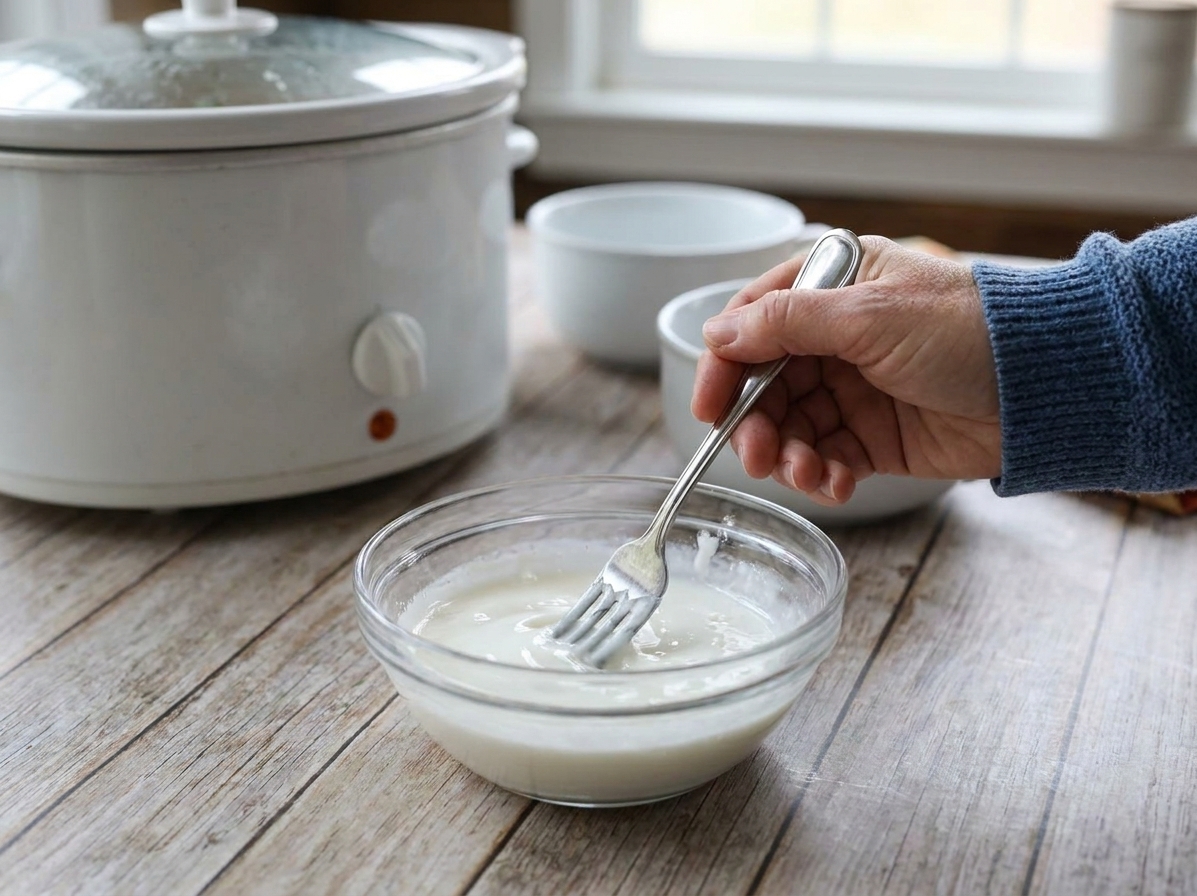
Method 2: Flour slurry (classic, cozy texture)
Flour thickening feels old-school in the best way. It can give a slightly more “stewhouse” texture than cornstarch, but it needs a bit more time to cook off that raw flour taste.
How to do it
- Whisk 2 tablespoons all-purpose flour with 2 to 3 tablespoons cold water until smooth.
- Stir into the stew.
- Cook on HIGH for 20 to 30 minutes, stirring once or twice, or until it no longer tastes floury.
Important notes
- Give it time. If you taste flour, it simply needs a longer cook.
- Expect a gentle thickening. Flour usually thickens a little less aggressively than cornstarch.
- Gluten-free option: Use a 1:1 gluten-free baking flour blend. Results vary by brand, but it generally works in a slurry.
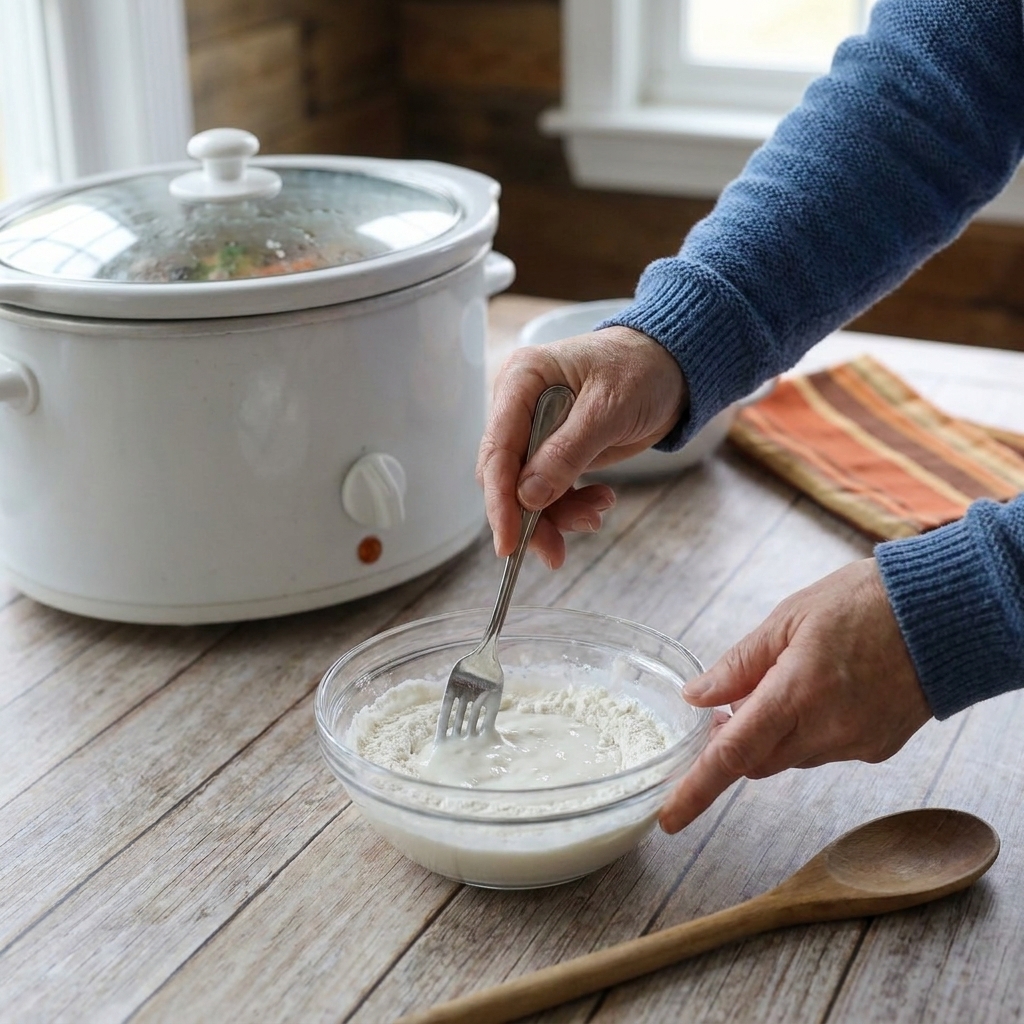
Method 3: Mash or puree some vegetables (my favorite for “natural” thickening)
This is the method I reach for when I want thicker stew without adding a separate thickener. Potatoes, carrots, beans, and even onions can help thicken beautifully once blended.
Two easy ways
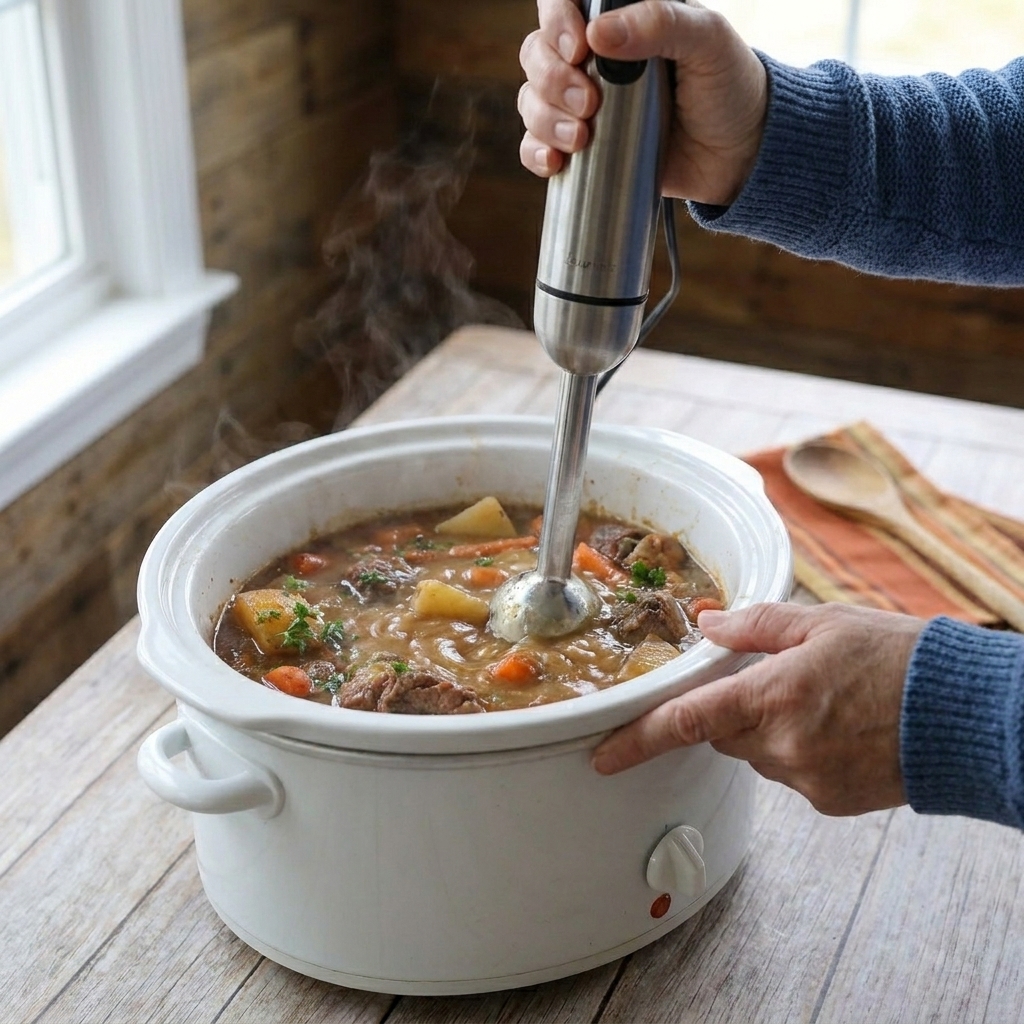
- Mash in the pot: Use a potato masher to mash some of the potatoes and carrots right in the slow cooker. This thickens while keeping things rustic.
- Puree a portion: Ladle 1 to 2 cups of stew (focus on veggies) into a blender, blend until smooth, then stir it back in.
Tips for the best texture
- Start small. Puree a cup, stir, then decide if you want more.
- Skip pureeing all the meat. Aim to blend mostly vegetables and broth for a smooth thickener.
- Be careful with hot liquid. If using a blender, vent the lid and blend in batches so you do not create a pressurized surprise.
Method 4: Instant potatoes or potato flakes (the weeknight cheat code)
I always keep a box of instant potato flakes in my pantry for two reasons: last-minute thickening and last-minute kid hunger. Potato flakes thicken quickly, add a cozy body, and are very forgiving.
How to do it
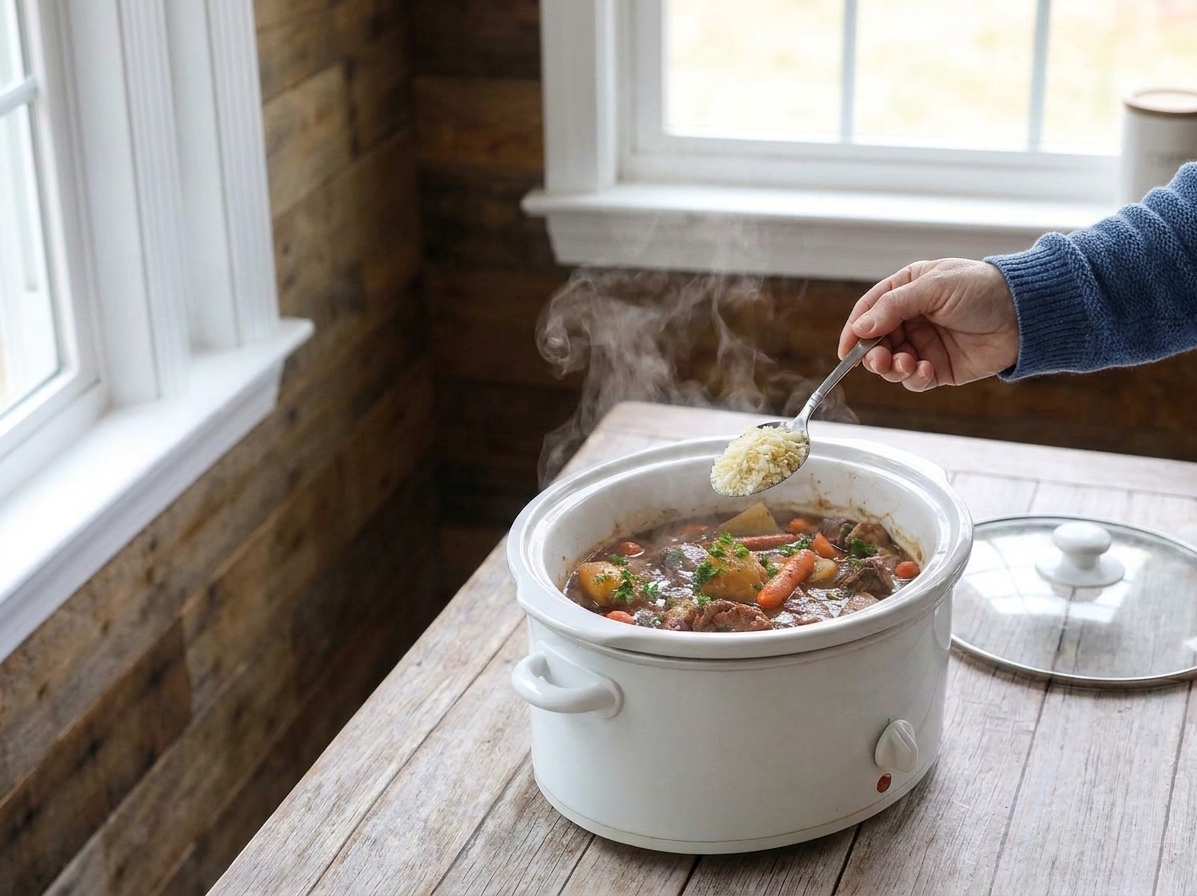
- Sprinkle 1 to 2 tablespoons potato flakes over the surface of the stew.
- Stir well, then wait 5 minutes.
- Add more in 1 tablespoon increments until it is where you want it.
What to watch for
- It thickens as it sits. Do not overdo it right away.
- Texture changes. Potato flakes can make the broth feel a bit “velvety,” which is lovely in beef stew, less ideal in very bright, tomato-forward stews.
- Salt levels. Some potato products are salted. Taste before adding extra seasoning.
Method 5: Beurre manié (butter and flour paste for silky stew)
If you want a thicker stew with a glossy, rich finish, beurre manié is the move. It is a French technique, but I promise it is totally weeknight-friendly: softened butter mixed with flour, then whisked in.
How to do it
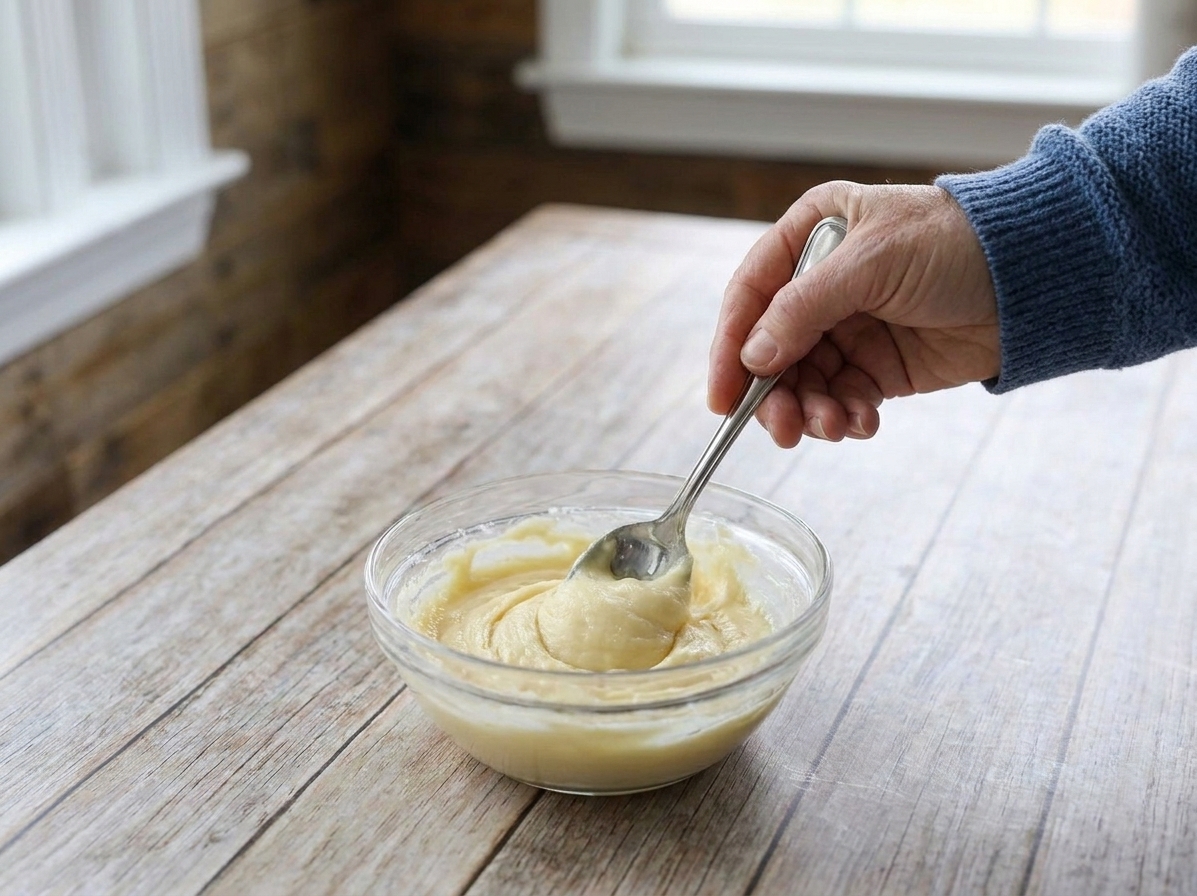
- In a small bowl, mash together 1 tablespoon softened butter and 1 tablespoon flour into a smooth paste.
- Stir it into the stew in small bits, mixing well so it melts in evenly.
- Cook on HIGH for 20 to 30 minutes, stirring once or twice.
Why it works well in slow cookers
- Fewer lumps than straight flour. The butter coats the flour so it disperses more smoothly.
- Great for lean stews. If your stew tastes a little flat, this adds a touch of richness while thickening.
Choosing the right method (quick guide)
- Need it thick in 15 minutes: cornstarch slurry
- Want a traditional stew texture: flour slurry
- Want to use what is already in the pot: mash or puree vegetables
- Pantry emergency fix: instant potato flakes
- Want a silky, richer finish: beurre manié
Optional swaps: arrowroot and tapioca
If you are out of cornstarch or need another gluten-free option, these can work well in slow cooker stews.
- Arrowroot starch: Use it like cornstarch (a slurry with cold water). It thickens quickly and stays fairly glossy. It can get a little slimy if you boil it hard for a long time, so add it near the end.
- Tapioca starch: Also works as a slurry. It can give a slightly more stretchy, glossy thickness, which some people love in stew.
- Freezing and reheating note: Any stew can loosen or change texture after chilling or freezing. If you are meal prepping, plan to adjust thickness after reheating with a small second round of thickener if needed.
Common stew-thickening problems (and easy fixes)
My stew is still thin after adding slurry
- It may not be hot enough. Thickening needs heat. Switch to HIGH and give it 10 more minutes.
- You may have more liquid than you think. Add another half batch of slurry (half the amounts), stir, and re-check after 10 minutes.
- Give it time between rounds. Stir, let it come back to a gentle simmer, then decide. This prevents over-thickening.
It turned gummy or too thick
- Add warm broth. Stir in a splash at a time until it loosens.
- Go easy with cornstarch. It can go from perfect to gluey if you add a lot at once. Next time, thicken in smaller rounds.
It tastes “starchy”
- Give it time. Let it cook 10 to 20 minutes longer on HIGH.
- Add a brightness booster. A small splash of vinegar or a squeeze of lemon at the end can balance that heavy, starchy feeling.
My go-to weeknight routine
If you are standing in your kitchen right now with a thin stew and hungry people circling, here is the exact order I follow:
- Stir well and remove the lid for 10 minutes on HIGH (you want it hot and gently bubbling).
- If it is still thin, make a cornstarch slurry and add half first.
- Wait 10 minutes, stir, then decide if you need the rest.
- Finish with a little salt and pepper, and a tiny splash of vinegar if the flavor feels sleepy.
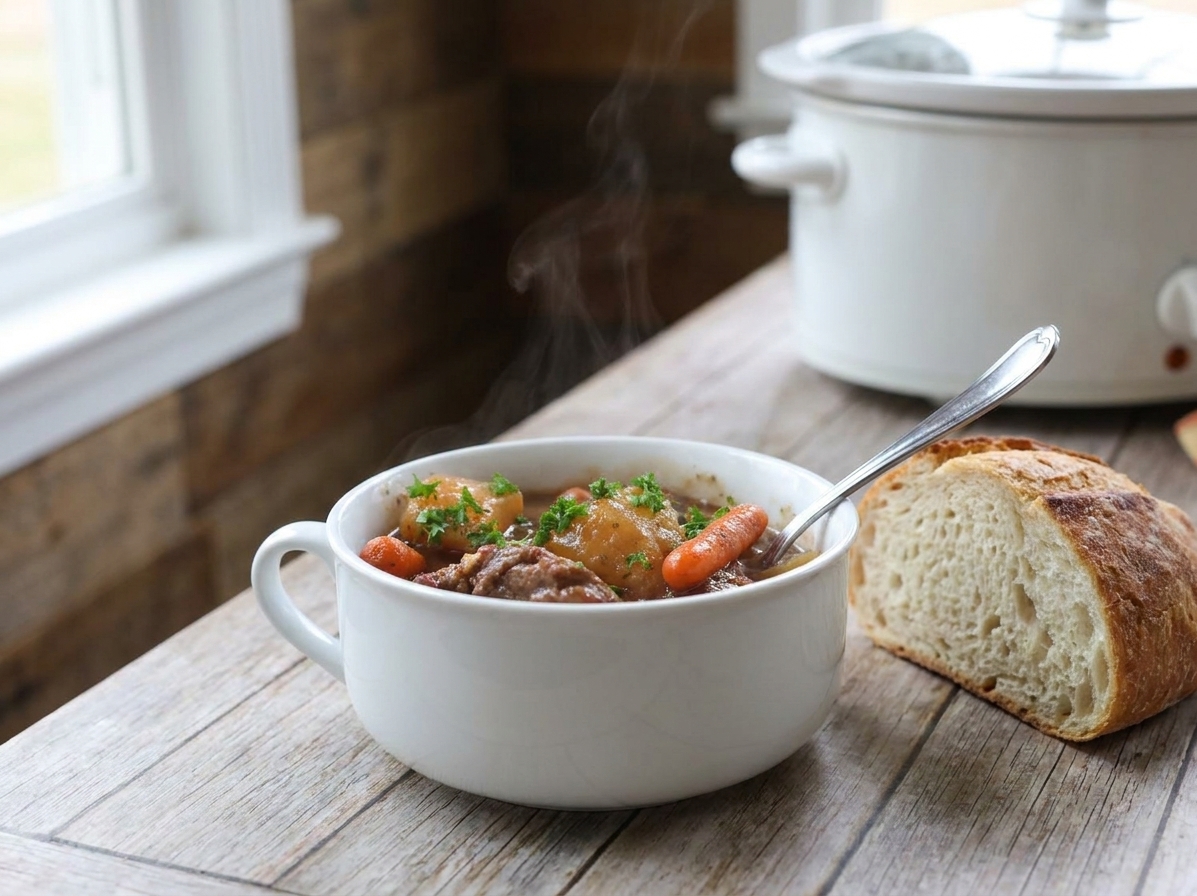
Stew thickening is not about perfection. It is about getting a bowl on the table that feels warm, hearty, and like you meant it to be that way all along.
FAQ
Can I add flour directly to the slow cooker?
I do not recommend it. Flour tossed straight into hot liquid loves to clump and can leave pockets of raw flour. Use a slurry or beurre manié instead.
How do I thicken stew without cornstarch?
Use a flour slurry, beurre manié, instant potato flakes, arrowroot, tapioca starch, or puree some of the vegetables. If you have potatoes in the stew already, mashing a few is the easiest no-extra-ingredient option.
Will leaving the lid off thicken my stew?
A little, yes, especially on HIGH for 30 to 60 minutes. But slow cookers do not reduce as efficiently as a stovetop pot, so you may still need a thickener for that truly hearty consistency.
When should I thicken slow cooker stew?
For starch thickeners (cornstarch, flour, beurre manié, arrowroot, tapioca), add them near the end so you do not risk texture changes over a long hold. For vegetable thickening, you can mash or puree at the end as well.