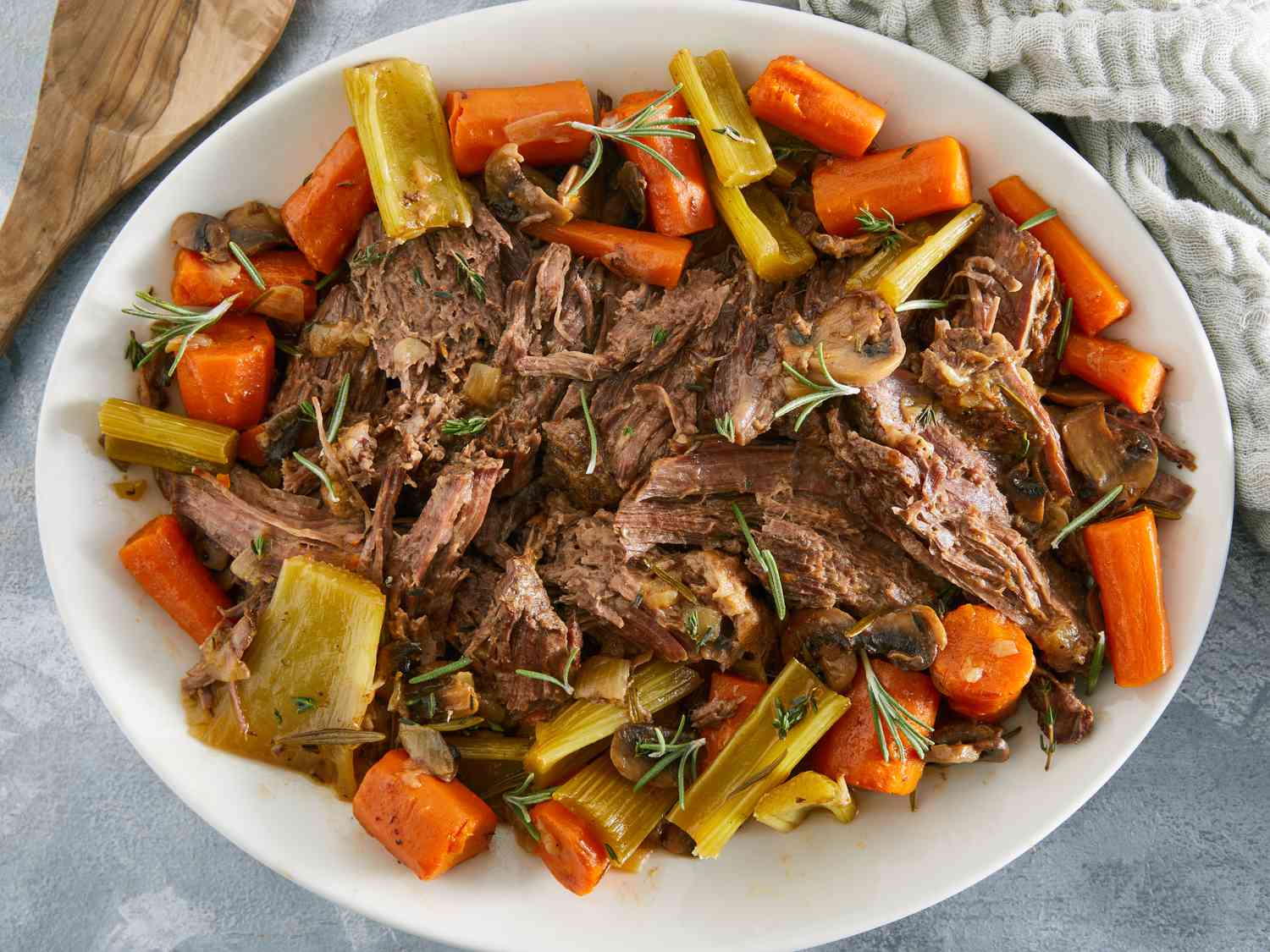
If you have ever walked in the door to that beefy smell and felt your shoulders drop, you already get why pot roast is such a slow cooker hero. The good news is you can cook it to the finish you love: sliceable and tender, or fall-apart and shreddable. This guide will help you choose the right cut, use the right amount of liquid, and cook it long enough to get that melt-in-your-mouth finish without babysitting the stove.
The secret to tender roast
Pot roast turns tender when tough connective tissue breaks down into gelatin. In real life, that means three things matter most:
- The cut: you want a well-marbled, collagen-rich roast.
- Time: collagen needs hours, not minutes.
- Gentle heat: steady low heat keeps the meat juicy while it softens.
If your roast is chewy, it is usually one of two things: the cut is too lean, or it simply needs more time. (Less common culprits: a slow cooker that runs hot on HIGH, slicing with the grain, or not seasoning enough.)
Best beef cuts for pot roast
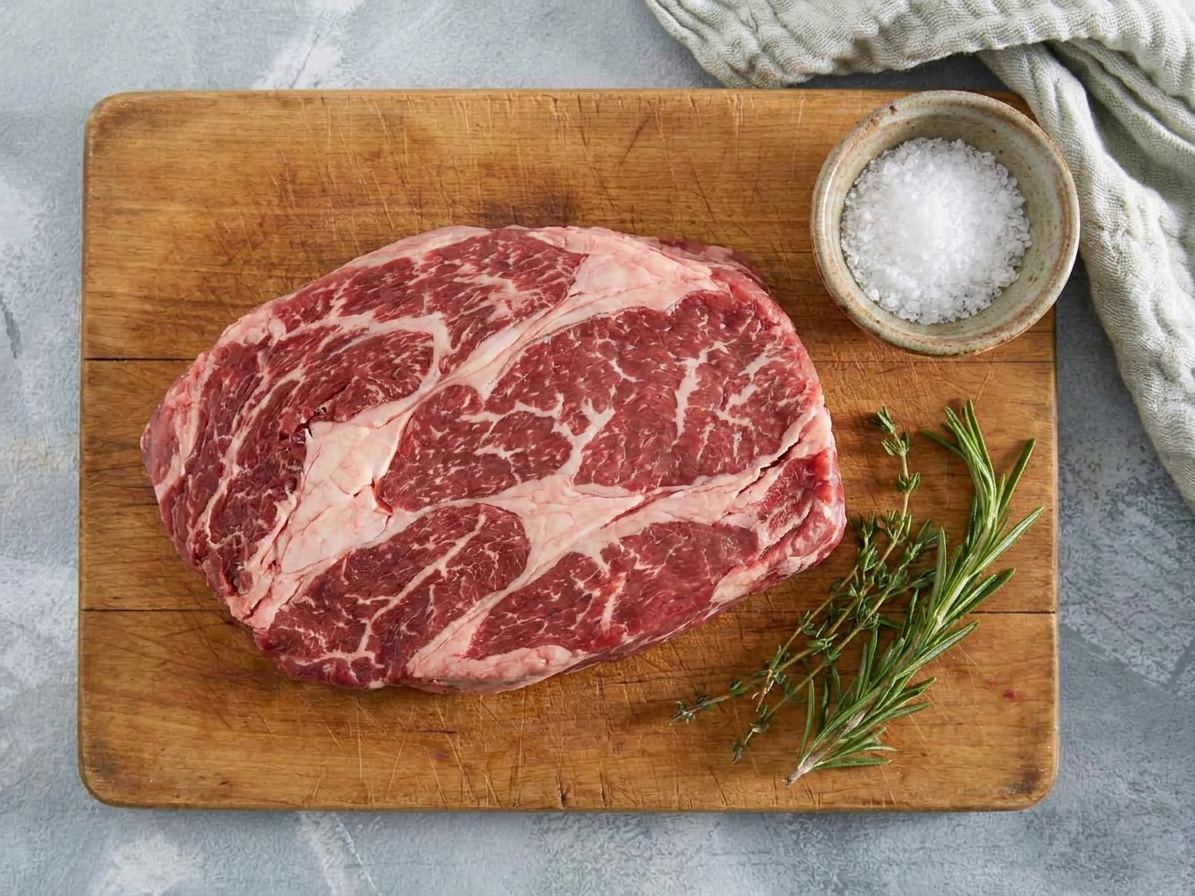
Here is my practical, grocery-store-friendly ranking for a classic crockpot pot roast.
Chuck roast (my top pick)
Why it works: Chuck has great marbling and plenty of connective tissue, which is exactly what turns silky and spoon-tender after a long cook. It is also forgiving if your timing is a little off.
Brisket (great flavor, different texture)
Why it works: Brisket gets very tender and tastes amazing, but it tends to slice rather than shred, and it benefits from being cut against the grain when serving.
Bottom round or rump roast (leaner, needs help)
Why it can work: These are leaner cuts. You can still get a good pot roast, but it is less naturally juicy. I recommend adding a little extra fat to help (more onion, a bit of butter at the end, or a richer broth) and being careful not to overdo the liquid.
Top round or sirloin roast (not my favorite here)
Why to avoid: These are more likely to cook up sliceable and a bit dry in the slow cooker. Save them for roasting in the oven.
Size tip: A 3 to 4 pound roast is the sweet spot for most 6-quart slow cookers. If your roast is very thick, plan on the longer end of the cook time.
Trim tip: Trim off any thick, hard surface fat cap, but do not strip it bare. Leaving a thin layer helps flavor and moisture, while removing the thick stuff keeps the gravy cleaner.
Do you need to sear first?
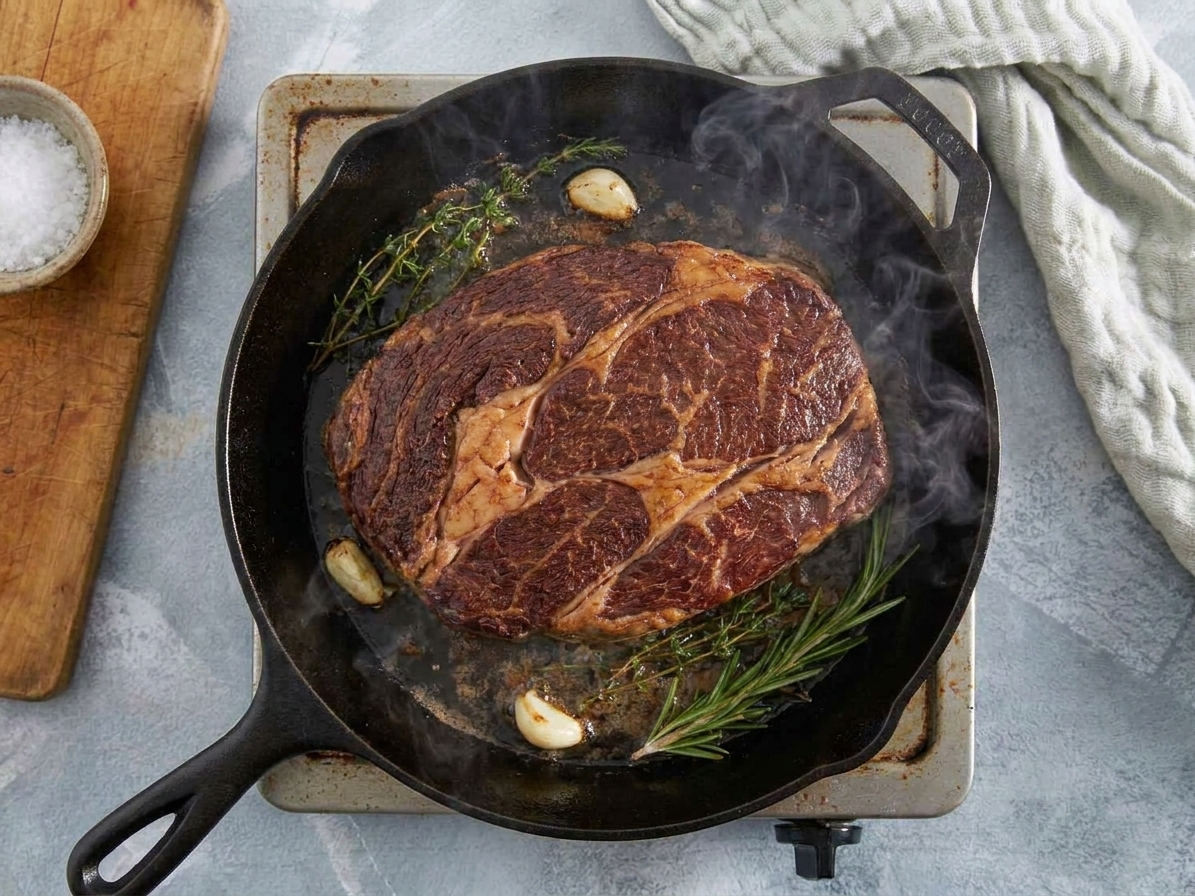
My honest answer: it depends on your day.
- If you have 8 to 10 extra minutes: sear it. Browning adds deeper flavor and a richer gravy.
- If you do not: you can skip it and still get tender meat. Just make sure you season well and build flavor with onions, garlic, and a good broth.
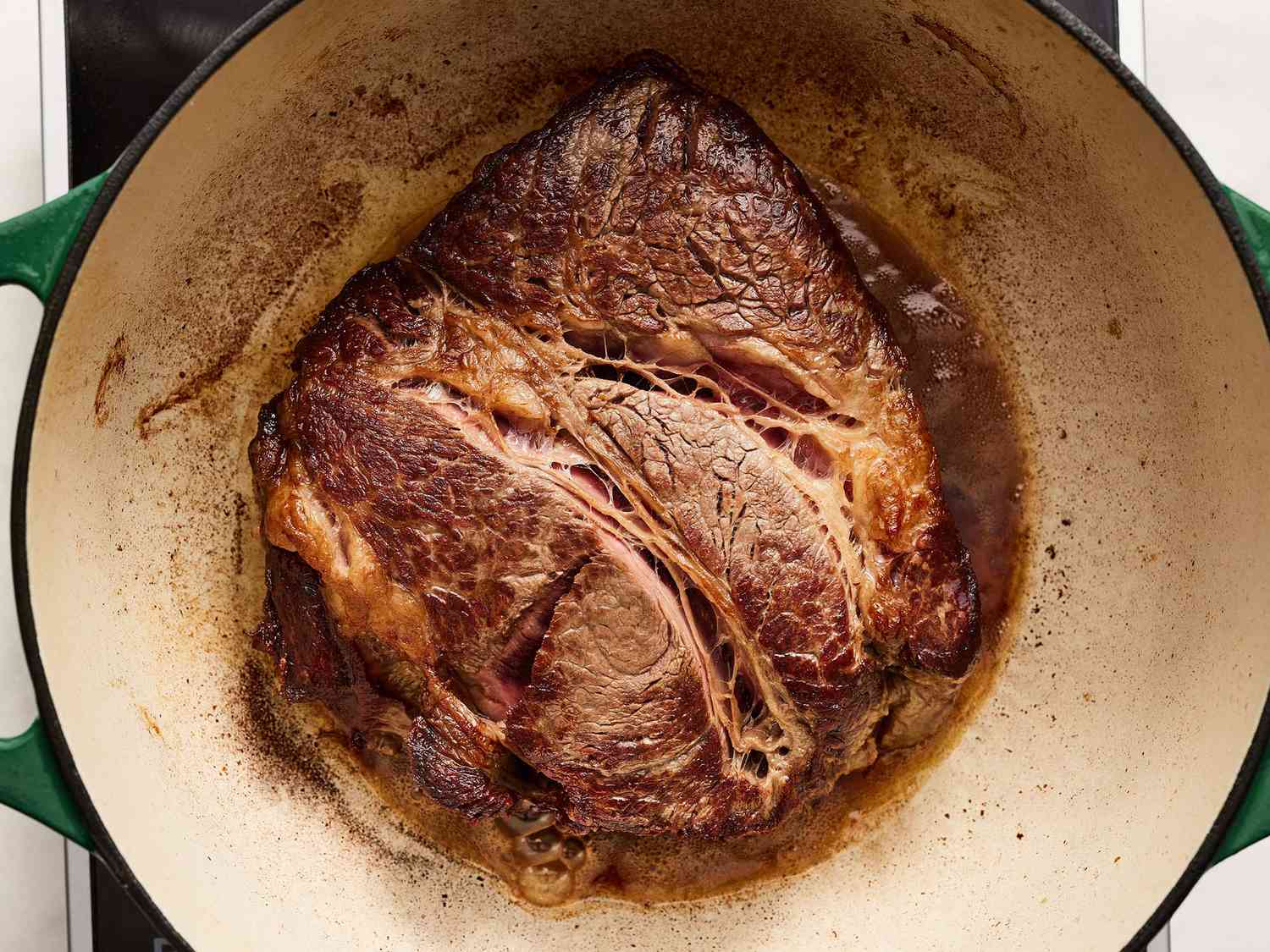
Fast sear method: Pat the roast dry, season with salt and pepper, then brown 3 to 4 minutes per side in a hot skillet with a tablespoon of oil. You are not cooking it through, just building color.
How much liquid to add
This is the part that surprises people: a slow cooker does not need much liquid to “keep things moist.” The lid traps moisture, and the roast and vegetables release plenty as they cook.
My liquid rule
- For a 3 to 4 pound chuck roast: start with 1 to 1 1/2 cups total liquid.
- For a 2 to 3 pound roast: 3/4 to 1 cup total liquid.
- For a 5 pound roast: 1 1/2 to 2 cups total liquid.
Why not more? Too much liquid can make the end result taste boiled and can wash out the gravy flavor. You want the meat partially surrounded, not fully submerged.
One quick reality check: If your slow cooker runs hot or tends to cook dry, or if you are using a very lean roast, it is smart to take a quick peek around the halfway mark to make sure there is still some liquid in the bottom. Add a splash of broth if needed, then get that lid back on.
Best liquid options
- Beef broth: the classic base.
- Red wine: replace up to 1/2 cup of broth for deeper flavor.
- Worcestershire sauce: 1 to 2 tablespoons adds savory “roastiness.”
- Balsamic vinegar: 1 tablespoon brightens a heavy roast in the best way.
Busy-mom shortcut: If you only have broth and an onion, you can still make an excellent pot roast. Do not let the perfect ingredient list steal dinner from you.
Timing and temps
Slow cooker models vary, but these time ranges are reliable for most modern crockpots.
For fall-apart (shreddable)
- LOW: 8 to 10 hours (best texture)
- HIGH: 5 to 6 hours (works, but LOW is more forgiving)
For sliceable (pull it earlier)
- LOW: 6 1/2 to 8 hours
- HIGH: 4 1/2 to 5 hours
Doneness check you can trust: The roast is ready when a fork slides in easily and you can twist off a chunk with almost no resistance. If it is tough, it needs more time, even if the internal temperature looks “done.”
Optional temp cue (helpful, not required): Many roasts are still tight and tough in the 160 to 180°F range, then turn truly tender closer to about 195 to 205°F. Texture always wins over a number here.
Slow cooker pot roast method
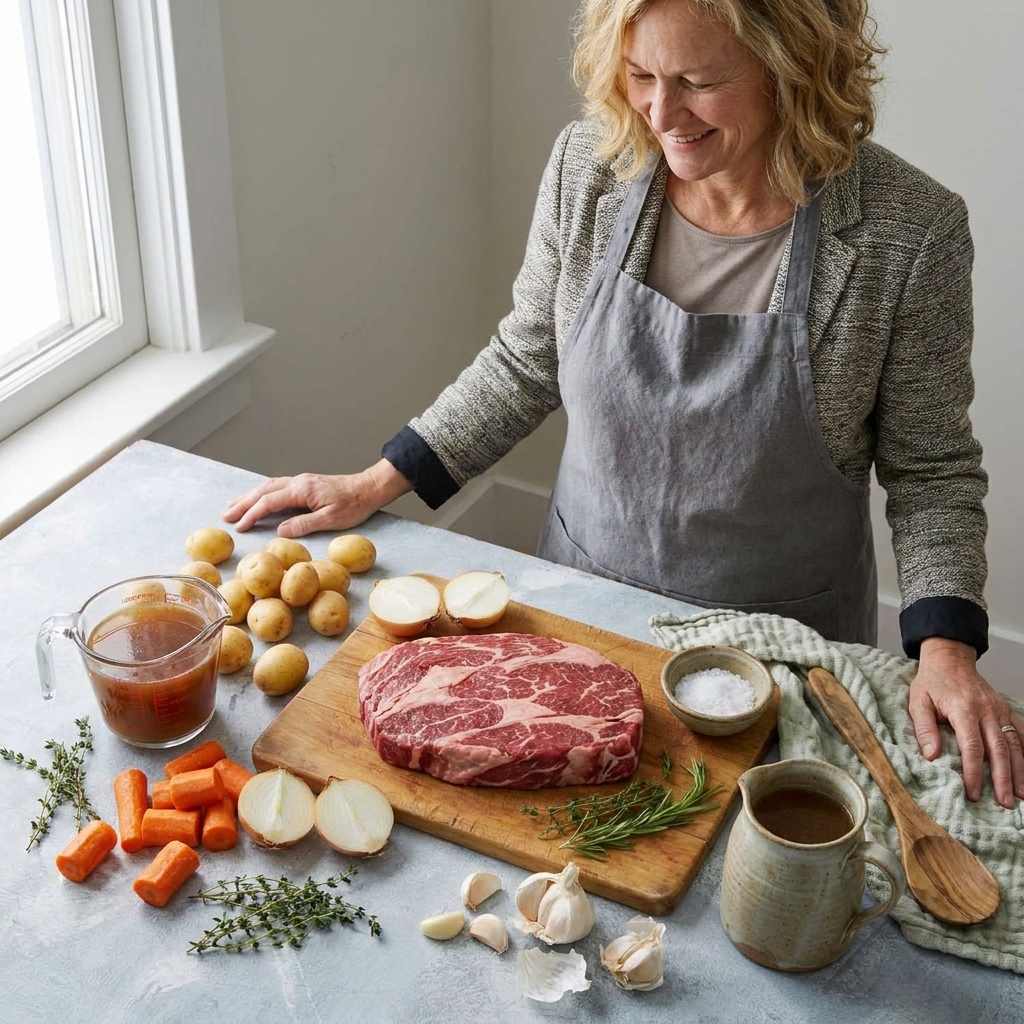
Ingredients (classic)
- 3 to 4 lb chuck roast
- 1 1/2 tsp kosher salt (plus more to taste)
- 1 tsp black pepper
- 1 to 2 tbsp oil (if searing)
- 1 large onion, sliced
- 4 cloves garlic, smashed or minced
- 1 to 1 1/2 cups beef broth
- 1 tbsp Worcestershire sauce (optional but recommended)
- 2 lb baby potatoes (or Yukon golds cut into chunks)
- 4 to 6 carrots, cut into large pieces
- 2 sprigs fresh thyme or 1 tsp dried thyme
- 1 sprig rosemary or 1/2 tsp dried rosemary
- 2 tbsp cornstarch + 2 tbsp cold water (optional, for gravy)
1) Build the base
Layer the onion and garlic in the bottom of the slow cooker. This protects the meat from sticking and gives the broth a sweet, rich backbone.
2) Season (and sear if you can)
Season the roast generously with salt and pepper. Sear if you have time, then place it on top of the onions.
3) Add liquid and herbs
Pour in the broth and Worcestershire. Add thyme and rosemary. Try not to rinse the seasoning off the top of the roast.
4) Add vegetables
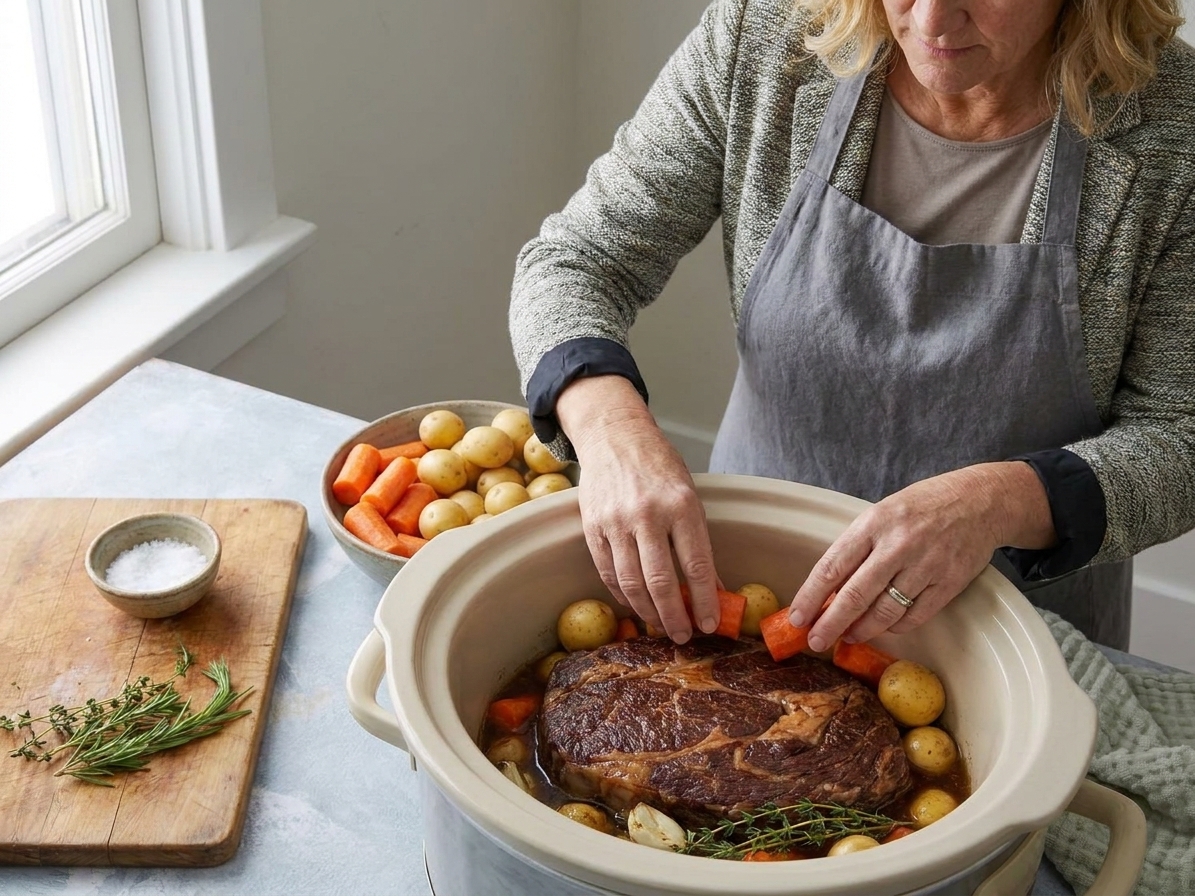
For vegetables that hold their shape, tuck potatoes and carrots around the roast, not directly on top. If you know your slow cooker runs hot or you hate mushy carrots, add them during the last 2 to 3 hours. (That assumes the roast is already cooking on LOW. Opening the lid briefly can extend cook time, so be quick.)
5) Cook
Cook on LOW for 8 to 10 hours for true fall-apart tenderness. Avoid lifting the lid unless you have to. Each lid lift lets heat out and can slow things down.
6) Rest the meat
Move the roast to a platter and tent loosely with foil for 10 to 15 minutes. Resting helps the meat stay juicy and makes it easier to pull apart.
7) Make gravy
If you want thicker gravy, skim off excess fat from the surface of the cooking liquid first (a spoon works fine). Whisk cornstarch and cold water in a small bowl, then stir it into the hot liquid while stirring. Cover and cook on HIGH for 10 to 15 minutes until glossy and slightly thickened.
Vegetables, not mushy
Potatoes and carrots seem simple, but they are the difference between “Sunday supper cozy” and “everything turned to paste.”
- Cut big: 2-inch chunks for carrots, halved baby potatoes, or large cubes of Yukon gold.
- Use waxy potatoes: Yukon gold or red potatoes hold up better than russets.
- Stagger timing: If your slow cooker cooks hot, add carrots and potatoes later.
- Keep them around the edges: They cook more gently than if piled on top.
Flavor boosters
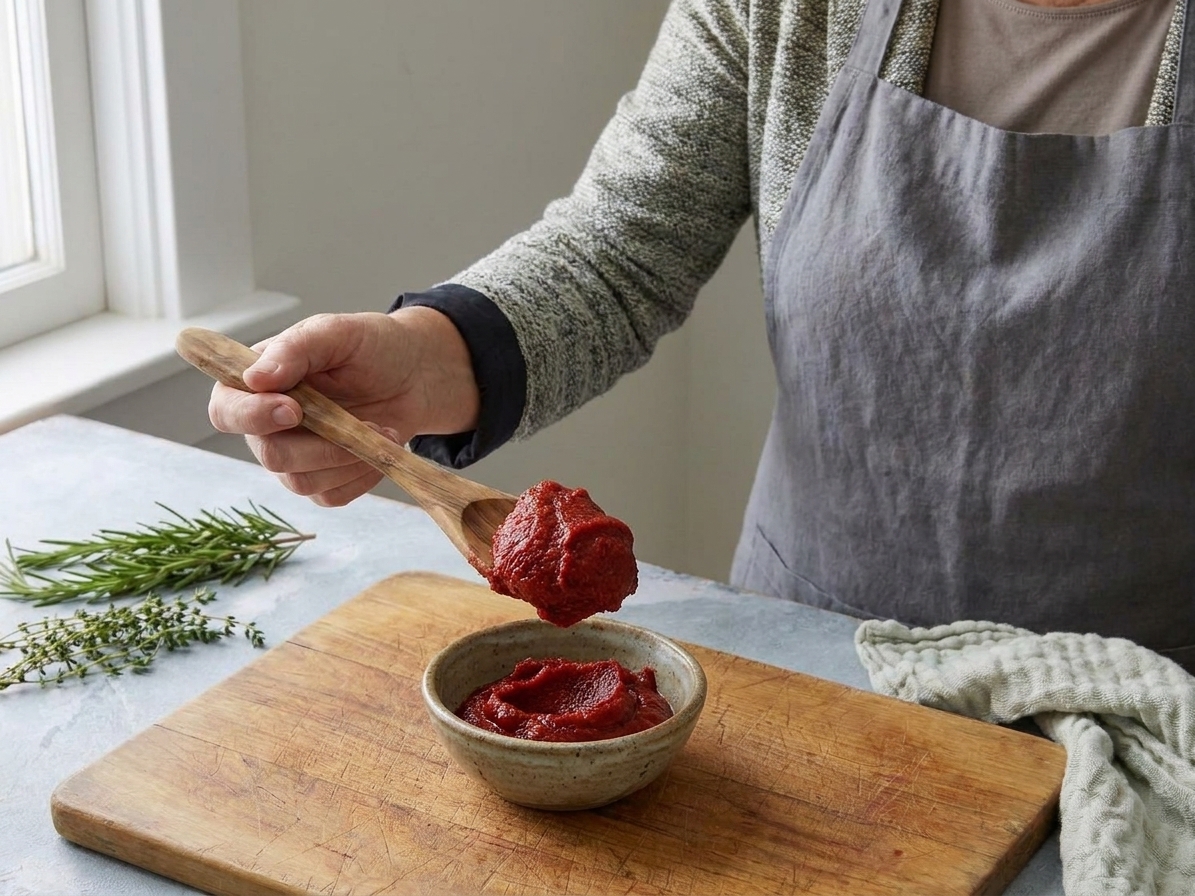
- Tomato paste: 1 tablespoon stirred into the broth makes the gravy taste long-simmered.
- Onion soup mix: convenient and tasty, but reduce added salt.
- Soy sauce: 1 teaspoon to 1 tablespoon adds umami if you are out of Worcestershire.
- Mushrooms: add in the last 2 to 3 hours so they stay meaty.
- Fresh herbs: stir in chopped parsley at the end for brightness.
Common problems
“My roast is tough.”
It usually needs more time. Keep cooking on LOW in 30 to 60 minute increments until the fork test passes. Tough does not mean overcooked here. It often means collagen has not fully broken down yet.
“It tastes bland.”
Add salt at the end, not just at the beginning. A final pinch can wake up the whole pot. Also consider Worcestershire, a splash of balsamic, or a spoonful of tomato paste next time.
“My gravy is thin.”
Thicken with cornstarch slurry, or simmer the liquid in a saucepan for 5 to 10 minutes to reduce.
“My veggies turned mushy.”
Cut larger pieces, use Yukon gold or red potatoes, and add carrots later. Also make sure you are not accidentally cooking on HIGH all day in a cooker that runs hot.
Slow cooker size notes
Slow cookers are not one-size-fits-all, and pot roast is a place where it matters.
- Do not overfill: Aim to keep the slow cooker no more than about two-thirds full once the roast and vegetables are in.
- Using a 4-quart: A 2 1/2 to 3 pound roast is usually a better fit than a big 4-pounder.
- Using an 8-quart: A 4 to 5 pound roast is great, but watch the liquid. Bigger crocks can mean more evaporation around the edges in some models.
Storage and reheating
- Refrigerate: Store meat and vegetables with some broth or gravy in an airtight container up to 4 days.
- Freeze: Freeze shredded or chunked roast with gravy up to 3 months. Potatoes can get a little mealy after freezing, so I often freeze the meat and gravy and make fresh potatoes later.
- Reheat: Warm gently on the stovetop or in the microwave with a splash of broth to keep it juicy.
FAQ
Should the roast be covered with liquid?
No. In a slow cooker, you usually want 1 to 2 cups liquid total for a standard roast. The meat will release juices as it cooks.
Can I cook pot roast from frozen?
I do not recommend starting frozen in a slow cooker for food safety reasons. Thaw in the fridge first, then cook.
Is LOW always better than HIGH?
For pot roast texture, yes. LOW gives you the most consistently tender results. HIGH can work when you are short on time, but it is less forgiving, especially if your slow cooker runs hot.
When do I add potatoes and carrots?
If you like them very soft, add them at the start. If you prefer them intact, add during the last 2 to 3 hours on LOW, especially if your slow cooker runs hot.
A simple serving plan
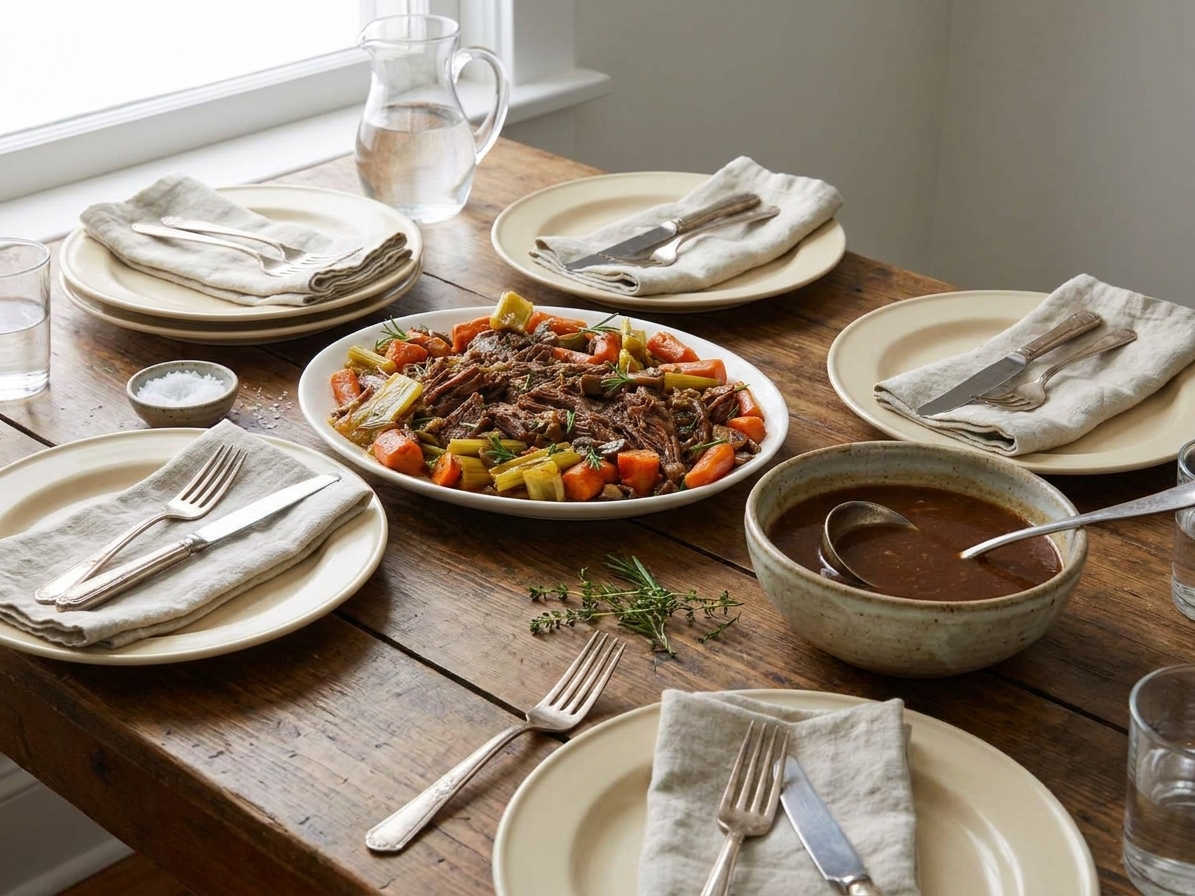
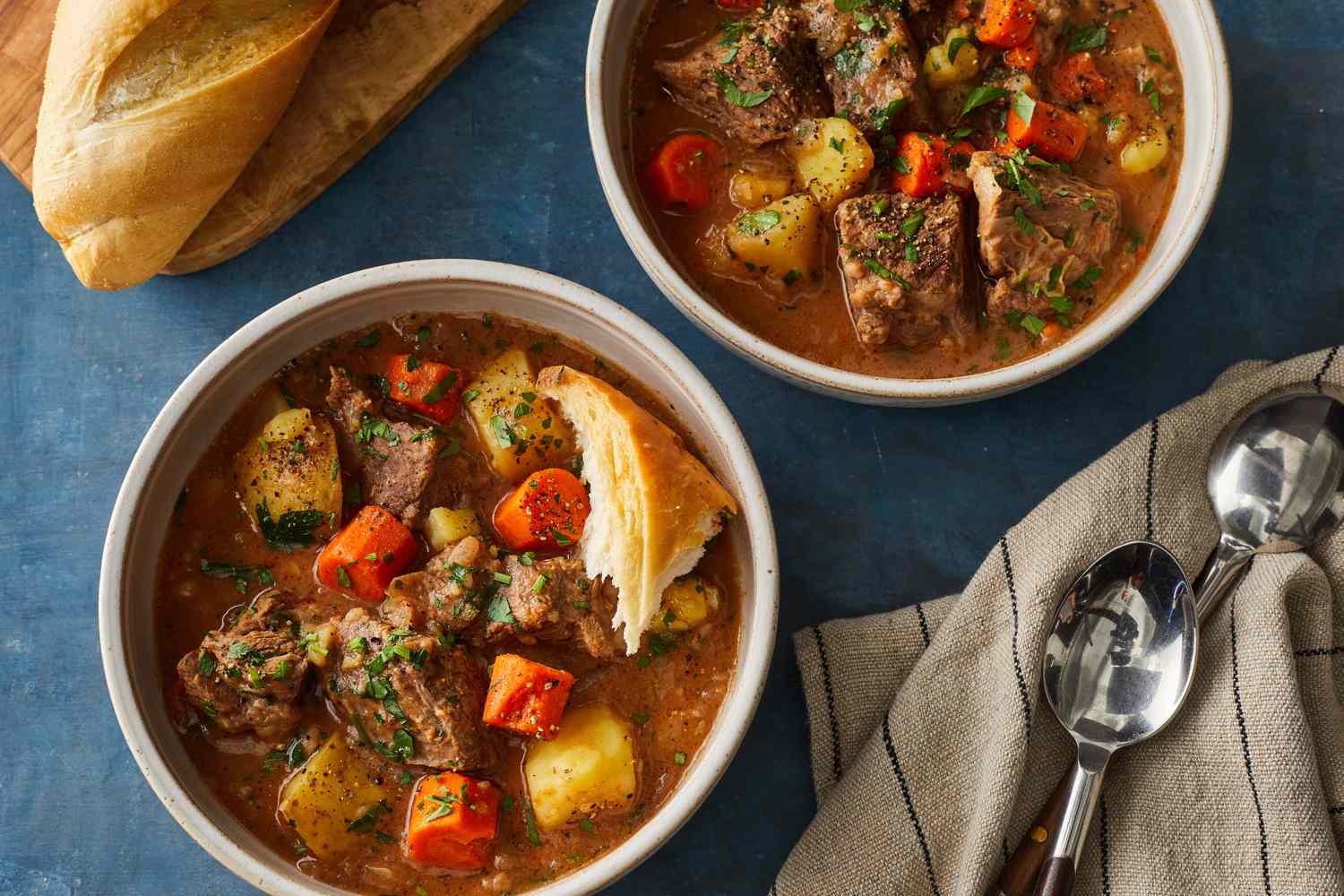
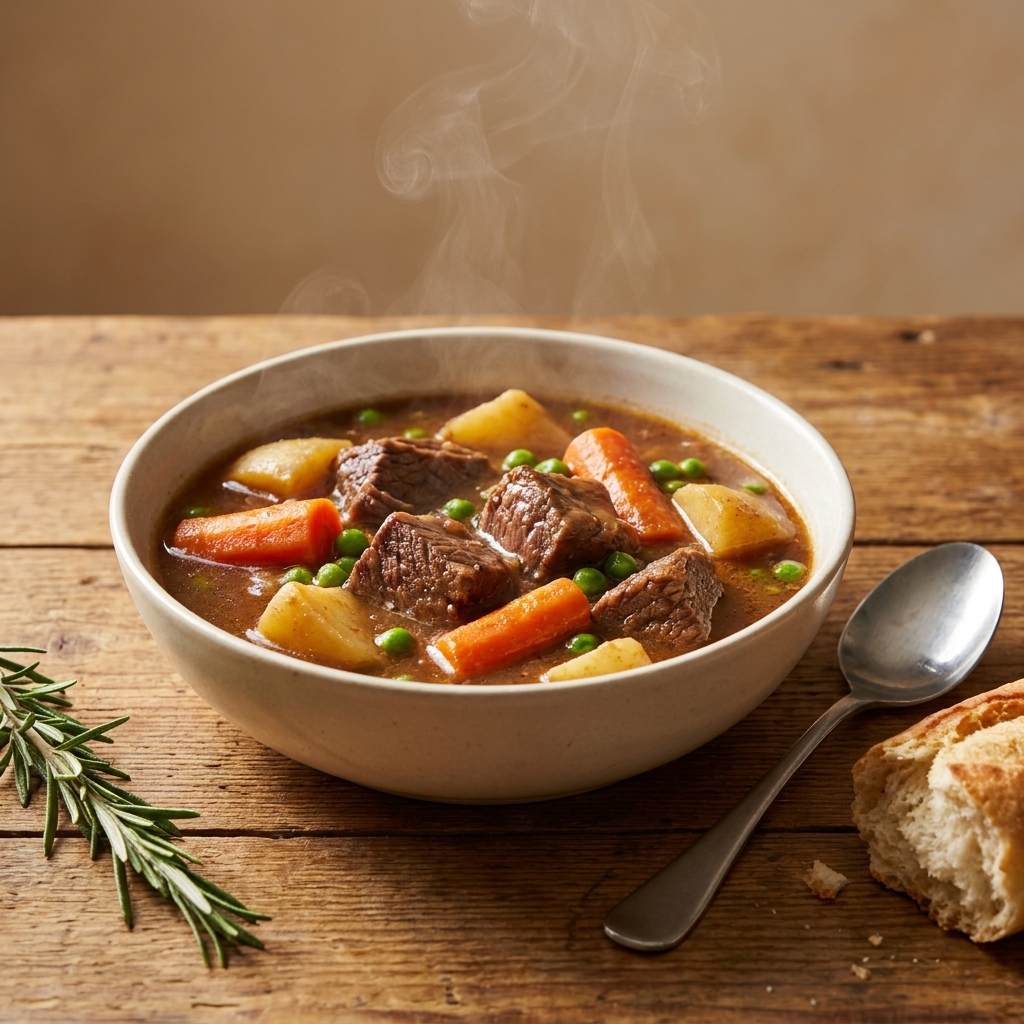
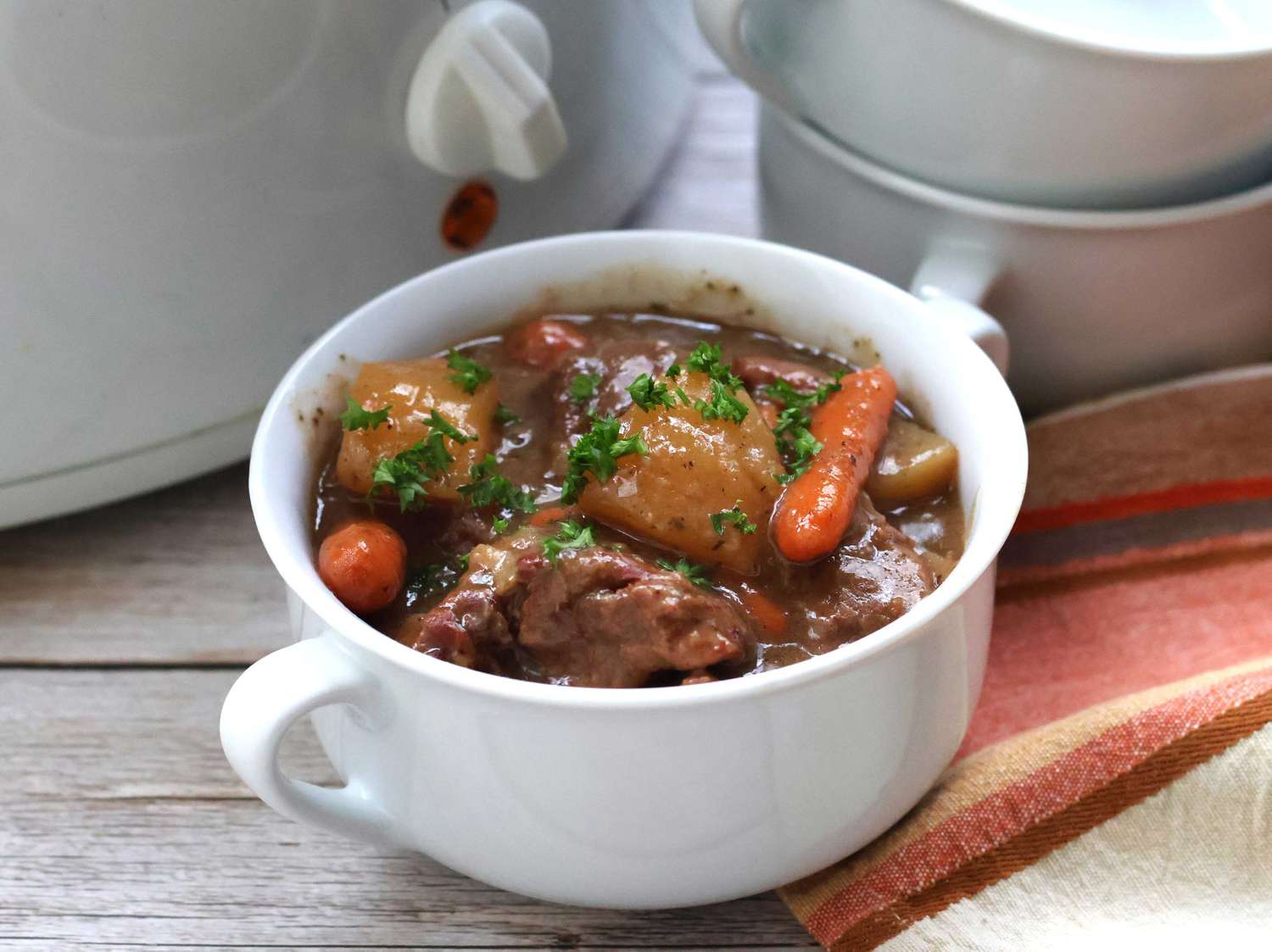
My favorite way to serve pot roast is straight from the slow cooker: big spoonful of carrots and potatoes, a pile of shredded beef, then gravy over everything. Add buttered rolls or egg noodles if you want to stretch it, and dinner is done.