Why cut choice matters
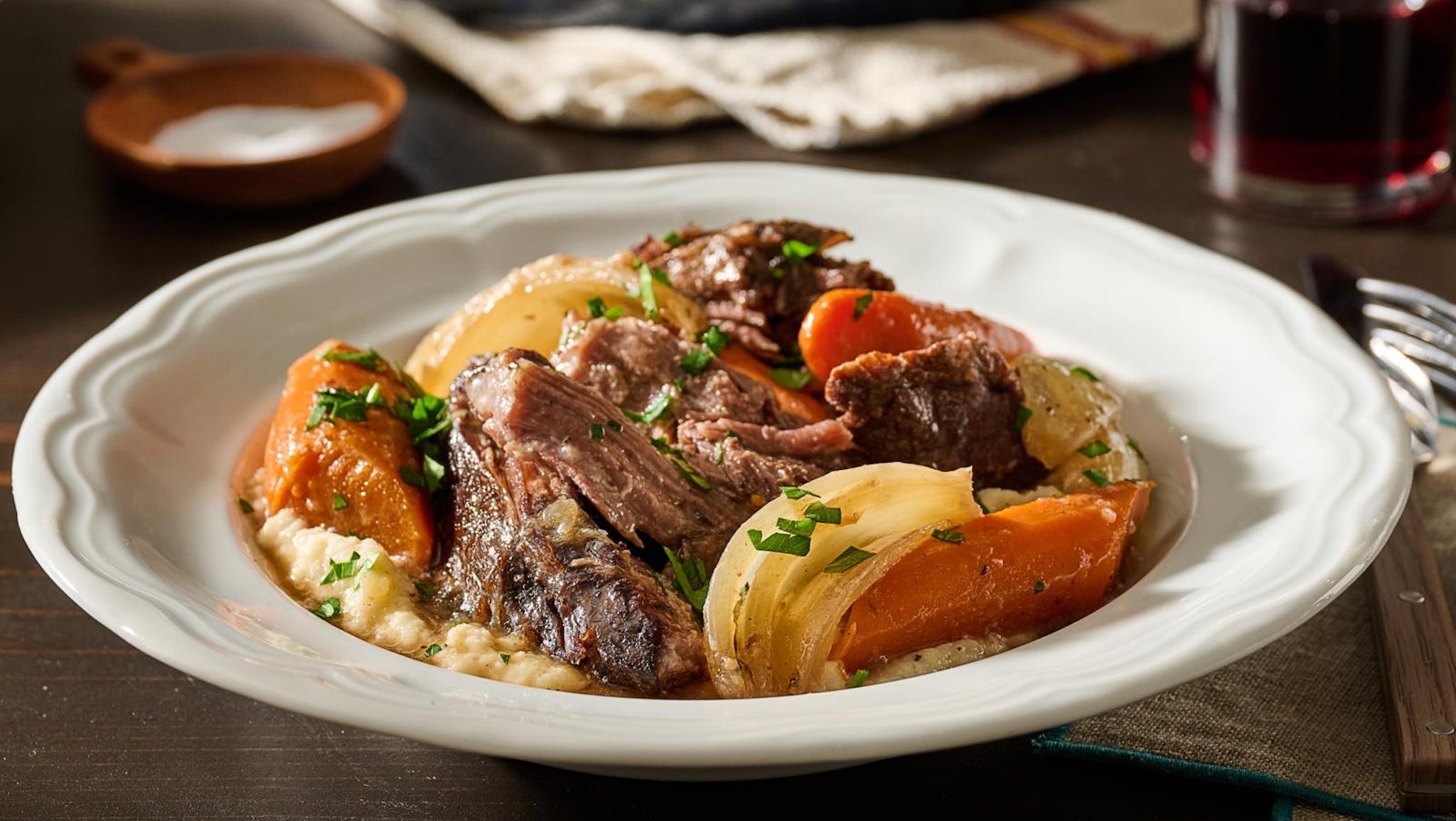
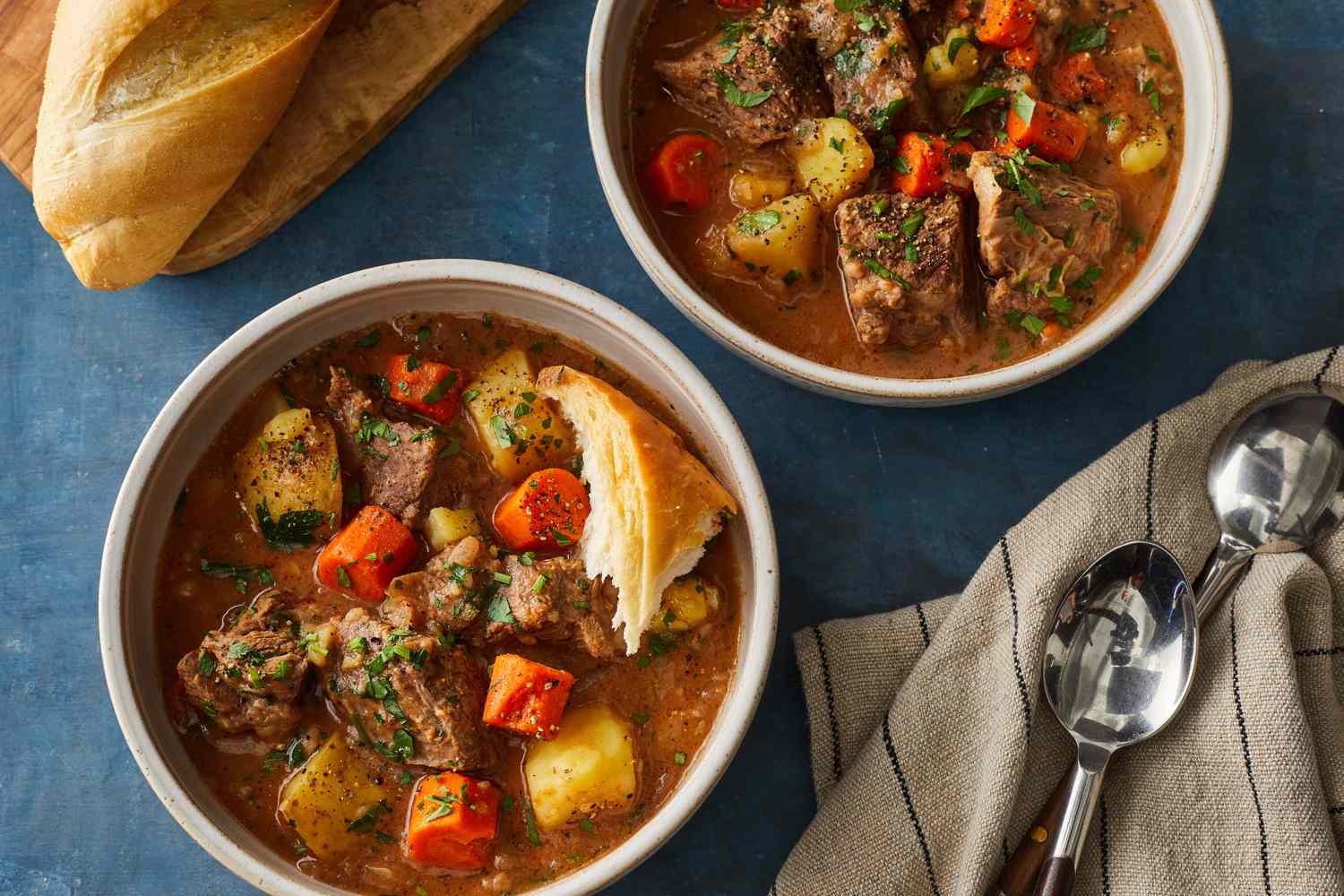
I love a slow cooker stew because it forgives a busy day. What it does not forgive is the wrong meat. Slow cooking is gentle, but it is also long. Tough, hardworking muscles (with connective tissue and collagen) break down into silky, spoon-tender bites. Lean, delicate cuts tend to tighten up, dry out, and stay oddly chewy.
So the secret is simple: pick cuts with enough connective tissue to soften over time, plus enough fat to keep everything luscious.
Best beef cuts for stew
Beef stew is where slow cookers shine. These cuts are usually affordable, widely available, and made for low and slow.
1) Chuck roast (the MVP)
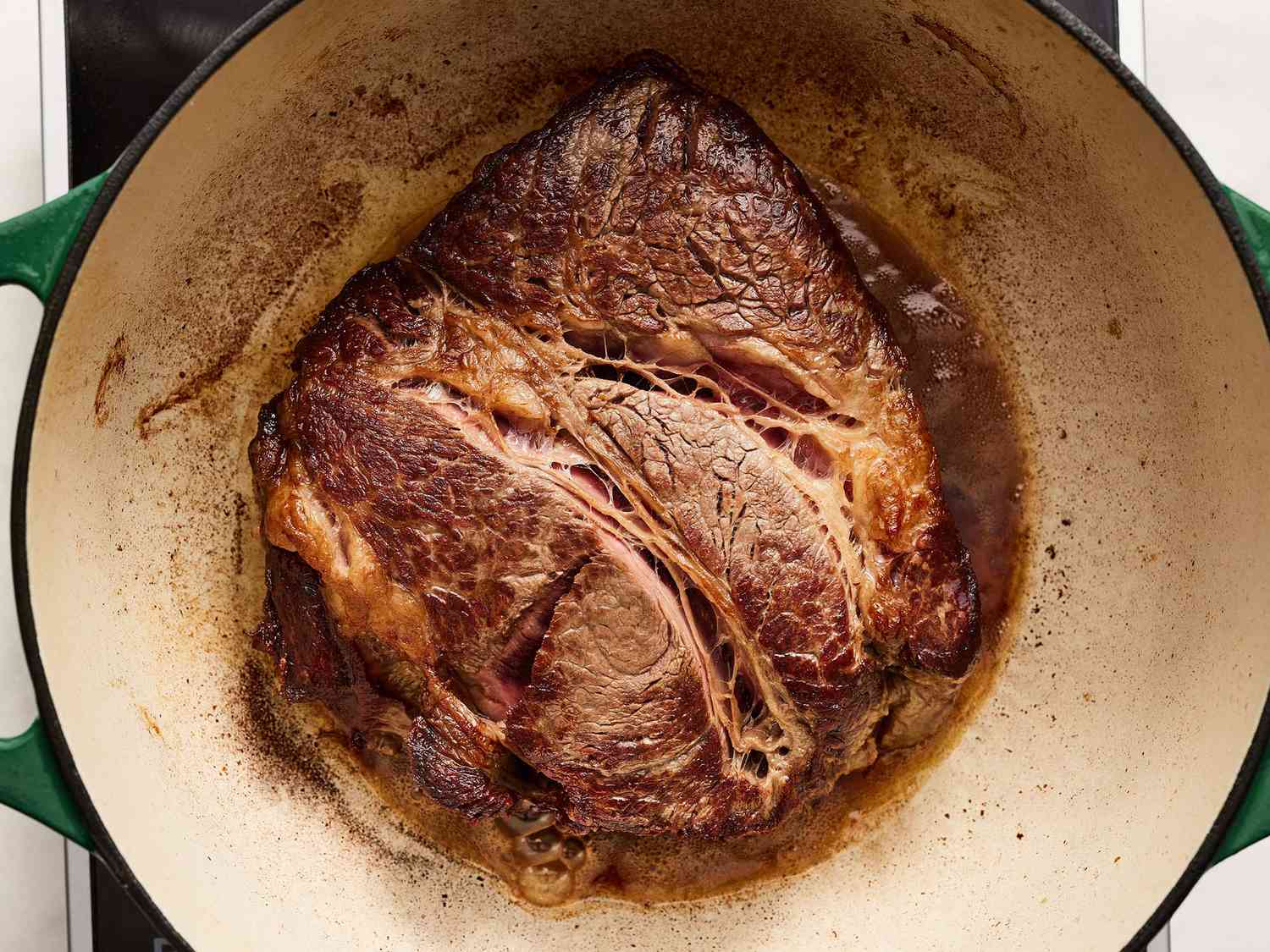
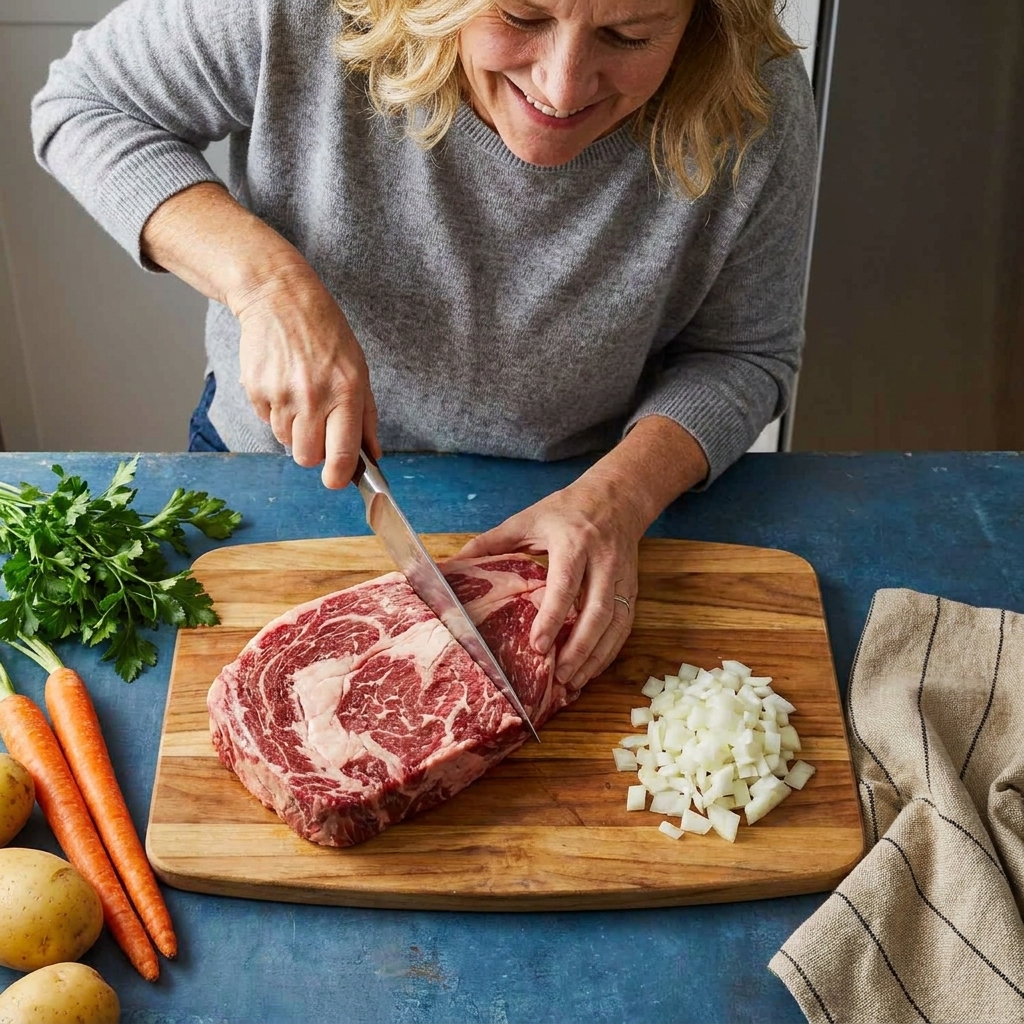
If you take only one tip from this guide, let it be this: chuck roast makes the best slow cooker stew. It has marbling and collagen that turn into rich, velvety goodness after several hours.
- Best for: classic beef stew, Guinness stew, beef and barley
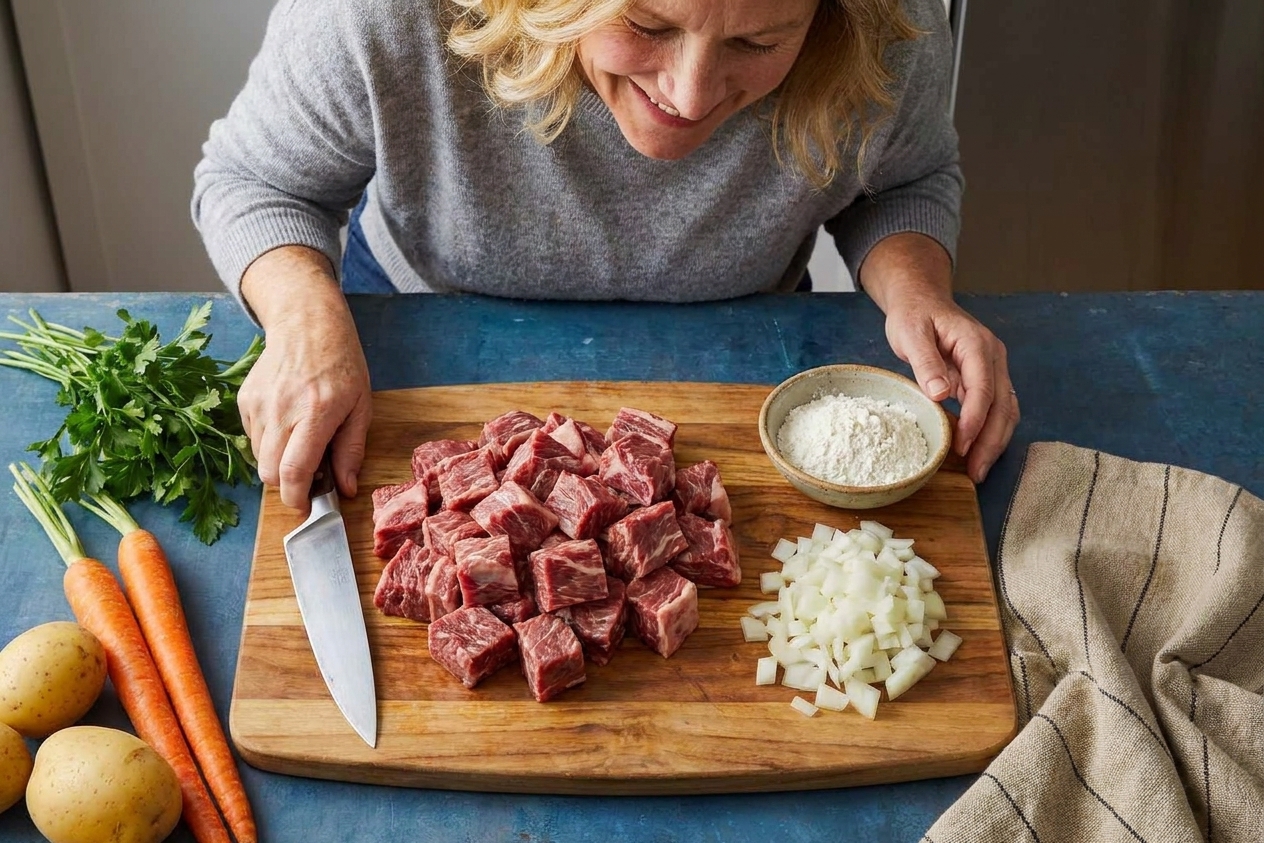
- How to prep: trim only thick, hard pieces of fat; cut into 1 1/2-inch chunks
- Why it works: it breaks down evenly and stays juicy
2) Beef shank
Shank is full of connective tissue. It is fantastic when you want a stew with a deeper, almost luxurious body to the broth.
- Best for: tomato-based stews, root-veg heavy stews
- Note: shank often comes bone-in. The bone adds flavor, but plan on fishing it out.
3) Short ribs
Short ribs are pricier than chuck, but the payoff is big: beefy flavor and a fall-apart texture. If I am cooking for company, this is my “you can’t mess it up” choice.
- Best for: red wine stews, mushroom-heavy stews
- Tip: skim fat at the end if needed. Short ribs render a lot.
4) Brisket
Brisket can be wonderful in stew, especially if you like bigger, meatier pieces that you can cut with a spoon and pull apart. It has plenty of connective tissue, but it can stay a touch firmer than chuck until it fully relaxes.
- Best for: Southwestern beef stew, smoky stews
- Tip: give brisket time. It is at its best on the longer end of the cook.
5) Store-bought “stew meat”
Pre-cut stew meat can be a time-saver, but it is a gamble because it can be a mix of cuts. If it looks very lean with little marbling, it is more likely to cook up dry.
- My rule: if I buy it, I choose packages with visible marbling and larger chunks (I can always cut smaller).
- Even better: buy chuck roast and cube it yourself. It takes 5 minutes and tastes like you tried harder than you did.
Beef cuts to avoid
These are common “oops” cuts for stew. They are not bad meats. They are just not slow cooker stew meats.
- Round roasts (top round, bottom round, eye of round): too lean. They can turn dry and tight. If you already have one, slice thin after cooking and serve it more like pot roast than chunky stew.
- Sirloin: tender when cooked quickly, but it can become firm in long slow cooking. Better for quick skillet meals.
- Filet or ribeye: delicious, but you are paying for tenderness you do not need, and long cooking dulls what makes them special.
- Extra-lean ground beef: it can end up grainy in slow cooker soups and stews. If you use ground beef, choose an 80/20 blend and brown it first.
Best pork cuts for stew
Pork stew can be cozy and slightly sweet, especially with apples, mustard, cabbage, beans, or potatoes. The same rule applies: choose cuts with fat and connective tissue.
1) Pork shoulder (Boston butt)
This is the pork equivalent of chuck roast. It is richly marbled and turns wonderfully tender.
- Best for: pork and green chile stew, white bean pork stew, sweet potato pork stew
- Tip: cut into 1 1/2-inch chunks and do not trim away all the fat. A little goes a long way for flavor.
2) Country-style pork ribs (boneless)
Despite the name, these are usually cut from the shoulder area. They are meaty, forgiving, and often already portioned.
- Best for: weeknight pork stew when you do not want to cube a roast
3) Pork belly (for richness, in small amounts)
Pork belly makes a stew taste restaurant-level, but it is very rich. I like to use it as a supporting player, not the whole cast.
- Best for: brothy stews where you want a silky mouthfeel
- How to use: replace about 1/4 to 1/3 of the meat with pork belly, not all of it.
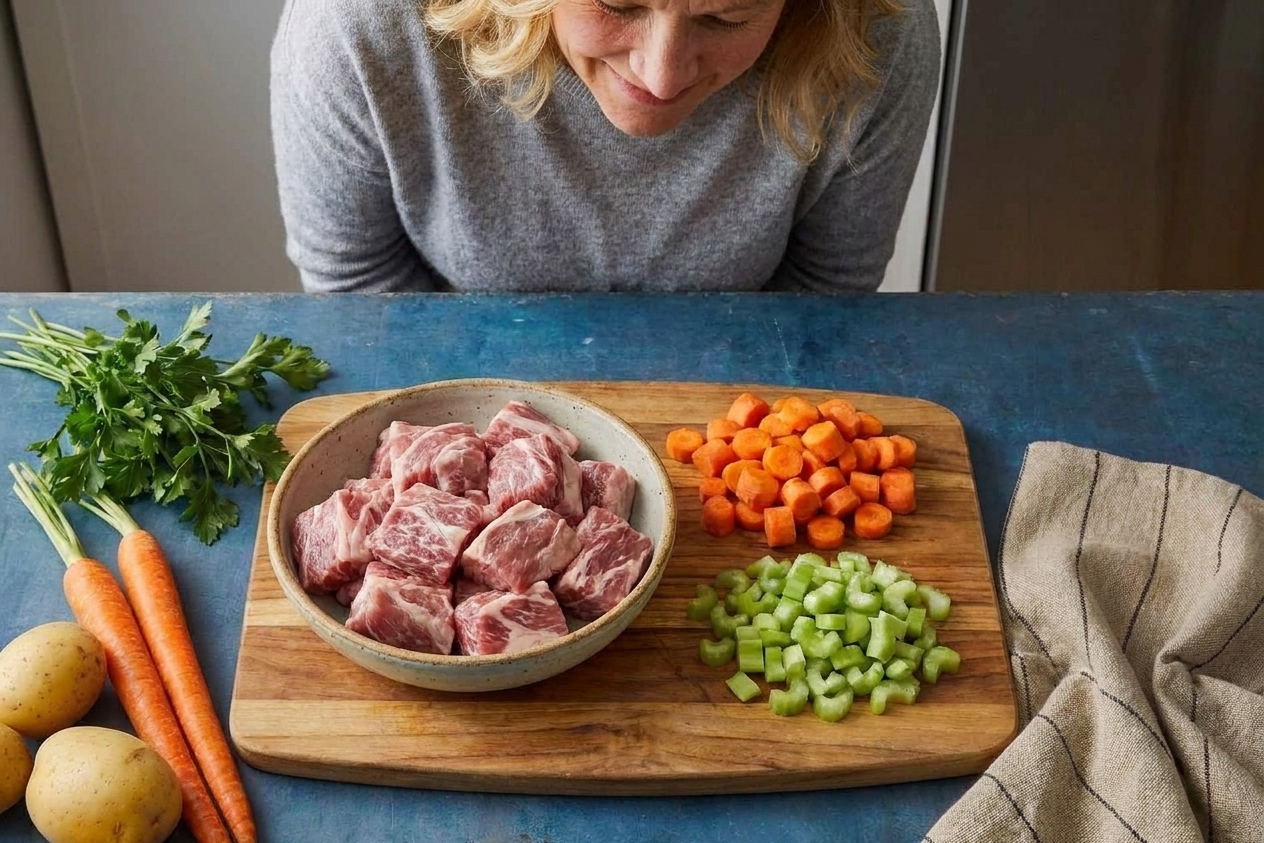
Pork cuts to avoid
- Pork loin: too lean for long cooking. It can shred, but it often feels dry. If you must use it, add extra broth and pull it earlier, then return it to warm through.
- Tenderloin: even leaner than loin. Save it for roasting or quick skillet meals.
- Pre-cooked ham: delicious in bean soup, but in pork stew it can overpower and turn salty fast. If you use it, reduce added salt until the end.
Best poultry cuts for stew
Poultry stews are comfort in a bowl, but poultry behaves differently than beef or pork. You do not get the same big collagen payoff you do from chuck or shoulder, although bones, skin, and dark meat do add body and richness. For chicken and turkey, you are mostly choosing between juiciness and convenience.
1) Chicken thighs (boneless or bone-in)
Thighs are my top pick for slow cooker chicken stew. They stay tender, they have more flavor, and they are much less likely to dry out.
- Best for: chicken stew with potatoes, chicken curry stew, chicken and dumplings base
- Boneless vs bone-in: bone-in adds flavor, boneless is faster to prep. Both work.
2) Chicken drumsticks
Drumsticks are budget-friendly and forgiving. They are fantastic when you want “set it and forget it” without paying thigh prices.
- Tip: plan a quick de-bone step near the end. The meat slides off easily once cooked.
3) Turkey thighs
Turkey thighs are underrated for stews. They have that dark-meat richness that holds up to long cooking.
- Best for: hearty vegetable turkey stew, smoky chipotle-style stews
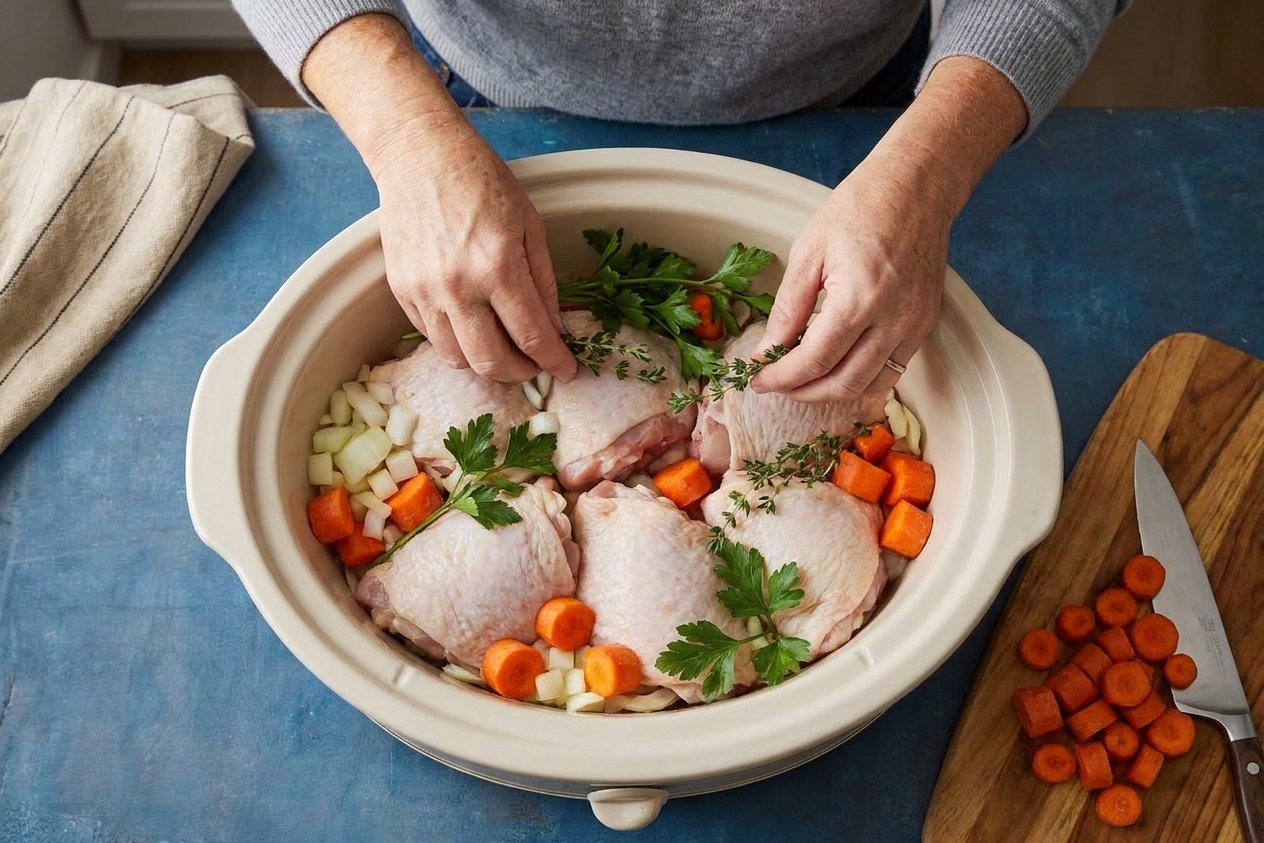
Poultry cuts to avoid
- Chicken breast: it can work, but it is the #1 cut that turns dry and stringy in long cooking. If you want breast meat, add it during the last 60 to 90 minutes, or cook it separately and stir it in.
- Turkey breast: same issue as chicken breast, only bigger and easier to overcook.
- Skin-on pieces: the skin turns soft in a slow cooker. If that texture bugs you, remove skin before cooking, or crisp it separately under the broiler and serve on top.
My tender meat checklist
If you are standing at the store wondering what to grab, here is the quick decision guide I use.
- Look for: marbling (thin white streaks), thicker muscles, and words like chuck, shoulder, shank, short rib.
- Avoid: super-lean, very uniform red meat with no marbling (often round or loin).
- Choose size wisely: 1 1/2-inch chunks stay juicier than tiny cubes.
- Plan for shrink: meat loses volume as it cooks. Buy a bit more than you think.
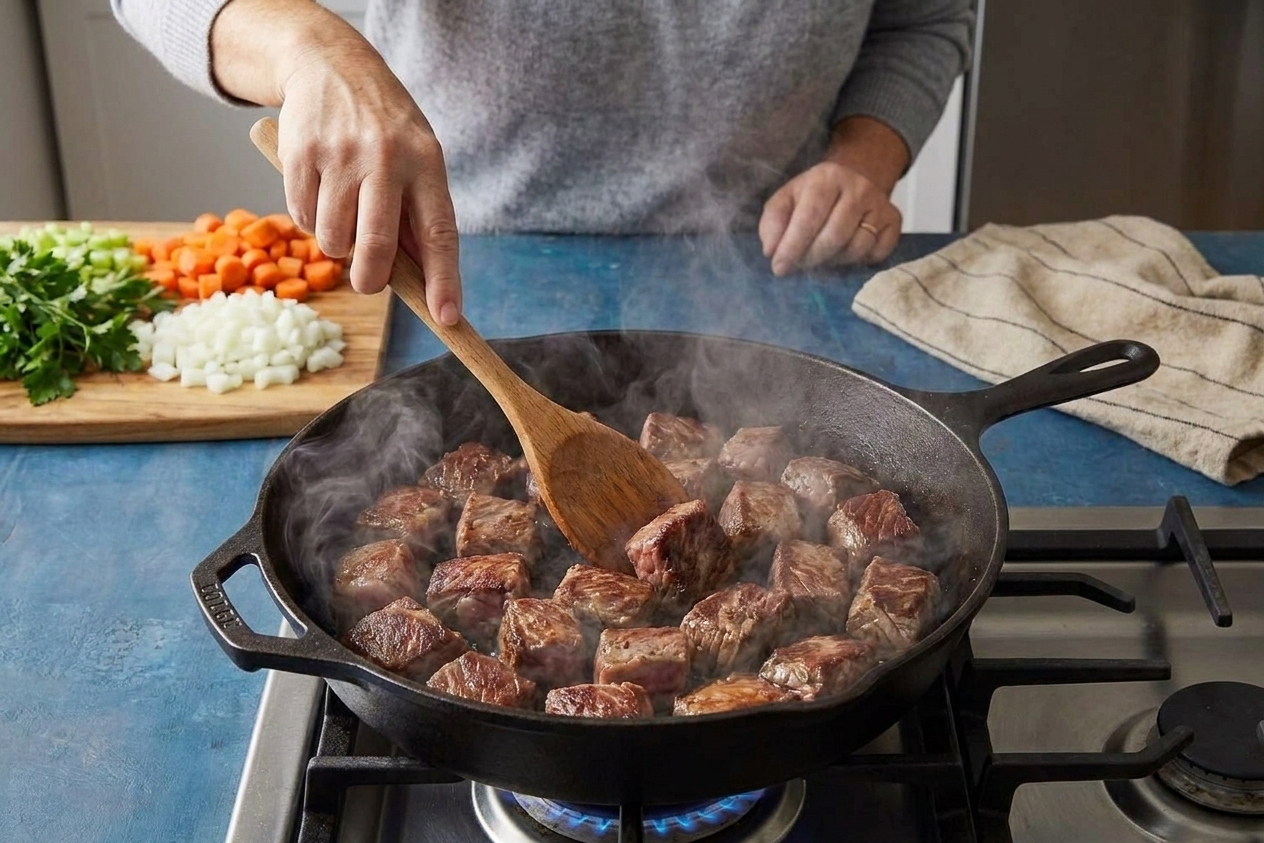
Do you need to brown meat?
Real talk from a busy mom: not always. Browning adds deeper flavor (that savory, roasty base), but a stew can still be very good without it.
- Brown when: you have 10 extra minutes and want maximum flavor, especially for beef.
- Skip when: it is a true dump-and-go day, or when the stew has other bold flavors (tomato paste, wine, soy sauce, lots of herbs).
- Compromise tip: use a spoonful of tomato paste, a splash of Worcestershire, or a browned onion to build flavor without a full sear session.
How much meat to use
For most slow cooker stews, these ratios keep the bowl hearty without turning it into a pot of meat with a few vegetables waving from the corner.
- 4-quart slow cooker: about 1 1/2 to 2 pounds meat
- 6-quart slow cooker: about 2 to 3 pounds meat
- 8-quart slow cooker: about 3 to 4 pounds meat
If you love extra-brothy stew, stay on the lower end. If your family cheers for “more beef!” go higher, and add a little extra liquid.
Common problems and fixes
“My stew meat is tough. Did I overcook it?”
Often, tough stew meat needs more time, not less. Collagen-rich cuts (like chuck or shank) can be chewy right before they turn tender. Give it another 45 to 90 minutes and check again.
If you used a lean cut (like round), extra time may not fix it. It can stay firm and get drier the longer it cooks. In that case, slice it thin and treat it more like pot roast.
“It’s tender, but dry.”
This is classic lean-cut behavior (round, loin, breast). Next time choose chuck or shoulder, or switch to thighs for poultry. For tonight, add a little broth and let it sit on Warm for 15 to 20 minutes.
“My stew is greasy.”
Some cuts render a lot of fat (short ribs, pork shoulder, belly). Two easy options:
- Spoon it off: skim the surface with a spoon.
- Chill and lift: refrigerate the insert (once cooled) and lift the solid fat cap before reheating.
“The meat fell apart too much.”
You may have cut pieces too small, or cooked extra long on High. Next time go for larger chunks and cook on Low when possible.
Quick FAQ
Is chuck roast the same as pot roast?
Pot roast is usually a recipe idea, not one specific cut. Many pot roasts are chuck, which is why they turn out so well in a slow cooker.
Can I use frozen meat for slow cooker stew?
I do not recommend cooking meat from frozen in a slow cooker. It can keep the meat in the temperature danger zone for too long. For best results and better food safety, thaw in the refrigerator first, then cook.
As always, cook to safe internal temperatures: 165°F for poultry, and at least 145°F for whole cuts of beef or pork (with rest time). Many people take stew meats higher for tenderness, but the key is that it gets safely hot and stays there.
What about lamb for stew?
Lamb shoulder is the slow cooker sweetheart. Lamb shanks also do beautifully, and lamb neck can be incredible if you can find it. Lamb leg is leaner, so it can be less forgiving.
How do I make stew meat more tender fast?
The most reliable “fast” trick is simply choosing the right cut (chuck, shoulder, shank). After that, keep pieces larger and give it time. Tenderness is mostly cut choice plus patience.
My short list
- Best beef: chuck roast
- Best pork: pork shoulder (Boston butt)
- Best poultry: chicken thighs
- Most likely to disappoint: round roasts, pork loin, chicken breast cooked all day
If you match the cut to the cook time, your slow cooker does the rest. That is my favorite kind of dinner.