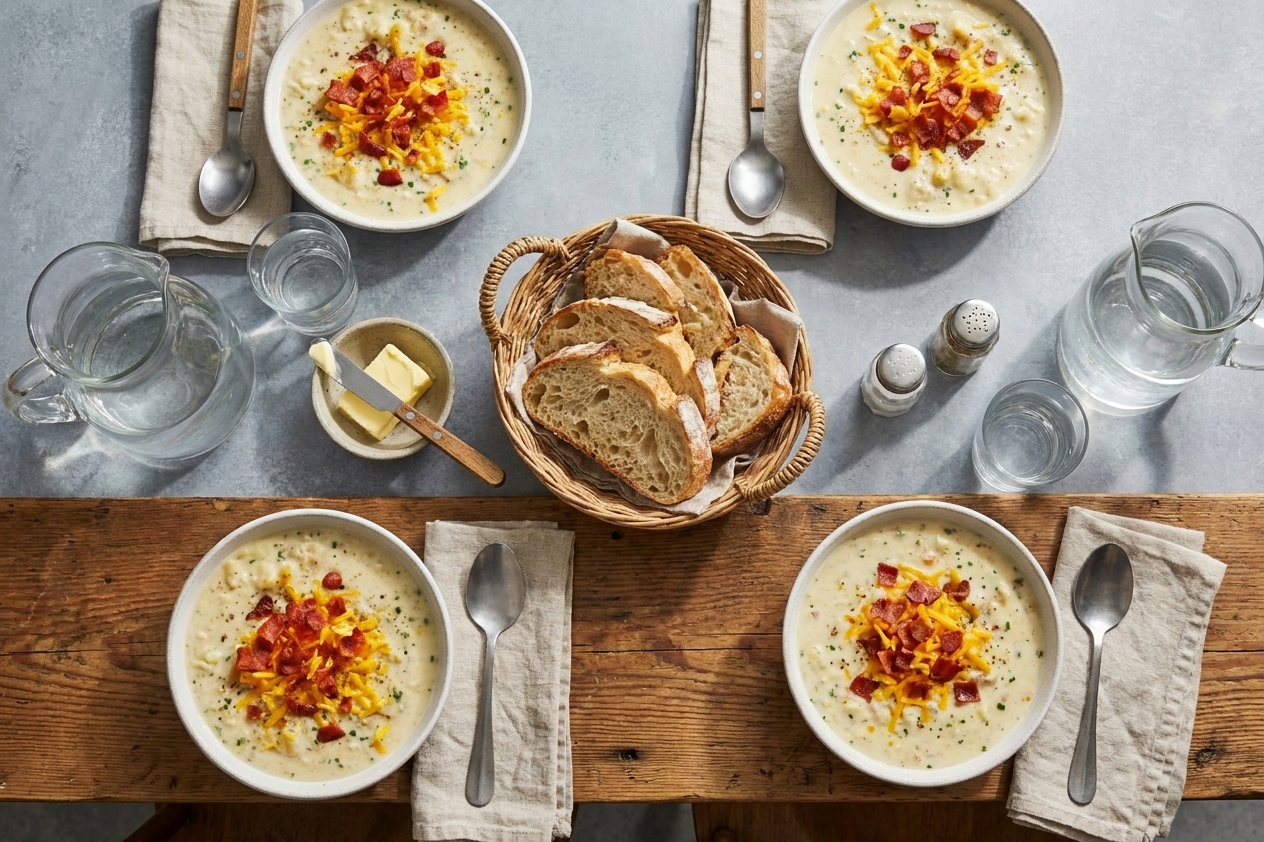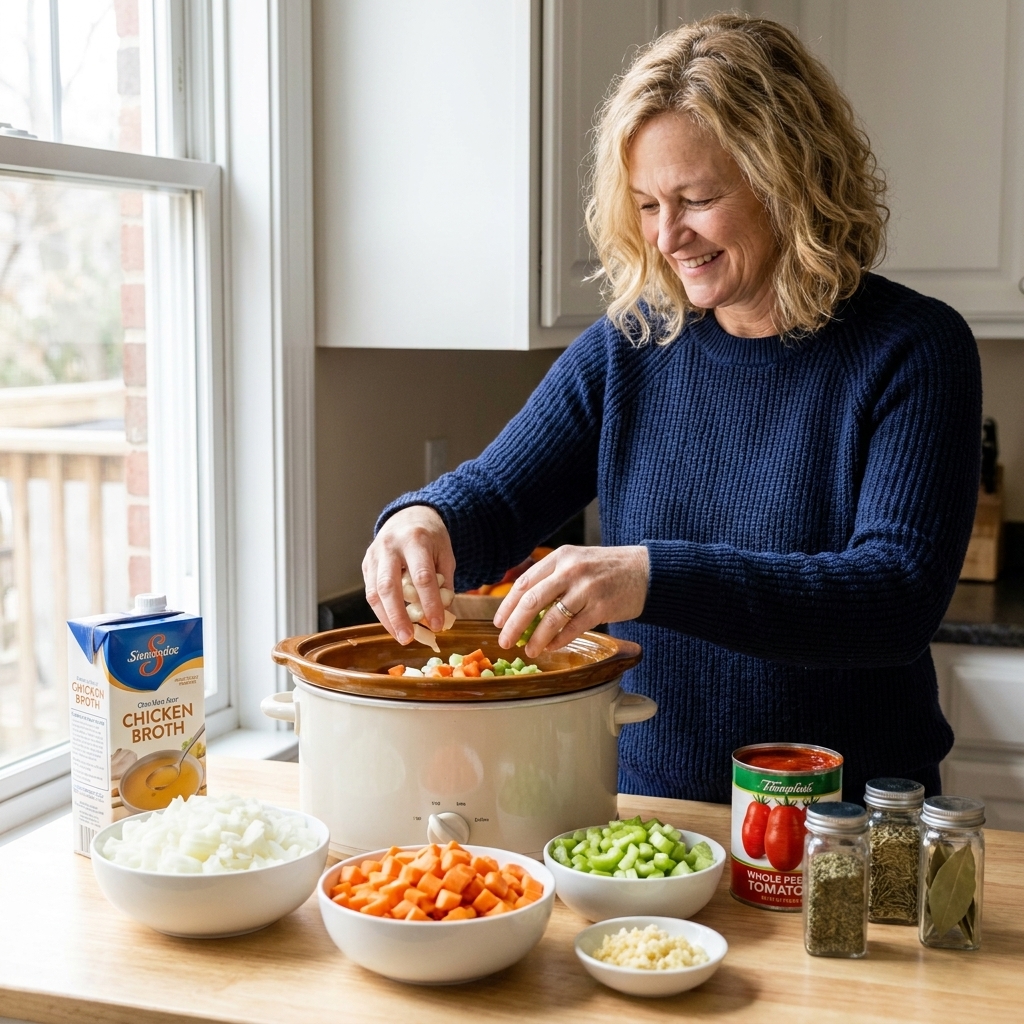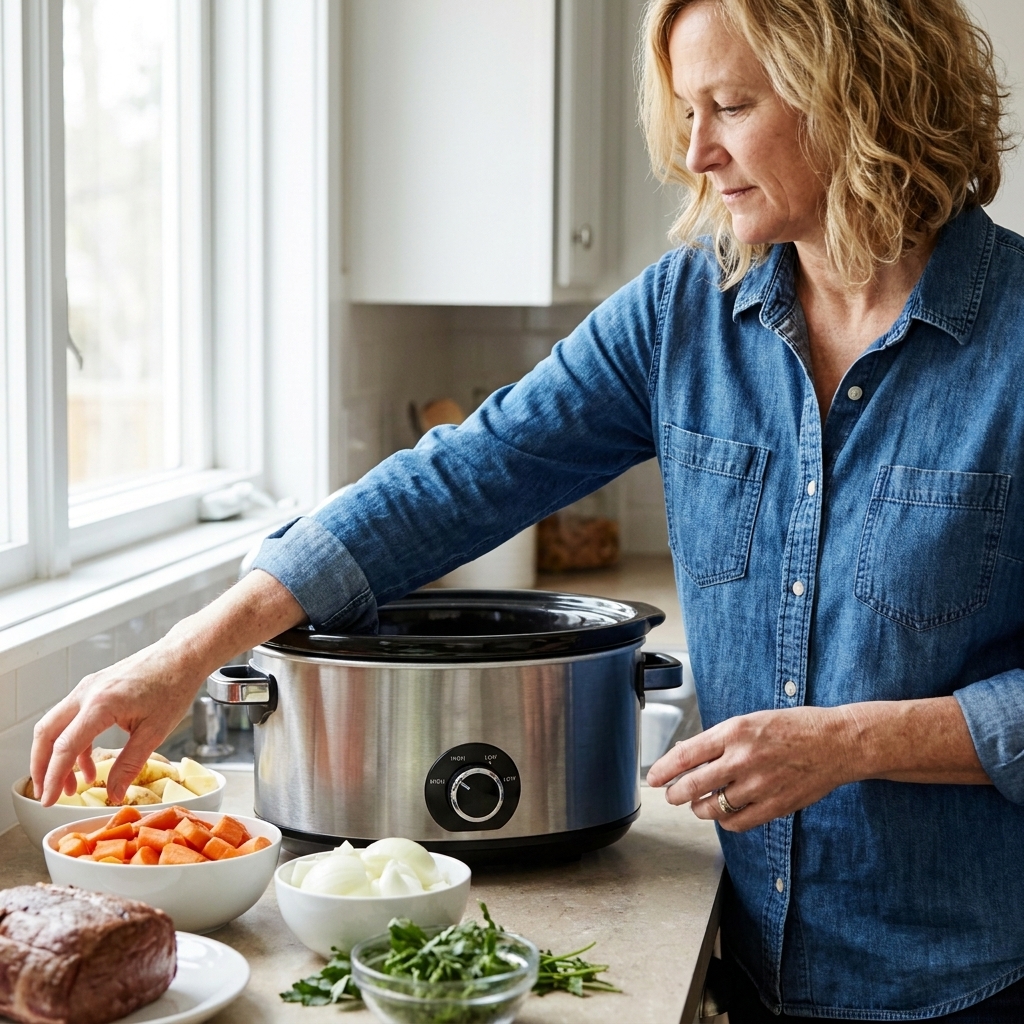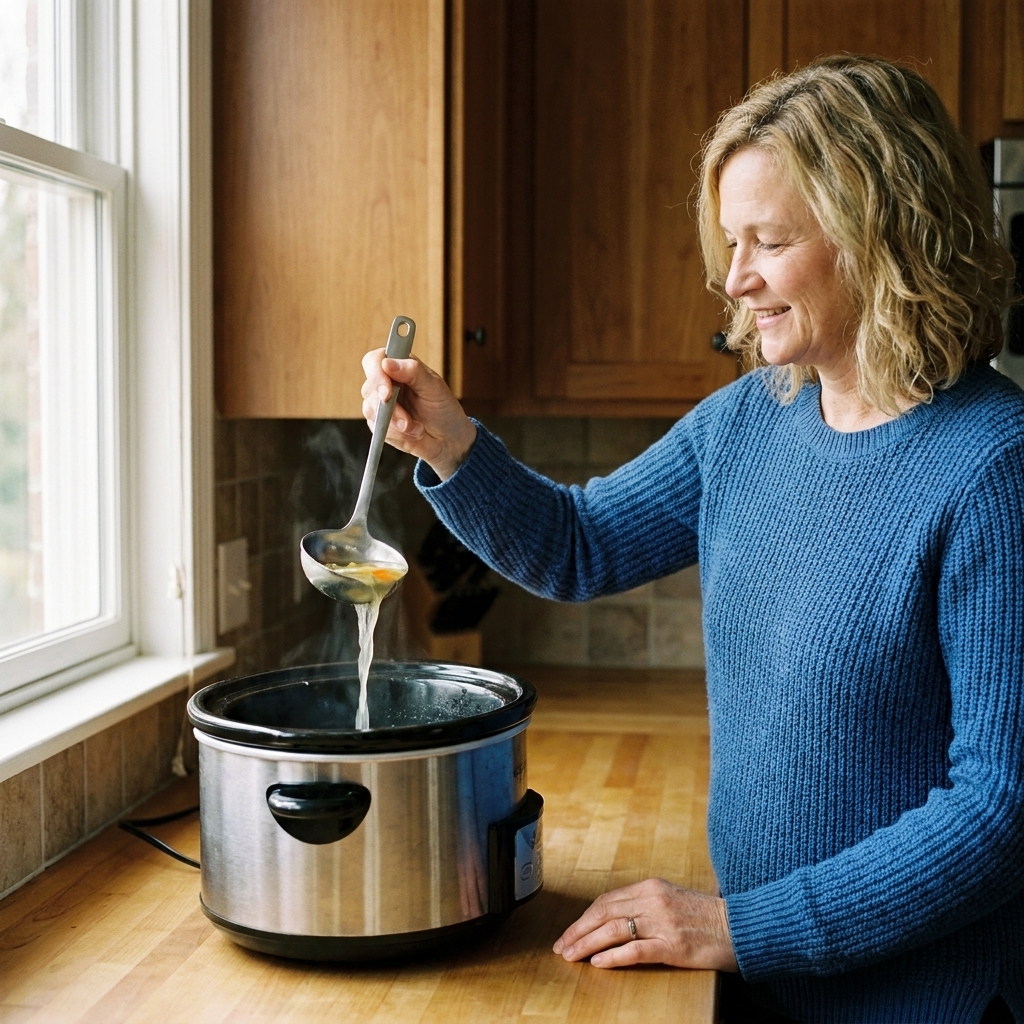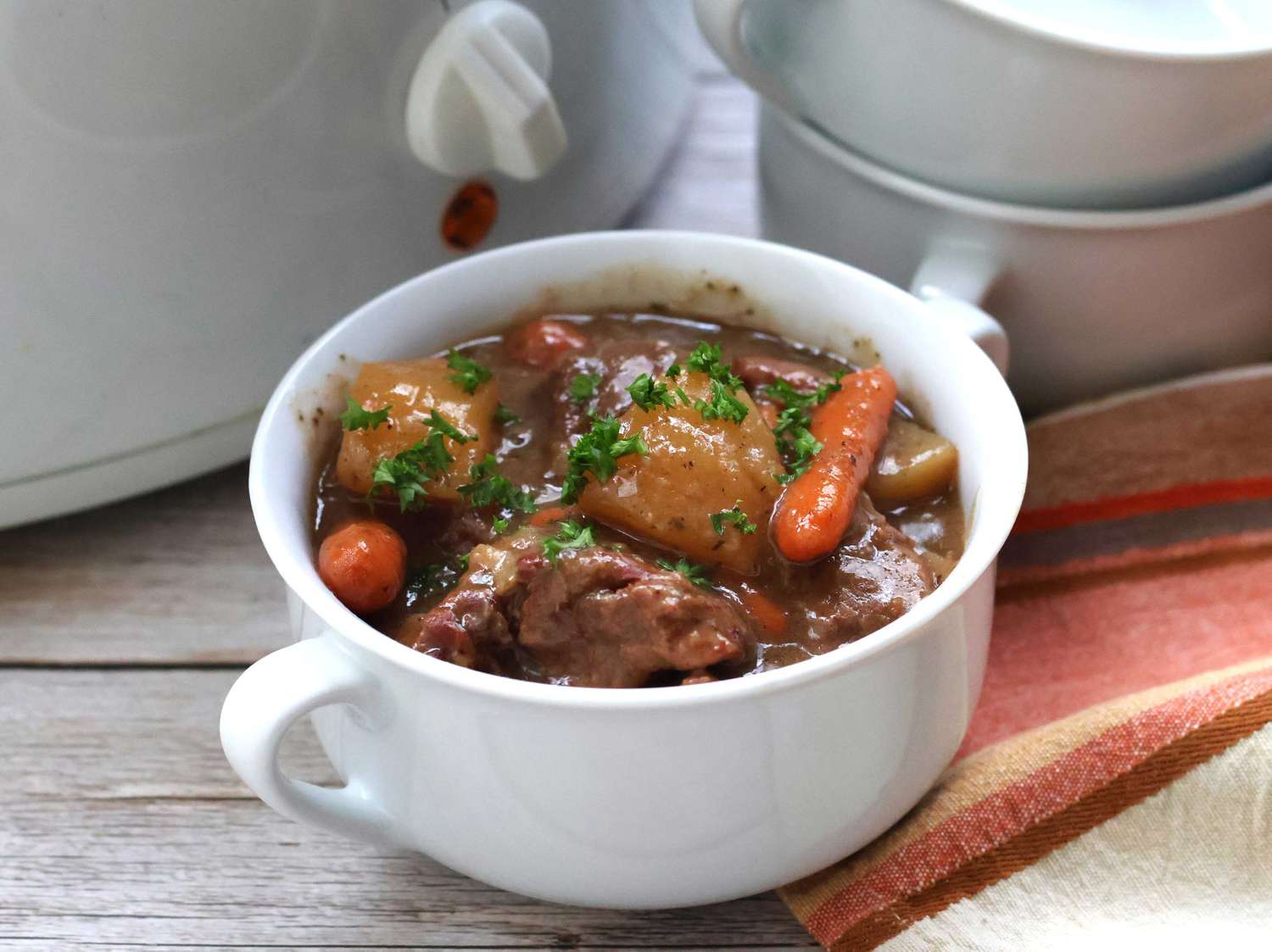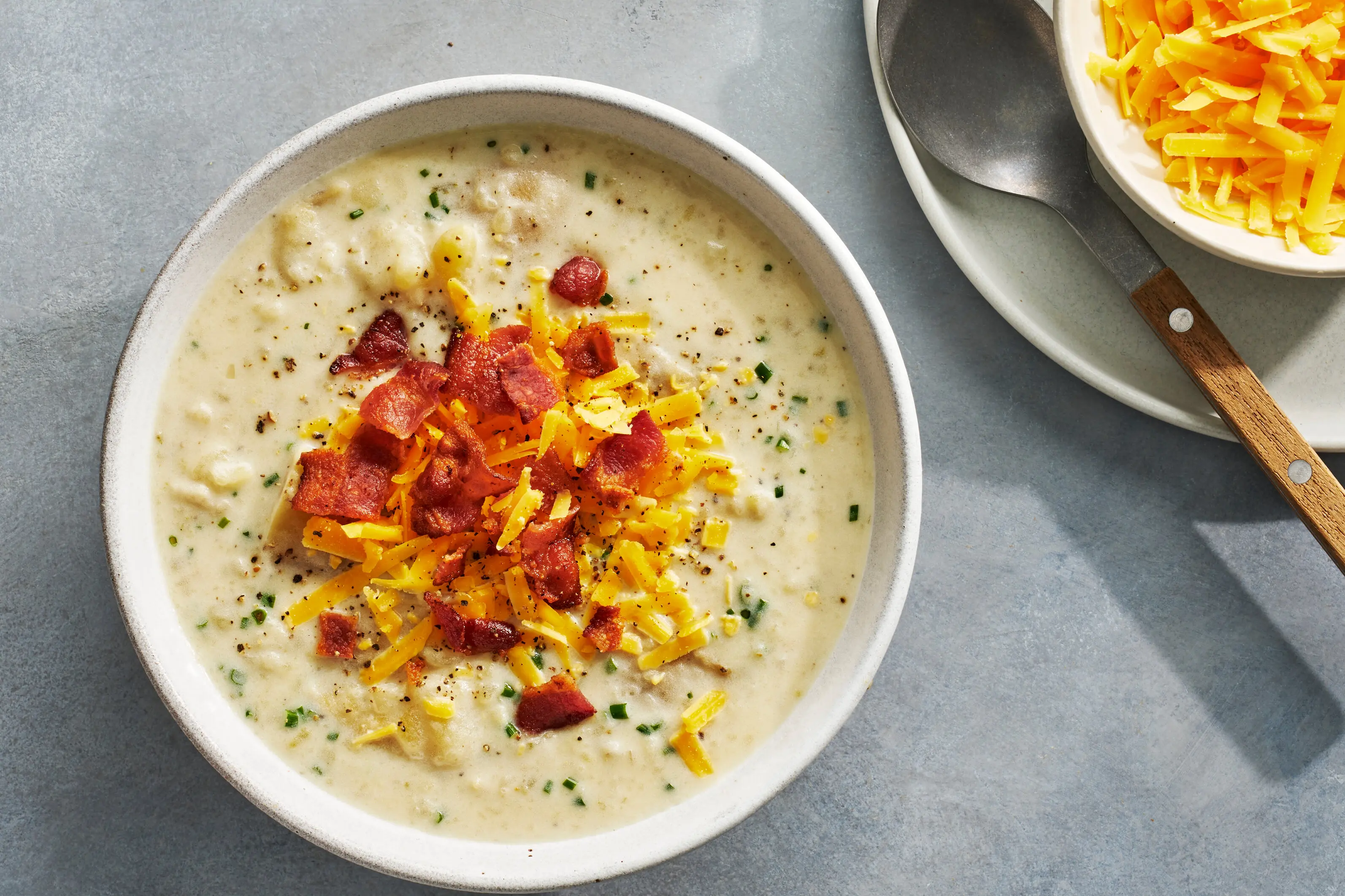
If you've ever lifted the lid on a slow cooker soup and found little white specks, a grainy texture, or a weird “broken” look, you didn't do anything wrong. Dairy is just picky in the slow cooker.
The good news is that preventing curdling is mostly about timing, plus a couple of easy ingredient choices. Here's the why behind it, and the best window for adding milk, cream, sour cream, yogurt, and cheese so your soup stays silky.
Why dairy curdles in a slow cooker
Curdling is basically dairy proteins (mostly casein) clumping together. In a slow cooker, a few common things encourage that clumping:
- Heat over time: Even on LOW, the edges can run hotter than you think, especially in long cooks.
- Acid: Tomatoes, wine, lemon juice, and vinegar can push dairy toward curdling.
- Rough handling: Hard boiling, aggressive whisking, and lots of stirring (especially once cheese is in) can contribute to graininess or separation.
- Lower fat dairy: Skim milk and reduced-fat products have less fat to buffer proteins, so they curdle faster.
The slow cooker’s superpower is long, hands-off cooking. Dairy’s enemy is too much heat exposure (especially with acid). So we let the soup do its thing first, then bring dairy in at the finish line.
The golden rule
For most slow cooker soups, add dairy during the last 15 to 30 minutes of cook time. That's usually long enough to warm everything through and blend flavors, but short enough to avoid hours of heat.
Slow cookers vary by model and how full the crock is, so use the time ranges below plus one simple cue: after dairy goes in, keep the soup below a simmer. If you like numbers, aim for roughly 160 to 180°F (71 to 82°C).
Maggie’s weeknight shortcut: I set a timer on my phone for 30 minutes before dinner. That's my “dairy window” reminder so I'm not guessing while hungry kids circle the kitchen.
When to add each dairy
Milk (whole, 2%, skim)
Best timing: Last 10 to 20 minutes on LOW, then switch to WARM if it starts bubbling.
Why: Milk has less fat, so it's the quickest to curdle, especially in acidic soups.
- Use whole milk when you can.
- If your soup is tomato-based or has wine or lemon, keep milk additions small or use cream instead.
- Warm the milk first (microwave or small saucepan) so the crock does not have to work hard to bring it up to temp.
Half-and-half
Best timing: Last 15 to 30 minutes.
Why: More stable than milk, but it can still break with long heat exposure or lots of acid.
Heavy cream
Best timing: Last 30 to 60 minutes.
Why: Higher fat makes cream more forgiving. This is my go-to for creamy slow cooker soups that cook all day.
Evaporated milk
Best timing: Last 30 to 60 minutes.
Why: Evaporated milk is heat-treated and generally more stable than regular milk. It's a great pantry option for chowders and creamy chicken soups.
Cream cheese
Best timing: Last 30 to 60 minutes, cut into cubes so it melts faster.
Why: It's fairly stable, but it can look lumpy if you toss in a whole block and walk away.
- Cube it and stir occasionally until smooth.
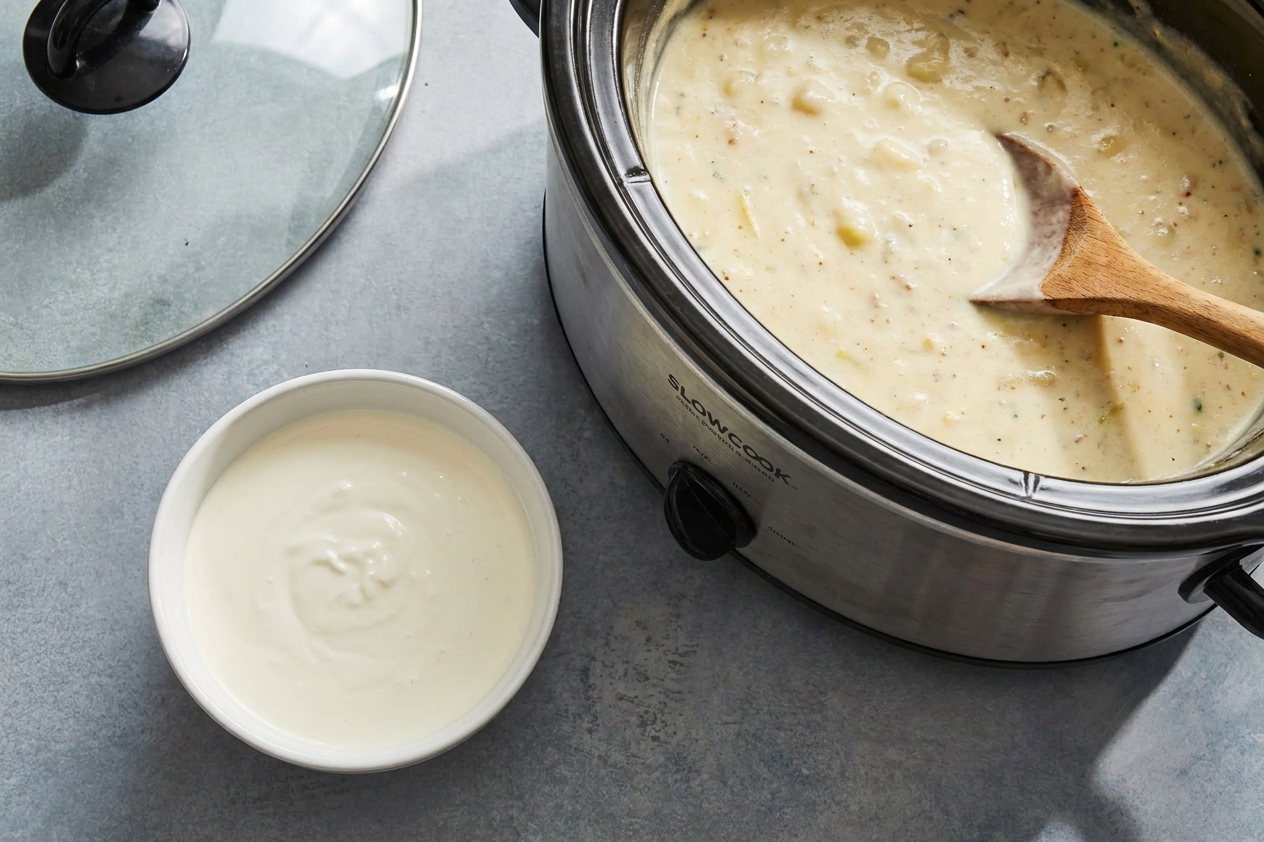
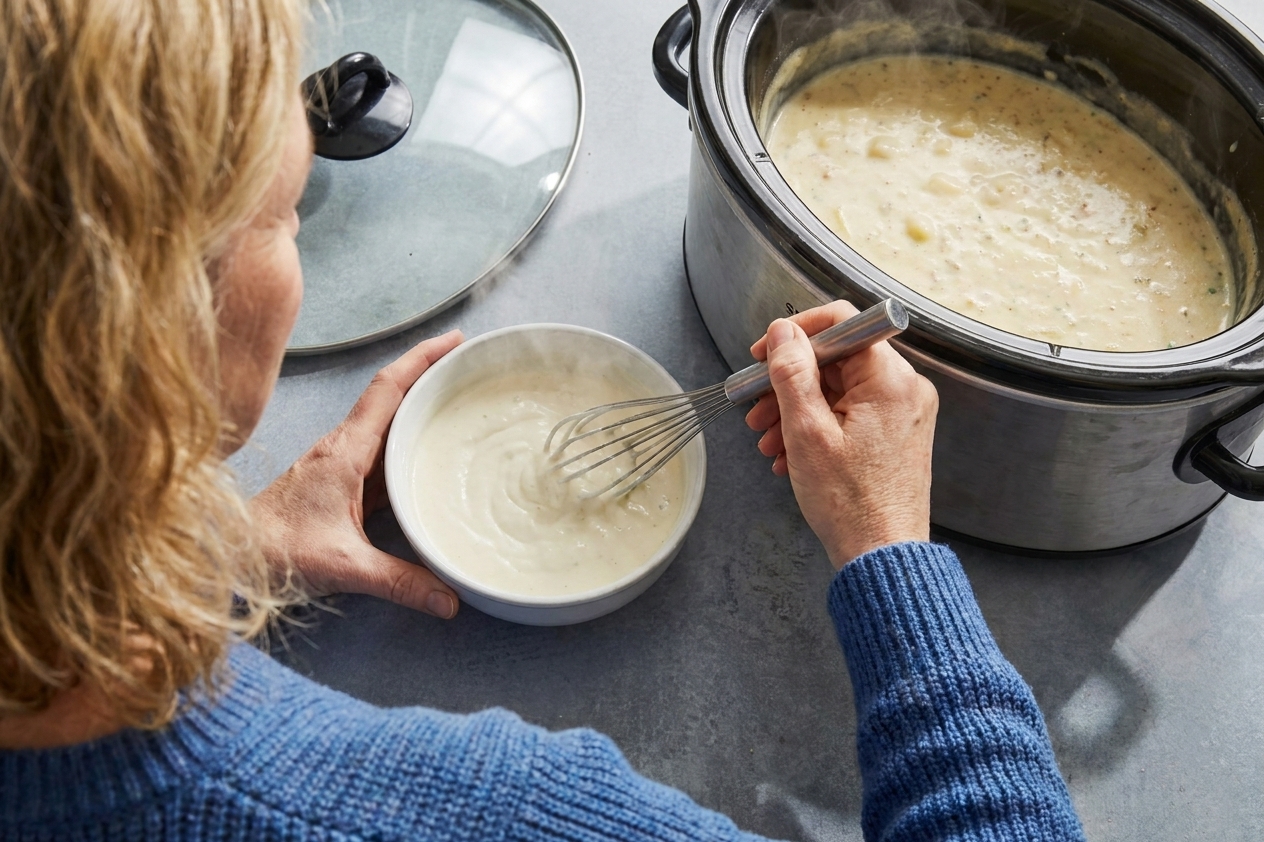
- For extra-smooth texture, soften and whisk with a ladle of hot broth in a bowl first, then stir back into the crock.
Sour cream
Best timing: Off heat or last 5 to 10 minutes on WARM.
Why: Sour cream is both acidic and delicate. It loves to curdle if it sits at a simmer.
- Temper it: Stir a few spoonfuls of hot broth into the sour cream in a bowl, then add that mixture back to the slow cooker.
- Full-fat sour cream holds up better than light.
Greek yogurt or plain yogurt
Best timing: Off heat or last 5 minutes on WARM.
Why: Yogurt is high-protein and tangy, which makes it especially prone to curdling when overheated.
- Use full-fat if possible.
- Temper yogurt before adding.
Cheese (cheddar, mozzarella, Parmesan, etc.)
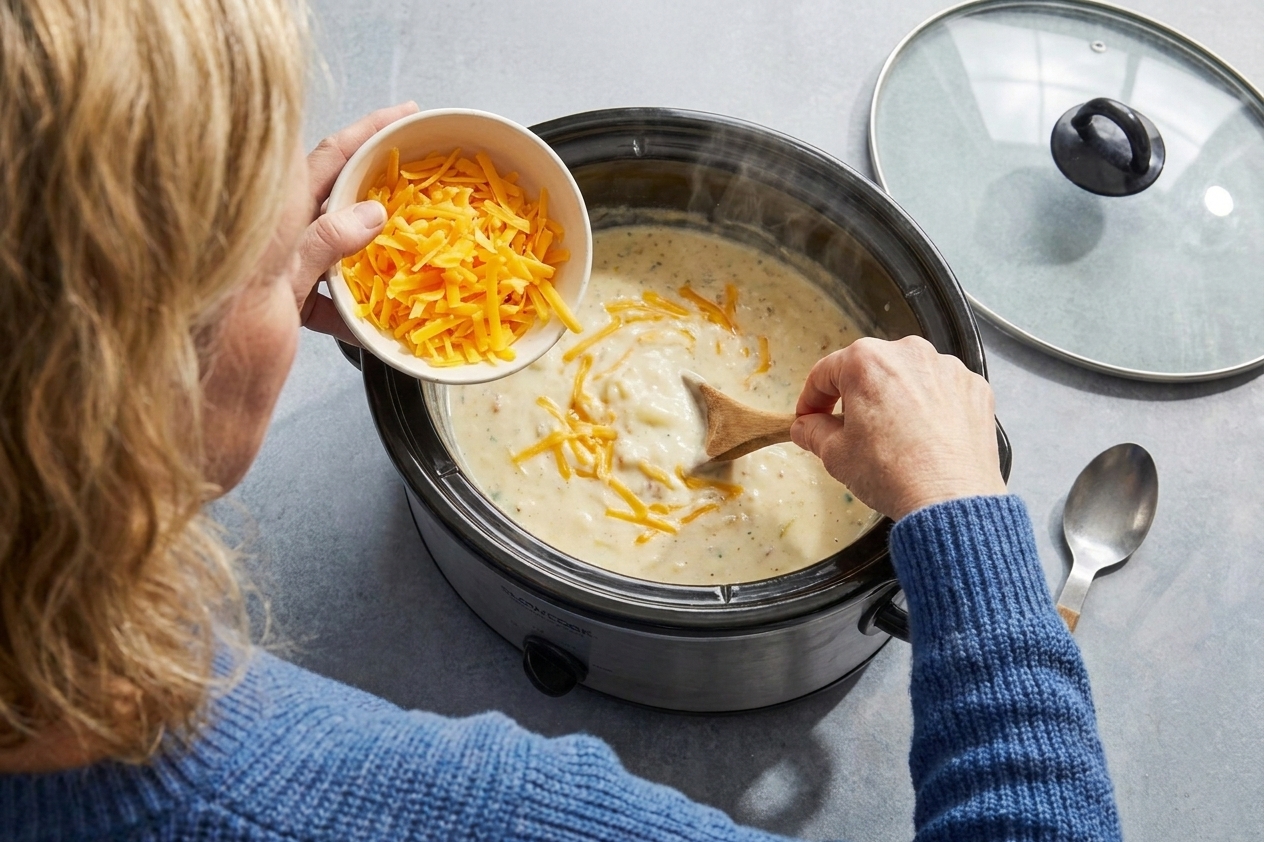
Best timing: Off heat or last 10 minutes on WARM, then stir until melted.
Why: Cheese can turn grainy or separate into oily clumps if it gets too hot or is cooked too long.
- Grate your own if you can. Pre-shredded cheese has anti-caking agents that can make soups less smooth.
- Add in small handfuls, stirring between additions.
- Optional pro move: toss grated cheese with 1 teaspoon cornstarch before adding to help it melt more smoothly.
- Parmesan rinds are great for flavor during cooking, but shredded Parmesan is best stirred in at the end.
Quick timing chart
- Milk: last 10 to 20 minutes
- Half-and-half: last 15 to 30 minutes
- Heavy cream: last 30 to 60 minutes
- Evaporated milk: last 30 to 60 minutes
- Cream cheese: last 30 to 60 minutes
- Sour cream: off heat or last 5 to 10 minutes on WARM (tempered)
- Yogurt: off heat or last 5 minutes on WARM (tempered)
- Shredded cheese: off heat or last 10 minutes on WARM
6 ways to prevent curdling
1) Keep it below a simmer
After dairy goes in, you want heat, not bubbling. If you see active bubbling around the edges, the crock is too hot for delicate dairy. Turn to WARM or even unplug for a few minutes, then add dairy.
2) Temper cold dairy
Tempering is easing dairy into heat. In a bowl, whisk the dairy with a ladle or two of hot broth, then stir that mixture back into the slow cooker.
3) Go higher-fat when the soup is acidic
Tomato soup, tortilla soup, minestrone, and anything with lemon or wine is a curdling hotspot. Heavy cream or cream cheese is usually your best bet.
4) Add acid early, dairy late
Let tomatoes, wine, and tangy ingredients simmer and mellow during the main cook. Add dairy at the end. If you want a bright pop of lemon, add it after the dairy is incorporated and the heat is off.
5) Be gentle when thickening
If you're thickening with a slurry (cornstarch + water) or adding potatoes that are breaking down, keep the heat gentle. Hard bubbling plus dairy is a classic grainy chowder situation.
6) Use a stabilizer when you need one
If you really want milk in an acidic soup, you can improve your odds by mixing it with a little starch first. Whisk 1 tablespoon cornstarch into 1 cup milk (no lumps), then add during the last 15 minutes and keep it on LOW or WARM.
If your soup already curdled
First, take a breath. Most “curdled” slow cooker soups still taste good, they just look a little less creamy. Here's what helps:
- Turn off the heat. Stop the bubbling right away.
- Blend it. An immersion blender can smooth out tiny curds (especially in vegetable soups). For chunkier soups, blend just a portion and stir it back in.
- Strain if needed. If there are larger curds you cannot blend out, pour through a fine-mesh strainer, then return the soup to the crock and gently rewarm.
- Rebuild creaminess. Stir in a splash of heavy cream or a spoonful of cream cheese off heat to improve texture.
- Do not re-boil. Once it breaks, more heat usually makes it worse.
Common soup situations
Creamy potato soup
Cook potatoes, broth, and aromatics all day. Blend part of the soup if you like it thicker. Add cream cheese or heavy cream in the last 30 minutes, keeping it below a simmer. Add shredded cheddar off heat.
Tomato soup with dairy
Let tomatoes cook fully first. Puree until smooth. Turn to WARM and make sure it's not actively bubbling. Stir in heavy cream slowly. Milk can work, but temper it and keep the heat very gentle.
Chicken tortilla soup with a creamy finish
Keep the base dairy-free. At serving, add a dollop of sour cream or Greek yogurt to each bowl (this is the easiest no-curdle method).
Chowder (corn, clam, seafood)
Chowders hate boiling. Keep it below a simmer to protect both the dairy and the seafood. Add evaporated milk or cream near the end, and add seafood at the end too so nothing overcooks.
FAQ
Can I add dairy at the beginning if I cook on LOW?
I wouldn't. LOW is still warm enough to break milk and cheese over a long cook, and many slow cookers run hotter than they used to. If a recipe truly needs dairy from the start, heavy cream is the safest choice, but it's still better late if you can manage it.
Is it safe to add cold milk or cream straight from the fridge?
Food safety-wise, yes. Texture-wise, it's riskier because it cools the pot and can make the dairy harder to blend in smoothly. I prefer to warm or temper it, then keep the soup below a simmer.
Does slow cooker size matter?
It can. A smaller slow cooker filled high can heat more aggressively at the edges. In any size, once dairy goes in, keep the heat gentle and do not let it bubble.
Can I use non-dairy milks?
Some can work, but they behave differently by brand and formulation (fat, protein, stabilizers). Unsweetened oat milk and coconut milk are often more stable than almond milk. Add them at the end just like dairy, and avoid boiling.
What about canned cream soups (like cream of chicken)?
They're usually formulated to be stable, but I still prefer adding them in the last 30 to 60 minutes for the best texture and to prevent any scorched flavor around the edges.
The takeaway
If you remember nothing else, remember this: let the soup cook, then add dairy late and keep the heat gentle. That one habit will save you from nearly every curdled slow cooker situation.
And if you do end up with a slightly broken soup on a hectic night, you're still feeding your people. Smooth it if you can, ladle it up, and call it a win.