Why cheese dips burn in a crockpot
Cheese dip feels like it should be the easiest party food: dump, melt, serve. But dairy is a little dramatic in the slow cooker, and slow cookers themselves vary a lot by brand, age, and how hot they run. Most scorched queso and grainy spinach artichoke dip comes down to a few predictable problems.
- Too much heat for too long. “Low” on many crockpots is still hot enough to dry out and darken the edges after a couple of hours. On some models, even Warm can run hotter than you expect.
- Hot spots around the crock insert. The perimeter heats first and hardest, so the rim is where scorching starts.
- Not enough moisture or emulsifier. Pure shredded cheese plus heat can turn oily or clumpy without something to help it stay smooth.
- Leaving the lid off. Dips thicken fast as steam escapes, and thicker dip scorches faster.
The good news: once you understand those four, keeping cheese dip warm becomes mostly a temperature and routine game.
The best temperature setup for all-day queso
My “melt first, then hold” method
If I could tape one rule to every crockpot, it would be this: use higher heat only long enough to melt, then drop to Warm. Most burning happens when a dip sits on Low for hours, and on hotter slow cookers, it can happen on Warm too.
- Step 1: Preheat the crockpot. Turn it to High for 10 minutes (with the lid on) while you gather ingredients. This reduces the temptation to crank heat later.
- Step 2: Melt briefly. Add your dip and heat until fully melted, stirring every 10 to 15 minutes. Timing varies with volume, starting temperature, ingredients, and cooker wattage, but it is often about 30 to 60 minutes on High or 60 to 90 minutes on Low.
- Step 3: Switch to Warm for serving. As soon as it is smooth, move to Warm. Stir, scrape the edges, lid back on.
What Warm really means
Warm is meant for holding, not cooking, which is exactly what we want for dairy based dips. The catch is that Warm is not identical across brands, and some slow cookers run hot enough to keep cooking even on Warm. If you are holding dip for more than a quick snack window, a thermometer is your best friend.
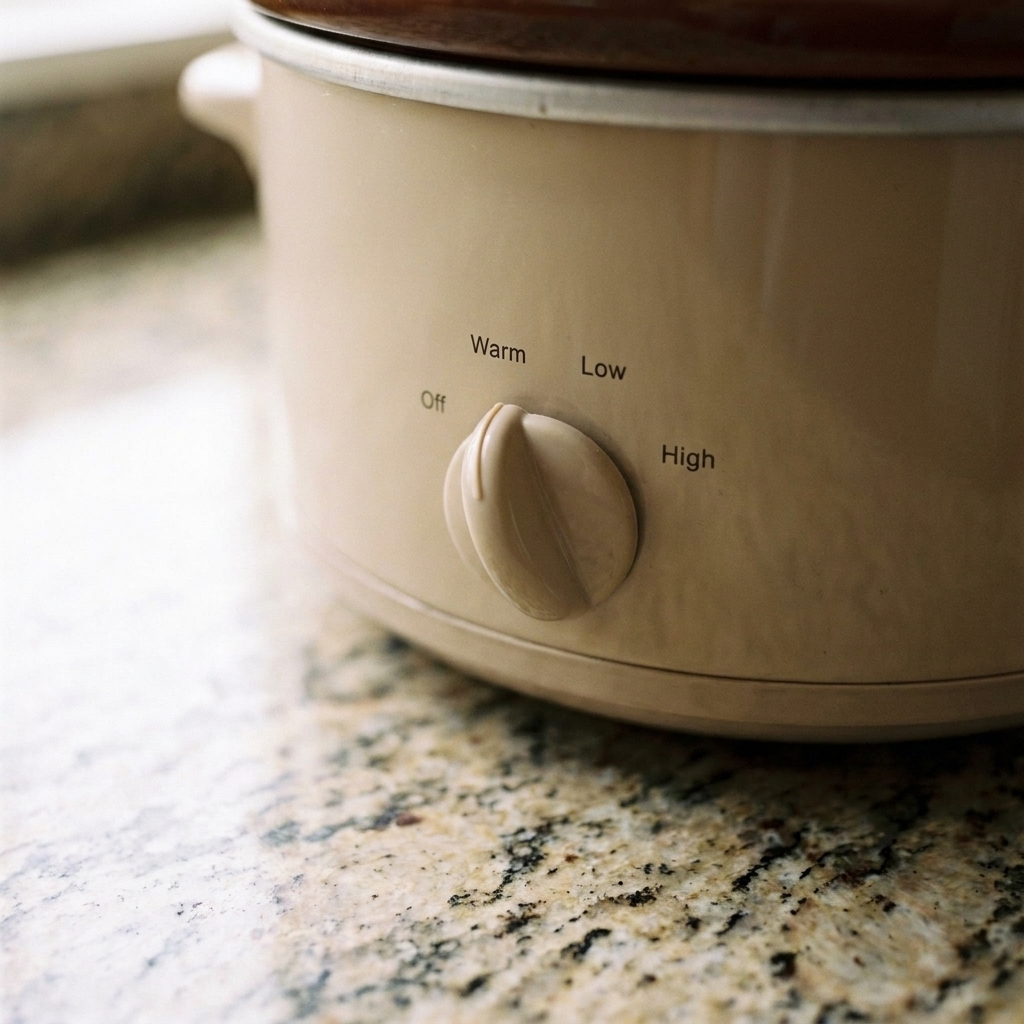
If your crockpot does not have Warm
You can still host queso night. Try one of these:
- Use Low plus a buffer. Create a little insulation (see the “water bath” method below) and stir more often.
- Cycle it. Turn it to Low to re-melt if needed, then turn it off for 10 to 15 minutes with the lid on, then back to Low briefly. This works surprisingly well for shorter parties.
3 no-burn tricks for hot slow cookers
1) Water bath method
This is my favorite “my crockpot is a furnace” fix. You are basically creating a makeshift double boiler inside the slow cooker.
- Pour 1 to 2 inches of hot water into the crock.
- Set a heat-safe, stable bowl (ceramic or stainless) inside the crock so it sits level and will not tip when stirred.
- Add dip to the bowl, then cover the slow cooker with the lid and heat on Warm or Low.
A few practical notes: do not overfill the water, avoid splashing water into the dip when you stir, and use care when moving the insert because hot water sloshes. Done right, the water softens the heat and prevents scorched edges. Bonus: it helps dips stay glossy instead of greasy.
2) Foil ring (optional)
If you are serving directly out of the crock insert and the edges always scorch first, you can experiment with this: roll a long piece of foil into a thick rope and press it into a ring around the inside edge above the dip line, like a little bumper. It can reduce direct edge heating in some cookers, but it is not a miracle fix. If it gets in the way of stirring or serving, skip it and lean on Warm plus stirring instead.
3) Smaller crockpot, fuller crock
A nearly empty crockpot is more likely to scorch because the dip is spread thin along the sides. If you are making a small batch, use a 2 to 3 quart slow cooker instead of a big 6 quart model. As a general rule, aim to keep the crock at least one-third full while holding.
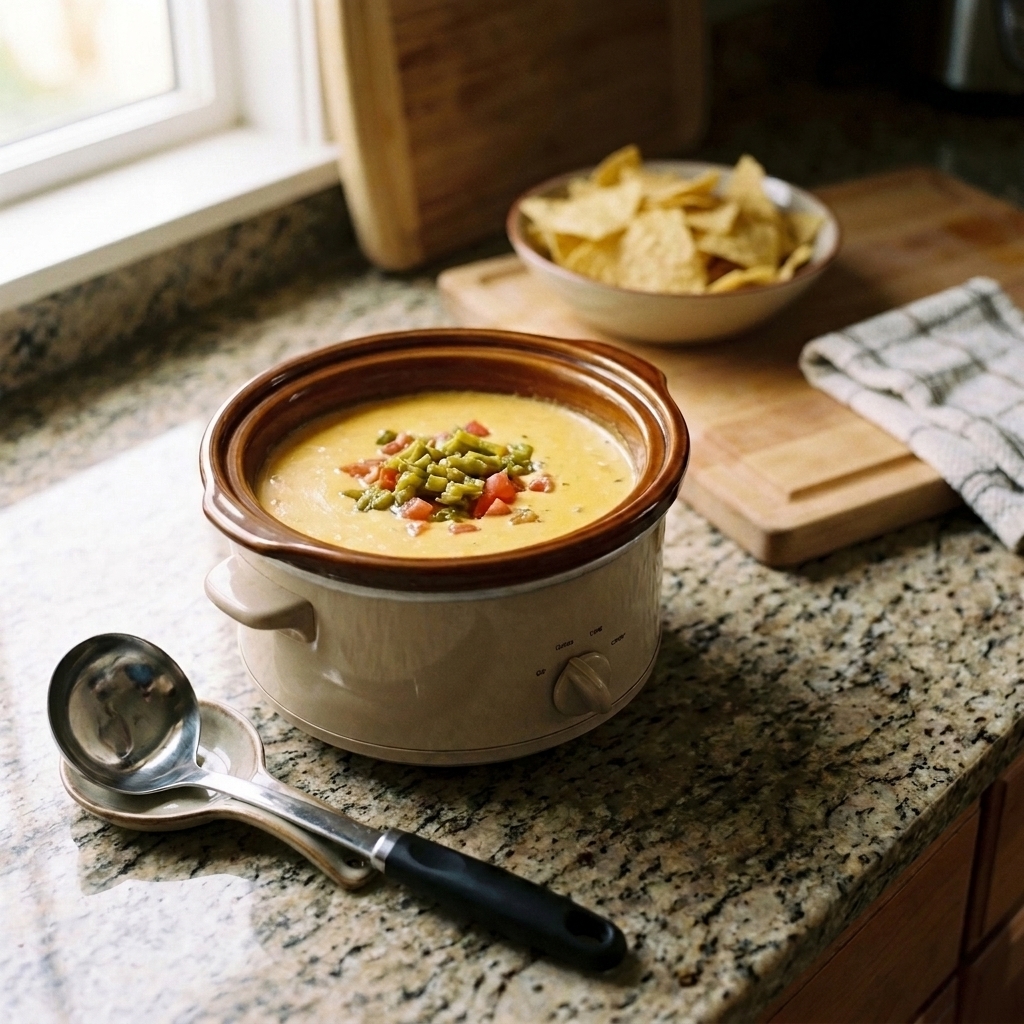
A stirring schedule that works
I love a set-and-forget recipe, but cheese dip is a “set and check” situation. The goal is to scrape the edges before they darken and to keep the texture silky. Steam helps, but thickness and the amount of dairy proteins also affect how fast a dip scorches, so the thicker the dip, the more it benefits from a quick stir.
- During melting: stir every 10 to 15 minutes.
- Once on Warm: stir every 20 to 30 minutes.
- If guests are serving constantly: you can stretch to 30 to 40 minutes, since frequent scooping naturally mixes things.
My personal habit is to stir whenever I walk by with a fresh bag of chips or refill drinks. It is a simple cue that keeps the dip perfect.
Ingredients that stay smooth
Some cheese dips behave beautifully for hours. Others need a little support. If your recipe tends to split, go grainy, or get oily, these ingredients help stabilize it.
Pick a melting cheese
- Best for slow cooker dips: American cheese, processed cheese melts, Monterey Jack, young cheddar, mozzarella, Oaxaca.
- Use sparingly: aged cheddar, Parmesan, feta. They are delicious but can turn gritty if they are the main cheese.
If you love sharp cheddar flavor, do half melty cheese and half cheddar. You get the flavor without the texture problems.
Add a creamy base
- Evaporated milk is my MVP for queso. It helps emulsify and stay silky.
- Heavy cream adds richness and helps prevent tightening.
- Cream cheese stabilizes dips like spinach artichoke and jalapeño popper style dips.
Acid can break cheese
Tomatoes, salsa, lime juice, and other acidic ingredients can encourage curdling with some cheeses. If your dip has a history of getting grainy, melt the cheese and creamy base first, then stir in salsa or tomatoes once it is smooth. Using a processed or melt-friendly cheese also makes acidic add-ins much easier to handle.
A note on pre-shredded cheese
Pre-shredded cheese is super convenient, but it often contains anti-caking agents that can make sauces feel a touch grainy. If you want the smoothest possible dip for long holding, shred your own. If you do not have time, no guilt. Just lean on a creamy base (evaporated milk or cream cheese) and stir a bit more.
Optional: sodium citrate for ultra-smooth queso
If you want a queso that is extremely stable, sodium citrate is the behind-the-scenes trick. A common range is about 1 to 2 percent of the weight of the cheese. It helps the sauce emulsify so it stays smooth even with longer holding. It is optional, but it works.
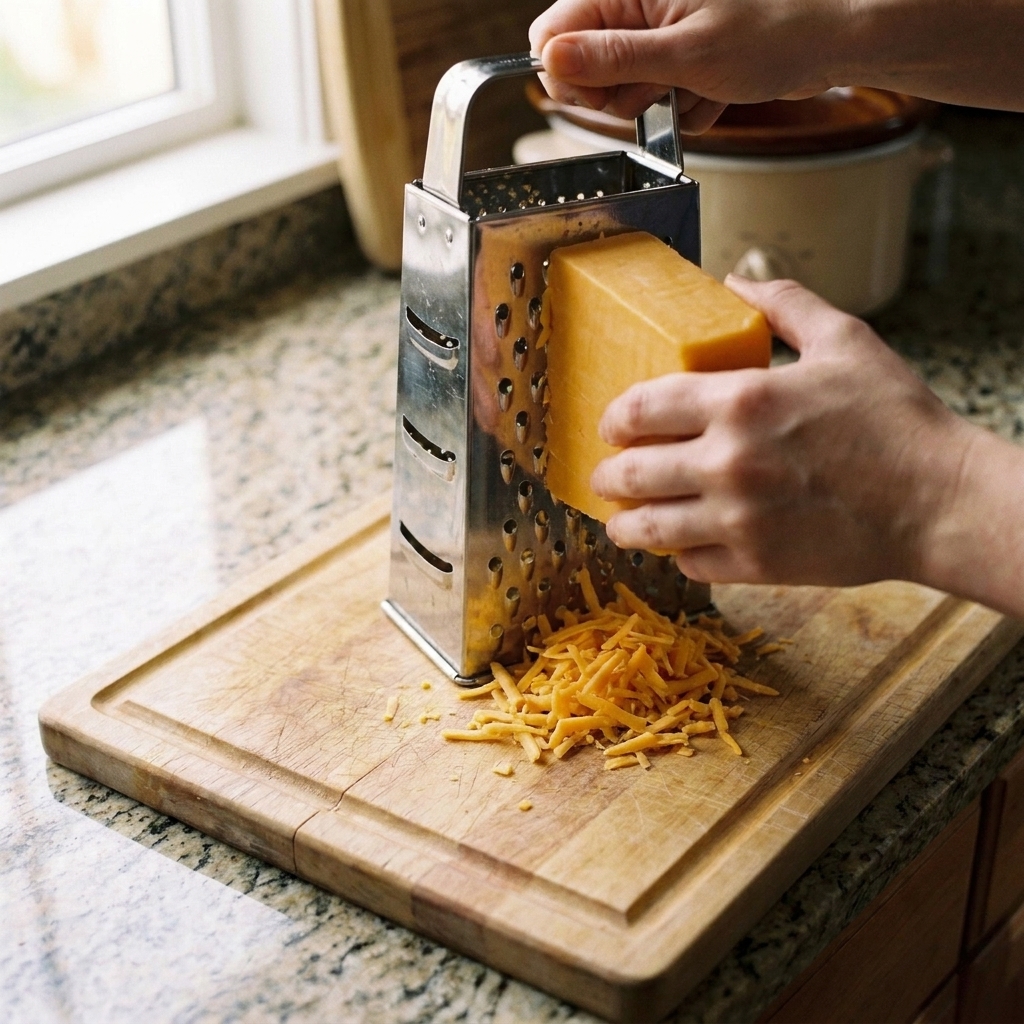
Keep queso warm without drying out
Keep the lid on
Every time the lid stays off, steam escapes. Steam is moisture. Moisture is your insurance against scorching, along with reasonable heat and occasional stirring. I leave the lid on, stir quickly, then close it again.
Use the right serving tool
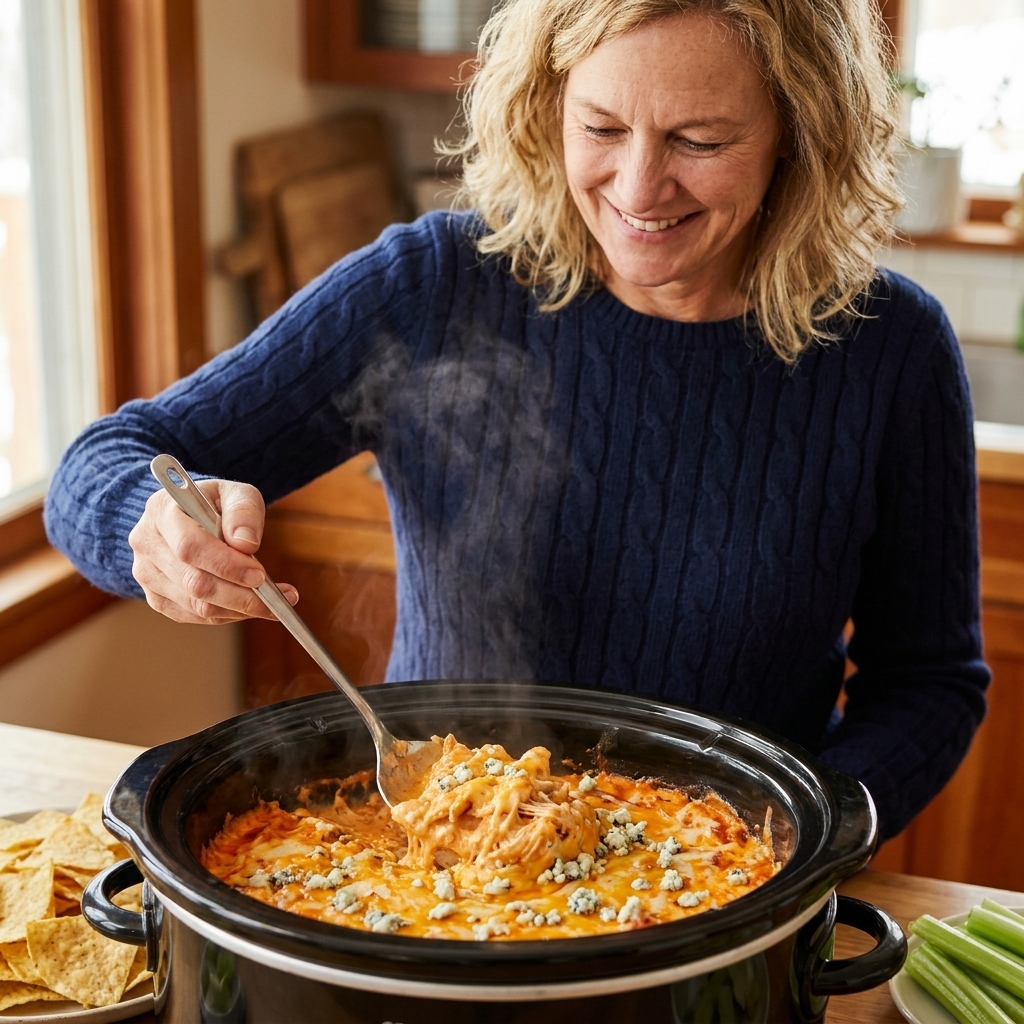
Skip tiny spoons that encourage people to scrape the sides (that is where scorching lives). A small ladle or larger spoon helps guests scoop from the center.
Thin it early
If you know you will be holding the dip for a while, start slightly looser than you want. Warm holding thickens most dips over time. You can always let it sit with the lid off for a couple minutes to tighten, but it is harder to revive a thick, overcooked ring around the edges.
Quick fixes
If it is getting too thick
- Stir in warm evaporated milk, warm milk, or warm cream a splash at a time.
- Turn to Warm (or Off) and let it relax for 5 minutes, lid on.
If it looks oily or separated
- Lower the heat immediately.
- Whisk or stir vigorously, scraping the sides.
- Add a small amount of cream cheese or a splash of evaporated milk to help it come back together.
If the edges are browned or scorched
Do not stir the burnt bits into the dip. Instead:
- Scoop the good dip from the center into a clean bowl.
- Wipe out the crock (carefully, it is hot).
- Return the dip and hold on Warm with a bit of added liquid.
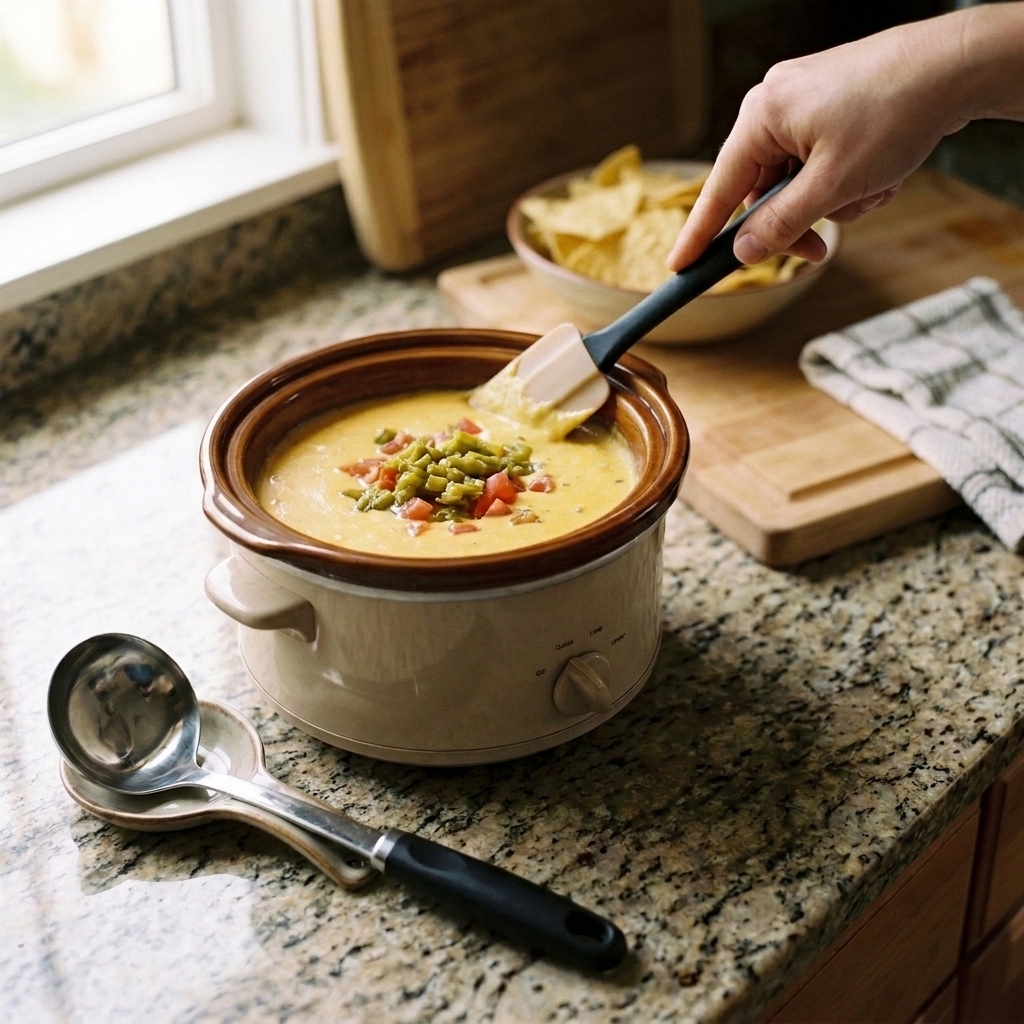
Food safety
This is the part people skip until they should not. The only way to know your dip is being held safely is to check the temperature.
- Target temperature: For hot holding, aim to keep queso and other hot dips at 140°F / 60°C or higher.
- How to check: Use an instant-read thermometer and probe the center of the dip, not the edge (the edge can be hotter and give you false confidence).
- Danger zone rule: If the dip sits between 40 to 140°F / 4 to 60°C for more than 2 hours total, it is time to discard it. If it is a very hot day or the party is outdoors, be more conservative.
Helpful habits for long events:
- Start hot. Fully melt and heat through before serving.
- Do not add cold ingredients late. If you want to add cooked meat or extra salsa, warm it first.
- Replace the batch for marathon hosting. For an all-day open house, consider swapping in a fresh batch midway rather than holding the same dip forever.
When in doubt, keep the lid on and briefly bump to Low to reheat, then return to Warm.
Best crockpot setup
My favorite hosting kit
- 3-quart slow cooker for most queso and buffalo chicken dip batches.
- 6-quart only when doubling for a crowd.
- Silicone spoon or spatula for scraping edges clean.
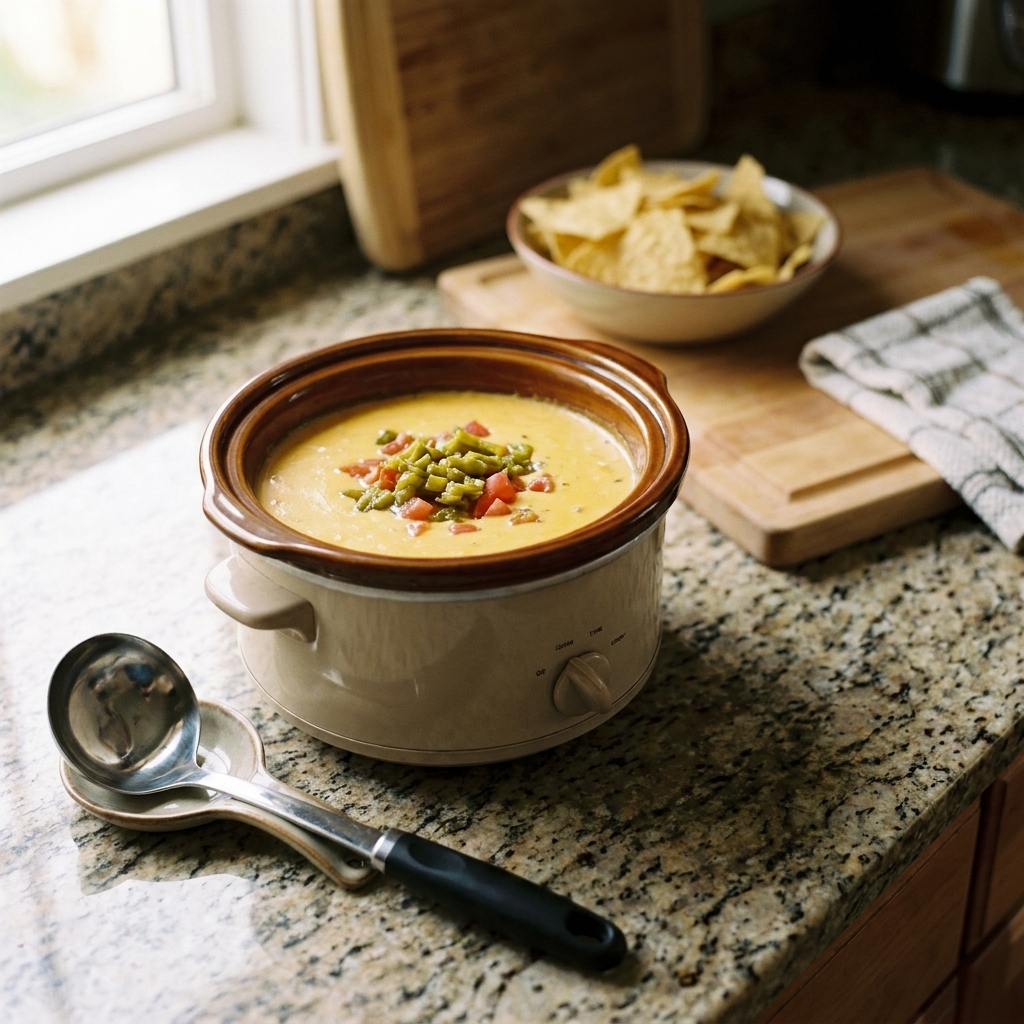
- Ladle for serving (less side-scraping).
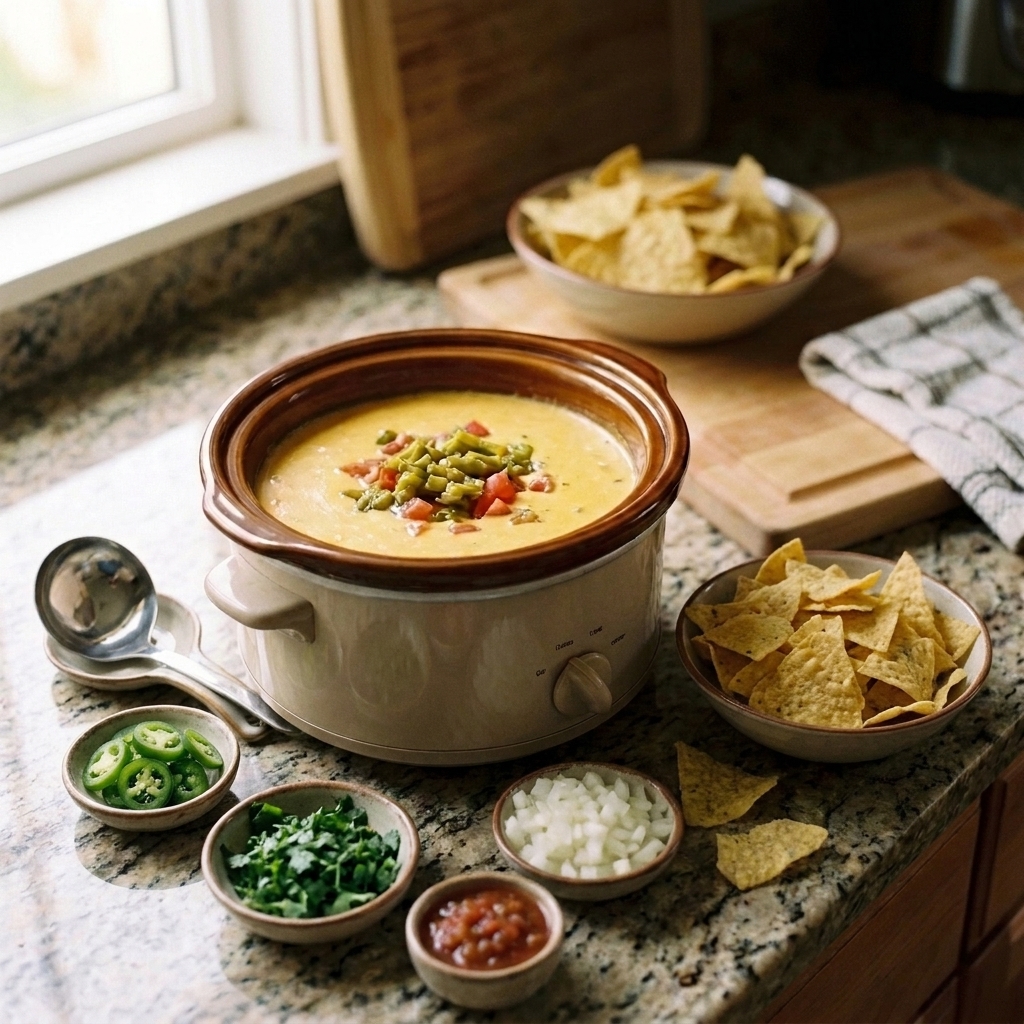
My holdable queso formula
If you want a cheese dip that stays smooth for hours, this is the style I trust most for potlucks and game days:
- Melty cheese base: American cheese or a melt-friendly cheese blend
- Creamy liquid: evaporated milk
- Flavor: diced green chiles, salsa, taco seasoning, or cooked chorizo
Melt on High with frequent stirring, then hold on Warm. If it thickens, splash in warm evaporated milk and stir. It is forgiving and it buys you time, which is the whole point.
FAQ
Can I use a crockpot liner for cheese dip?
You can, and it does make cleanup easier. For burning prevention, liners are not magic, but they can slightly reduce sticking on the sides. The bigger difference still comes from holding on Warm and stirring occasionally.
Why did my queso turn grainy?
Most often it is heat that is too high for too long, using mostly aged or sharp cheeses, or adding acidic ingredients early. Lower the heat, add a splash of warm evaporated milk, and stir well. Next time, use more melt-friendly cheese, melt the base first, then add salsa, and switch to Warm as soon as it is smooth.
How do I keep spinach artichoke dip from browning on the edges?
Spinach artichoke dip is thick, so it scorches faster. Keep it on Warm, stir and scrape the edges every 20 to 30 minutes, and consider loosening it with a little extra cream cheese or a splash of warm cream before the party starts.
Should I serve on Low or Warm?
Warm almost always wins for cheese dips. Use Low only to reheat briefly if it cools down, then switch back to Warm.
No-burn checklist
- Melt first, then hold on Warm.
- Keep the lid on, stir every 20 to 30 minutes.
- Use a smaller crockpot for small batches.
- Build in an emulsifier: evaporated milk or cream cheese.
- If your cooker runs hot, try the water bath method.
- For long parties, verify the center stays at 140°F / 60°C+.
If you take nothing else from this guide, take this: cheese dip does not need more heat, it needs gentler heat and a little attention. That is the sweet spot where queso stays smooth for hours and nobody is chiseling scorched cheese off the sides of the crock.