If your slow cooker one-pot dinners keep coming out watery, bland, or weirdly overcooked, it is not you. It is usually one small habit that snowballs over a long cook time. I taught middle school for years, so I am very familiar with the concept of tiny choices having big consequences by 5 PM.
Below are the five mistakes I see most often, plus the fixes that make dinner taste rich and cozy again. No perfection required, just a couple smarter moves that take the same amount of effort.
1) Using stovetop liquid amounts
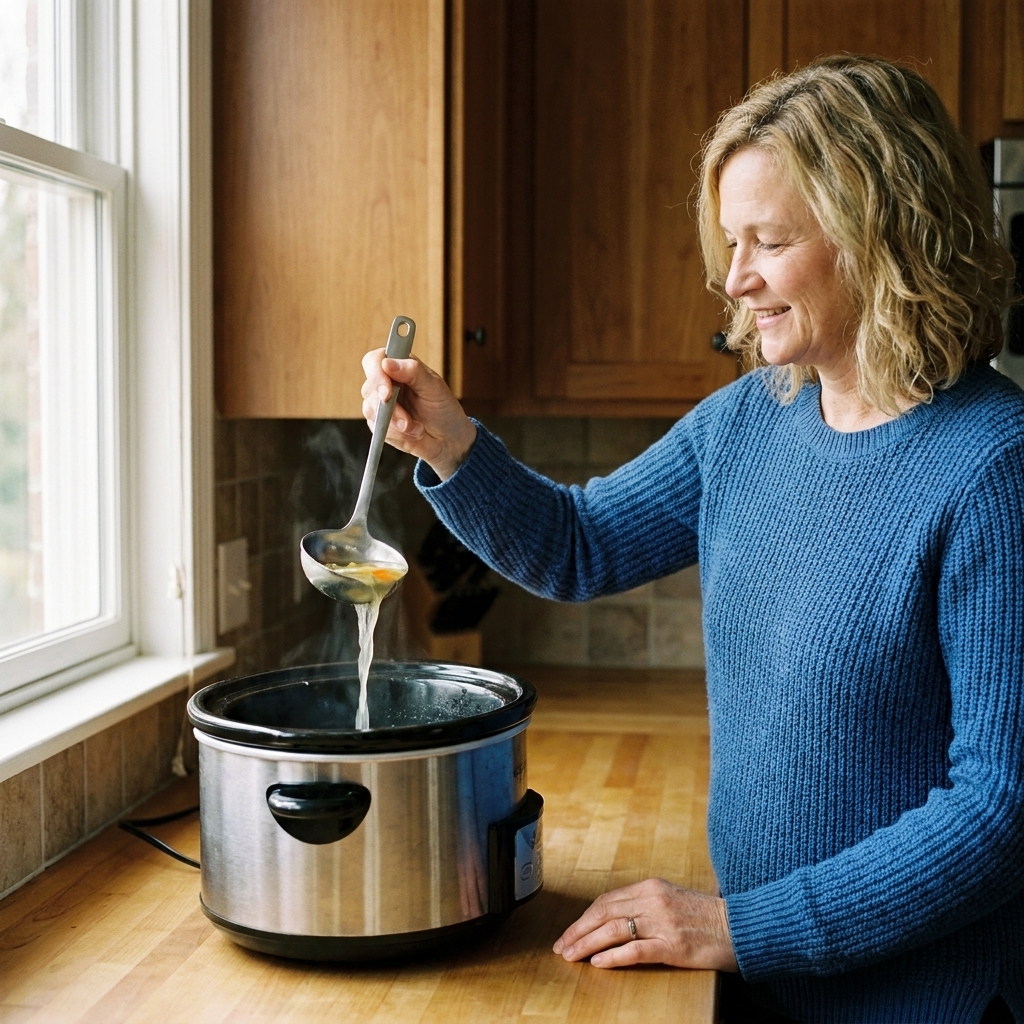
What goes wrong: The slow cooker is a closed, steamy environment. You do not get much evaporation, so that “2 cups broth” you would simmer down on the stove can turn into a soupy sauce by dinnertime.
The fix: Start with less liquid than you think you need, especially for one-pot meals where veggies and meat release moisture as they cook.
- Rule of thumb: When converting a stovetop one-pot meal to the slow cooker, try reducing broth or water by about 25% to start. In some recipes and some machines, you can reduce up to around 50%, but start at 25% first and adjust next time so you do not end up with a too-thick sauce or scorching around the edges.
- For casserole-style dishes (chicken and rice, creamy pasta, etc.), add liquid gradually and keep it on the cautious side.
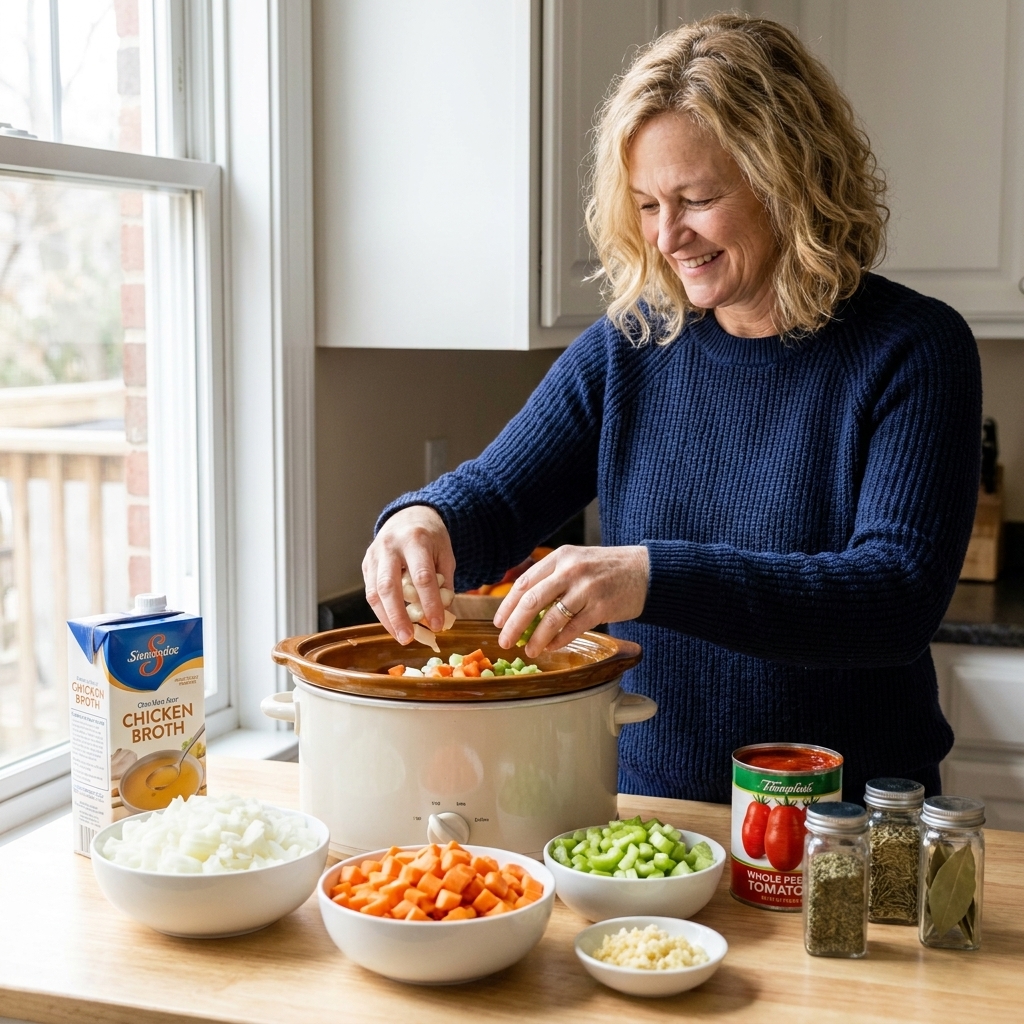
- Skip extra water if you are using canned tomatoes, salsa, condensed soup, or frozen vegetables. Those all bring liquid.
- If you need to add more later: use warm broth so you do not cool down the pot.
Quick save if it is already watery: Crack the lid for the last 20 to 30 minutes on HIGH (only if you are home and watching it), or thicken with a slurry. I keep it simple for a typical 4 to 6 serving slow cooker: mix 1 tablespoon cornstarch + 1 tablespoon cold water, stir in, then cook until the sauce looks glossy and thicker, about 10 to 15 minutes. If your slow cooker does not thicken well on LOW, switch to HIGH and make sure it comes up to a steady simmer. If it still looks thin, repeat with another small slurry.
Quick safety note: If you crack the lid, do it late in the cook, not early. Early on, you want the slow cooker to stay hot and steady.
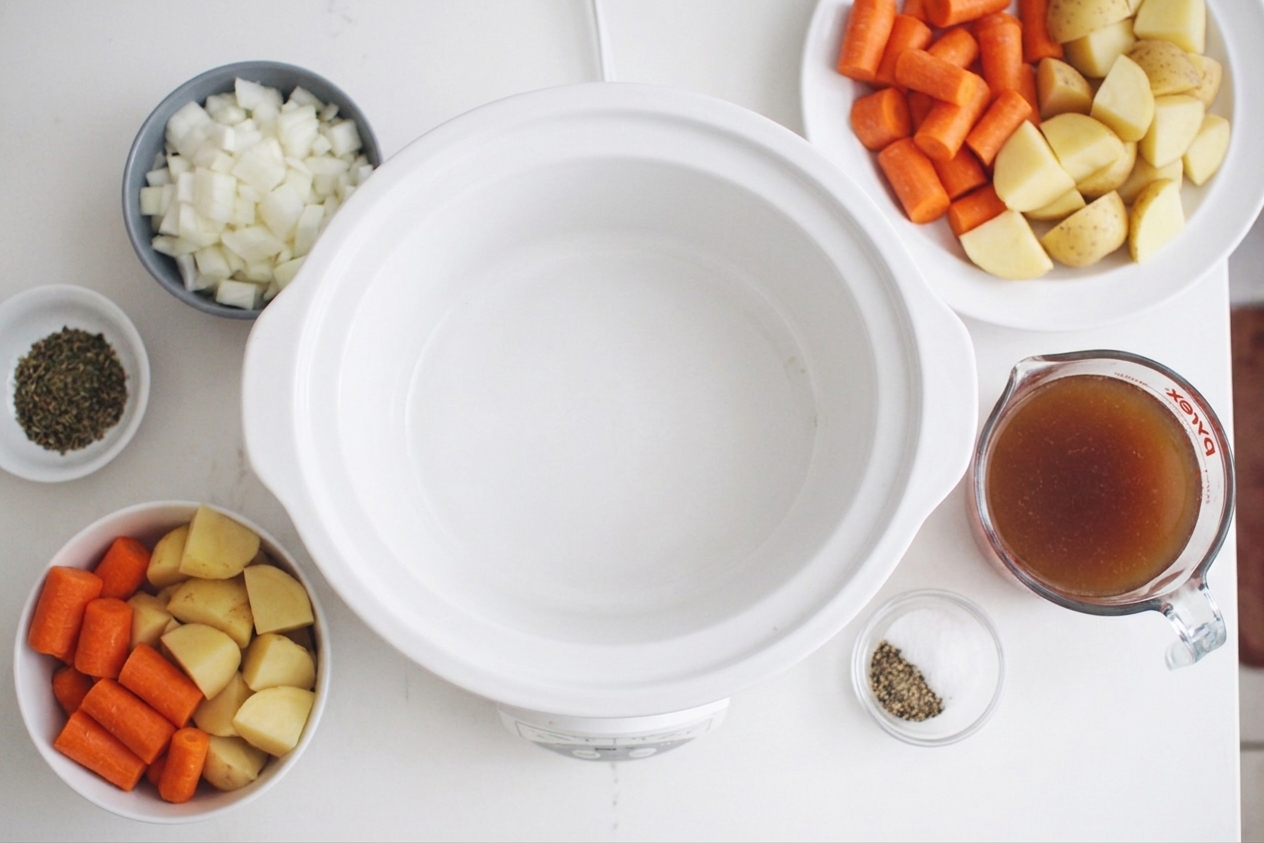
2) Adding all vegetables first
What goes wrong: Not all vegetables cook at the same speed. In a one-pot slow cooker dinner, delicate vegetables can turn mushy while the meat finally gets tender.
The fix: Stagger your add-ins based on how well they hold up.
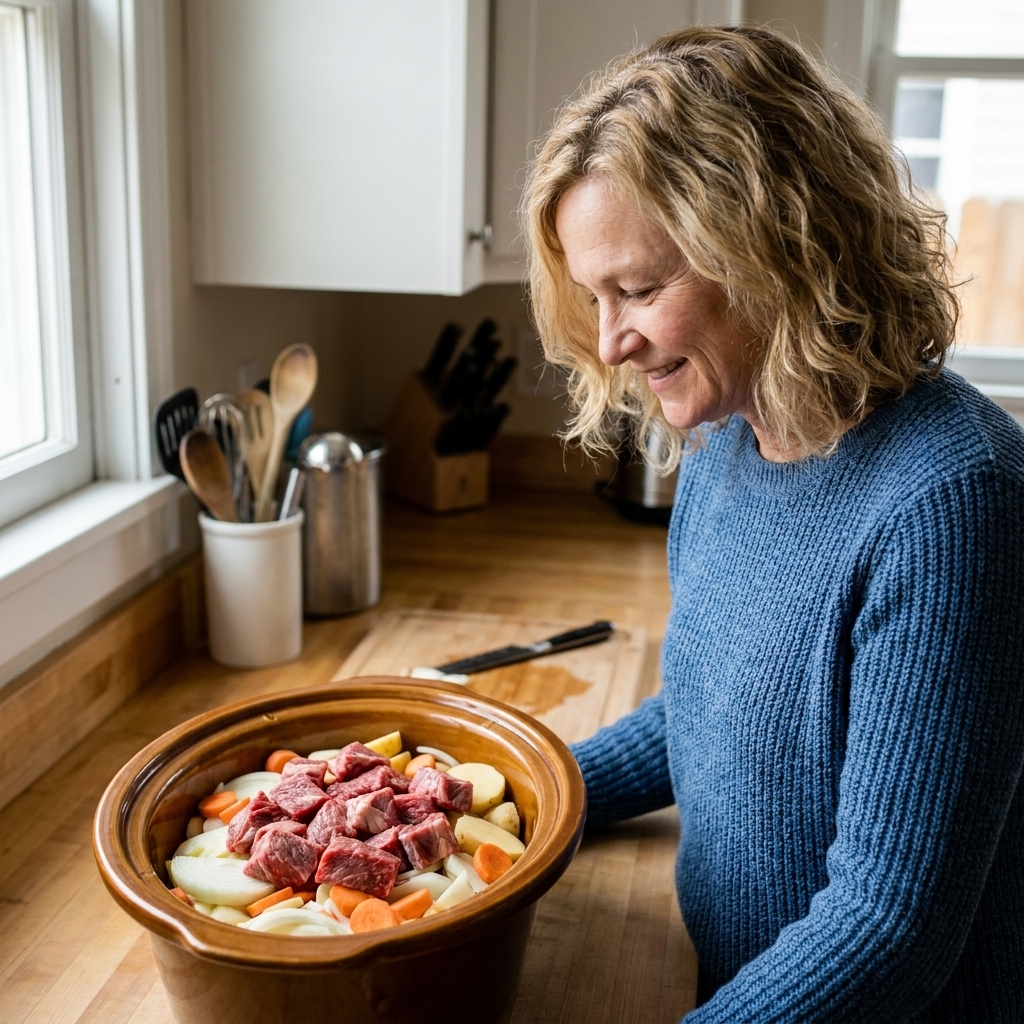
- Add at the beginning: potatoes, carrots, parsnips, rutabaga, onions (for long-cooked stews and roasts).
- Add later: bell peppers, zucchini, mushrooms, green beans. If you are home, aim for the last 1 to 2 hours. If you need a clearer target, last 60 to 90 minutes on HIGH usually works well.
- Add at the very end: spinach and peas (last 10 to 20 minutes).
- Kale timing: for tender (not bright) kale, plan on 30 to 60 minutes, chopped. If you like it very soft, add it earlier.
One-pot shortcut: If you truly need “dump and go,” choose sturdy vegetables only, or use a frozen vegetable mix and stir it in at the end while you thicken the sauce.
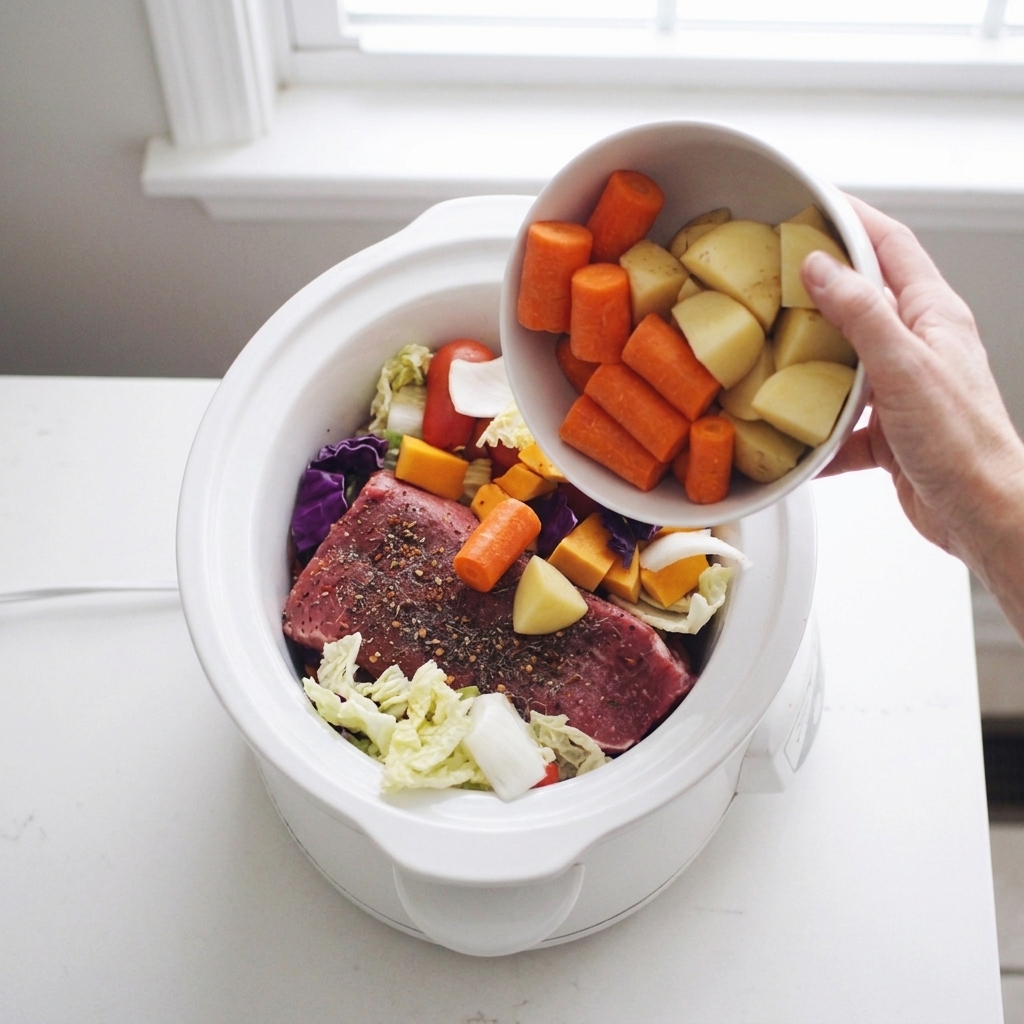
3) Not seasoning in layers
What goes wrong: Slow cooking can mute seasoning. Also, the dish tastes different after hours of cooking, especially once starches (potatoes, rice, pasta) soak up salt.
The fix: Season in layers, then do a quick “wake up” at the end.
- At the start: salt, pepper, onion or garlic, dried herbs, and something savory like soy sauce, Worcestershire, fish sauce, or bouillon (use what fits your recipe).
- At the end: taste, then add a small punch of brightness. My favorites are lemon juice, lime juice, a splash of vinegar, or a spoonful of pickled jalapeno brine for chili.
- Fresh herbs go last: parsley, cilantro, basil, dill. They taste alive when added at the end.
Tip: If a slow cooker dinner tastes “flat,” it usually needs salt or acid. Add a pinch of salt first, then a tiny splash of acid. Stir and re-taste. Repeat until it tastes like food again.
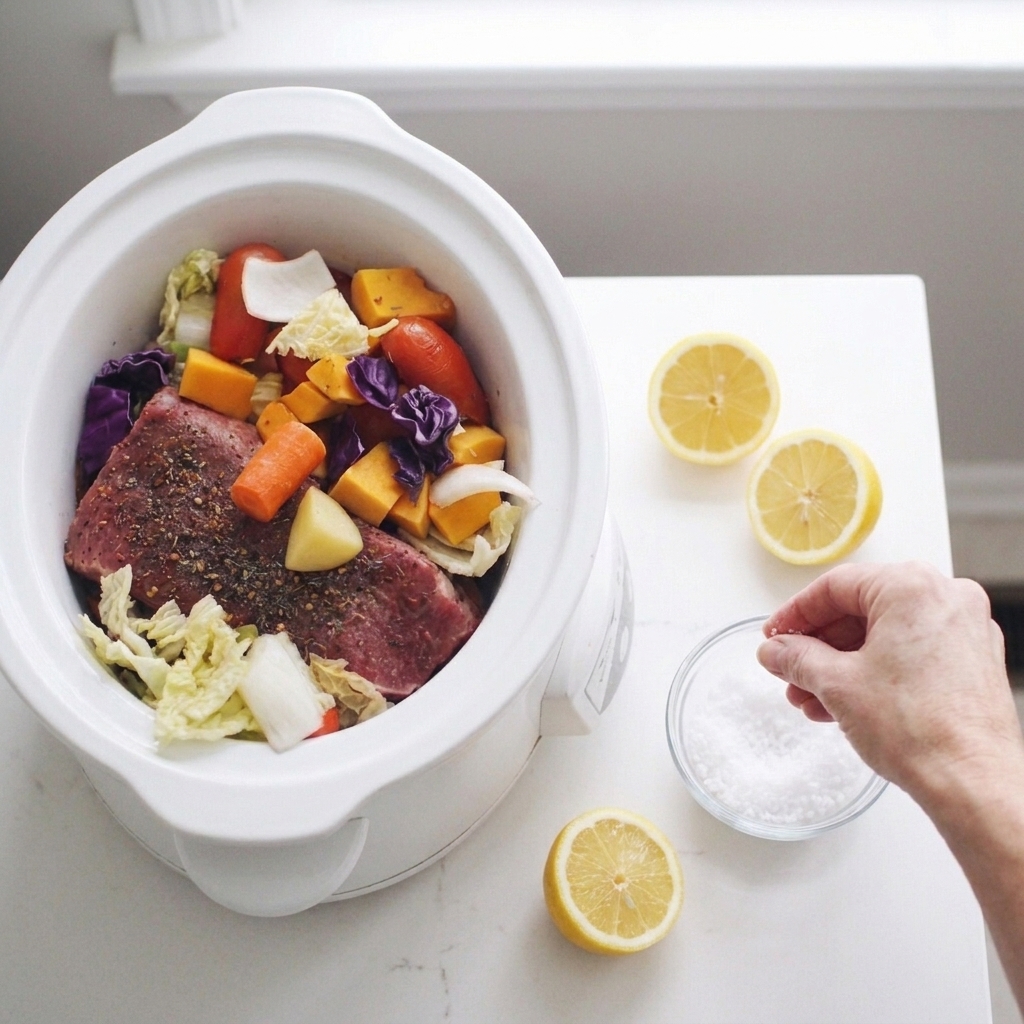
4) Lifting the lid too much
What goes wrong: Every time you lift the lid, you let out heat and steam. One peek is not the end of the world, but repeated checks can extend cook time, especially early in the cook, depending on your model and your kitchen temperature. That is how you end up with undercooked potatoes, tough meat, or a sauce that never quite comes together.
The fix: Treat the lid like a “do not disturb” sign.
- Only open when you must: to add quick-cooking ingredients later on, to shred meat, or to thicken.
- If you like to check progress: use a slow cooker with a clear lid, or trust the timer and check once nearer the end.
- Plan one check: pick a single time window (for example, last hour) to taste and adjust seasoning.
Real-life mom note: I get it. The house smells amazing and you want to peek. Set a phone reminder instead. It saves you from the 5 PM panic of “Why are the potatoes still crunchy?”
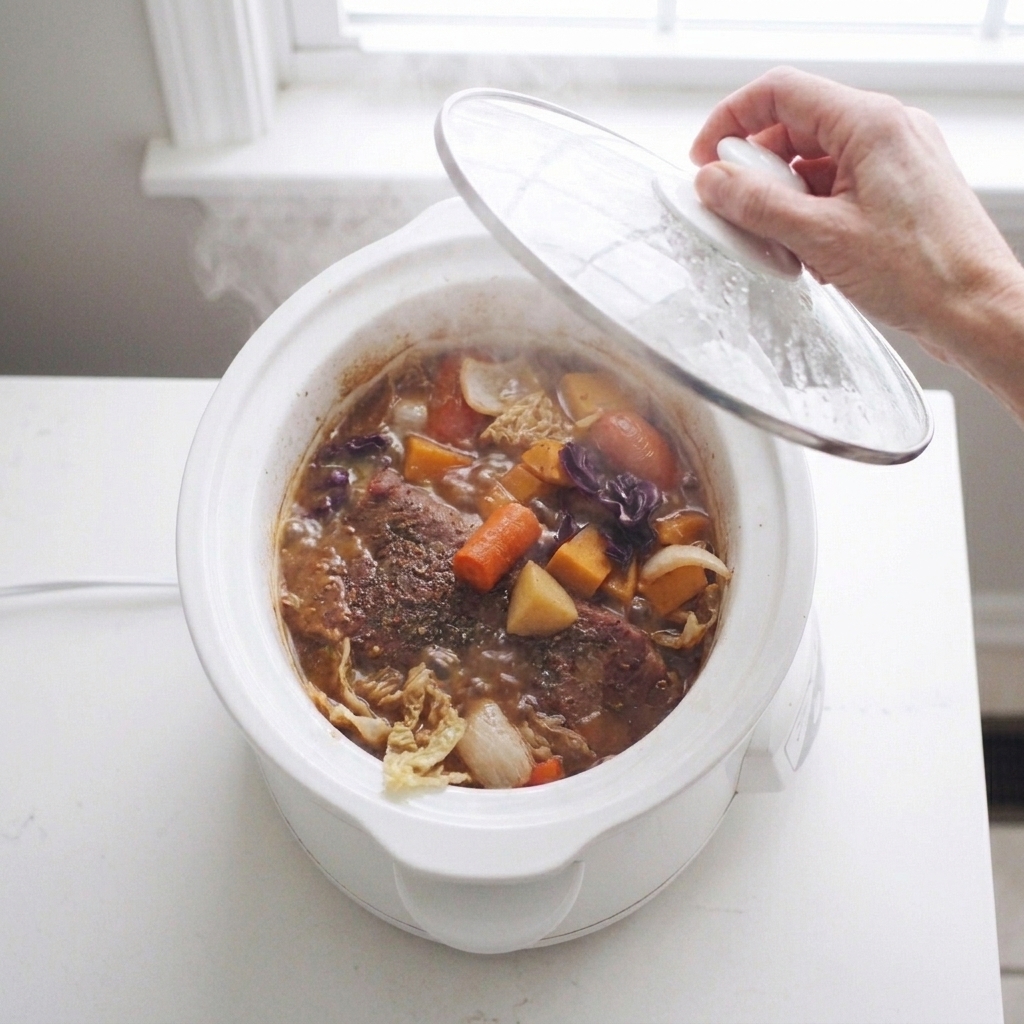
5) Overcooking dairy and starches
What goes wrong: Long cook times can split dairy and turn pasta or rice into mush. In a one-pot slow cooker dinner, this is the fastest way to end up with grainy sauce or overcooked noodles.
The fix: Add these ingredients later, or use a method built for the slow cooker. Slow cookers vary a lot, so start checking early the first time you try a new recipe or a new machine.
Dairy (milk, cream, sour cream, cream cheese)
- Add later: last 20 to 40 minutes on LOW if possible.
- Acid-heavy dishes: If your recipe is tomato-forward or has a lot of lemon juice or vinegar, dairy is more likely to curdle. In that case, stir it in off-heat or on WARM, and keep the heat gentle.
- If your cooker runs hot: stir dairy in off-heat, or on WARM if your model has it, then let it melt in gently.
- Temper if needed: stir a ladle of hot liquid into the dairy first, then add it back in.
- Choose stability: evaporated milk and cream hold up better than low-fat milk. Sour cream can curdle, so it is happiest as a stir-in at the very end.
Pasta
- Best practice: cook pasta separately and stir in before serving.
- If you must cook it in: add in the last 20 to 45 minutes and check early. Use sturdy shapes like rotini or penne.
Rice
- Option A (most reliable): cook rice separately.
- Option B: use parboiled or converted rice, which is more forgiving.
- Option C: for soups, add cooked rice at the end so it does not drink your broth dry.
Fast fixes
If dinner is already headed off the rails, here are my quickest fixes.
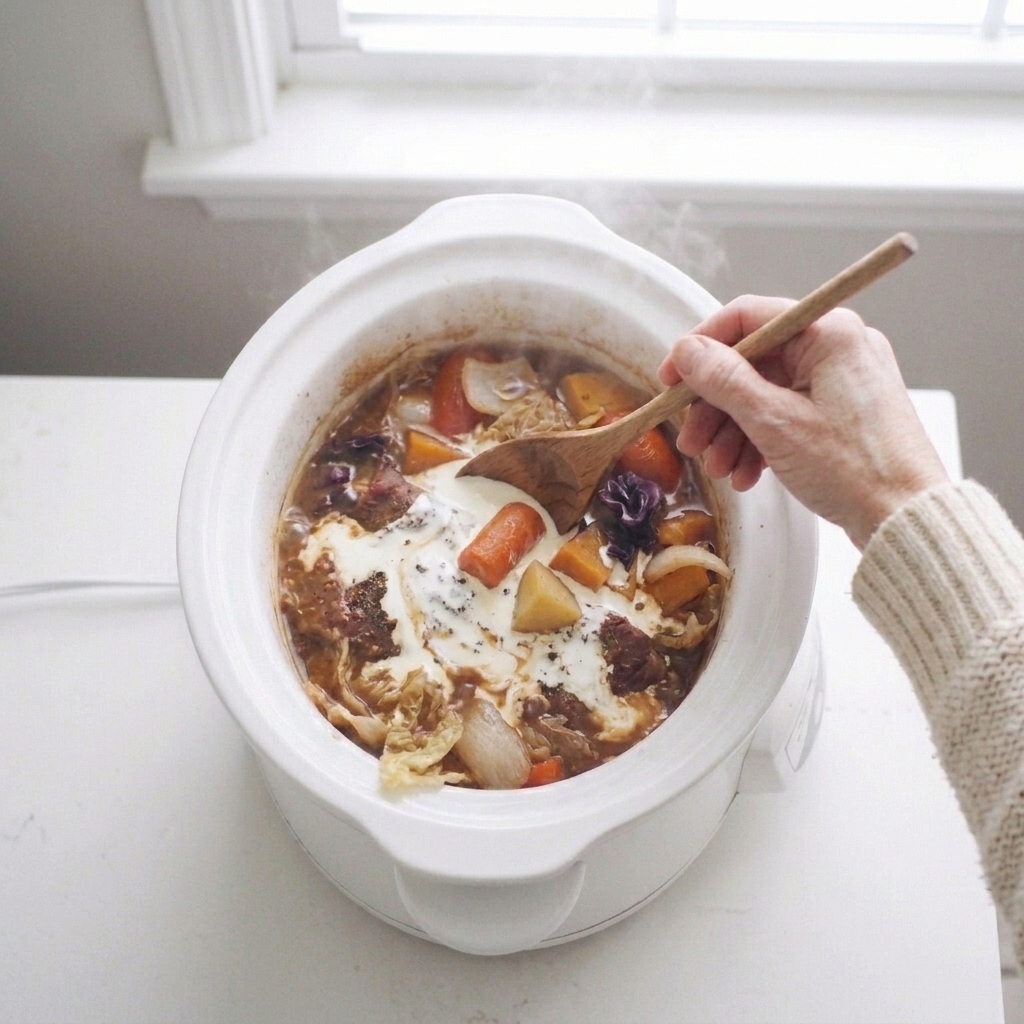
- Too watery: thicken with a cornstarch slurry, mash some potatoes or beans in the pot, or crack the lid briefly on HIGH to reduce (late in the cook, and only while you are home).
- Too bland: add salt in small pinches, then add acid (lemon, vinegar) and a savory booster (Worcestershire, soy, bouillon).
- Veggies too soft: next time, use larger chunks and add delicate veggies later. For tonight, turn it into a “stew bowl” over rice or mashed potatoes and call it cozy on purpose.
- Meat dry or stringy: it is often overcooked lean meat. Use thighs instead of breasts, or choose chuck roast or pork shoulder for long cooks.
My sanity checklist
Before I hit START, I do a 20-second scan:
- Did I reduce the liquid (and keep extra broth warm for later)?
- Are my veggies layered by cook time?
- Did I season with salt plus something savory?
- Am I keeping the lid on, especially early?
- Am I saving dairy, pasta, or rice for later?
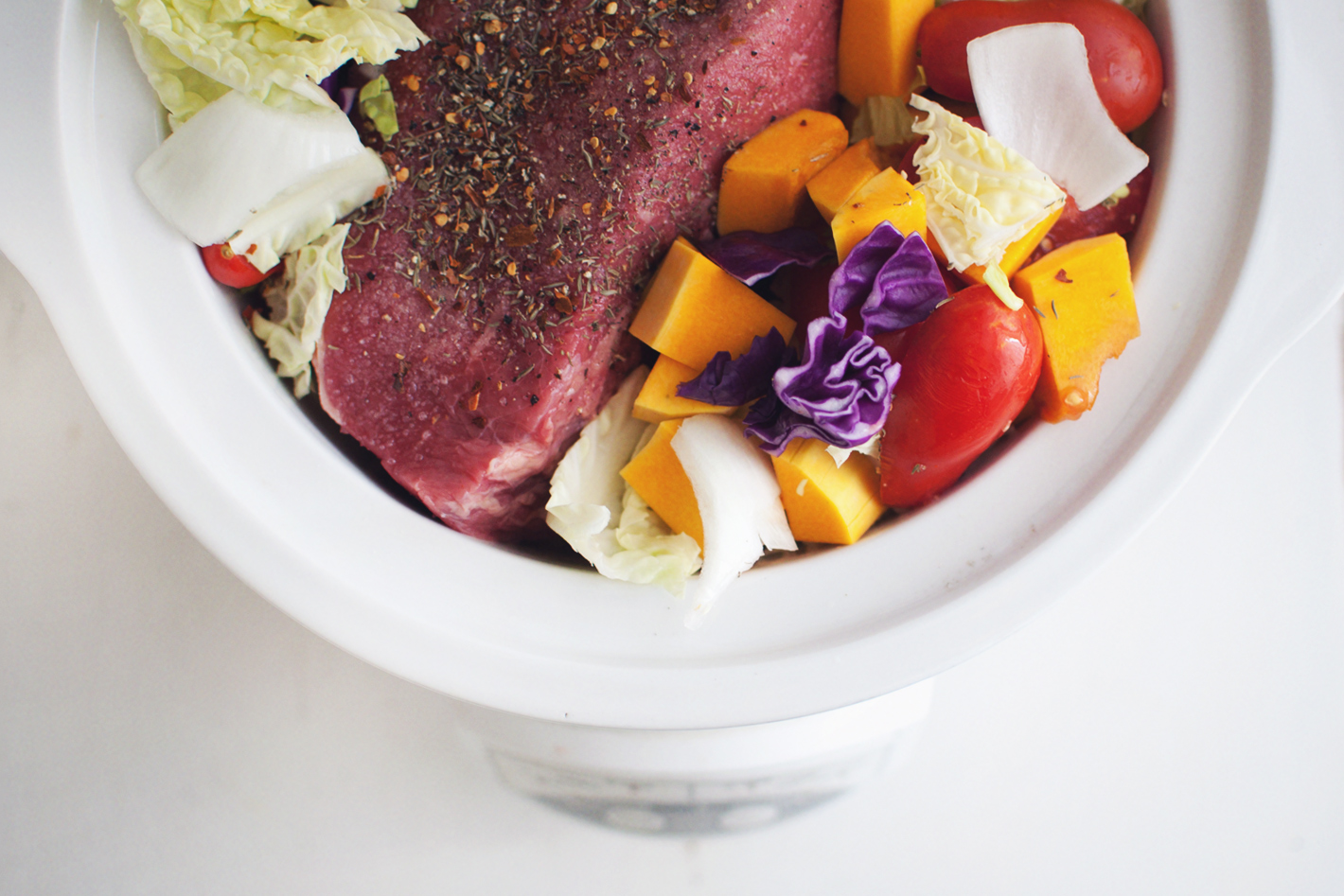
- Is my slow cooker filled about half to two-thirds? Very small batches can cook unevenly, and very full pots can take longer to heat.
That is it. Nothing fancy. Just the stuff that keeps dinner from turning into soup or mush.
FAQ
Why is my slow cooker sauce always watery?
Because the slow cooker traps steam. Cut back liquid (especially broth), avoid adding extra water with canned tomatoes or frozen veggies, and thicken at the end with a cornstarch slurry or by mashing some of the starch in the pot.
Should I brown meat before putting it in the slow cooker?
For one-pot weeknight dinners, it depends on your time. Browning adds deeper flavor and better texture, especially for ground meat and big roasts. If you skip it, compensate with bold seasoning (tomato paste, Worcestershire, soy sauce, smoked paprika) and be sure to use enough salt.
Why are my potatoes not cooking in the slow cooker?
Common causes are cutting them too large, lifting the lid too often, or your slow cooker running cooler than expected. Dice into 1-inch pieces, keep the lid on, and in most slow cookers, place potatoes closer to the bottom where it tends to be hottest.
Can I cook pasta in the slow cooker?
You can, but it is easy to overcook and different models behave differently. For the best texture, cook pasta separately and stir it in right before serving. If you cook it in the slow cooker, add it only near the end and start checking early.
Is HIGH faster than LOW?
Usually, yes, but not always in a simple way. Many slow cookers are designed so both settings reach a similar final temperature, and HIGH just gets there faster. If your slow cooker runs hot, you may find LOW behaves more like a gentle simmer. Use the time ranges as guides and adjust based on your machine.
Any quick slow cooker food safety basics?
Start with thawed meat (not frozen), and keep the lid on early so the slow cooker heats efficiently. Refrigerate leftovers promptly in shallow containers so they cool down quickly.