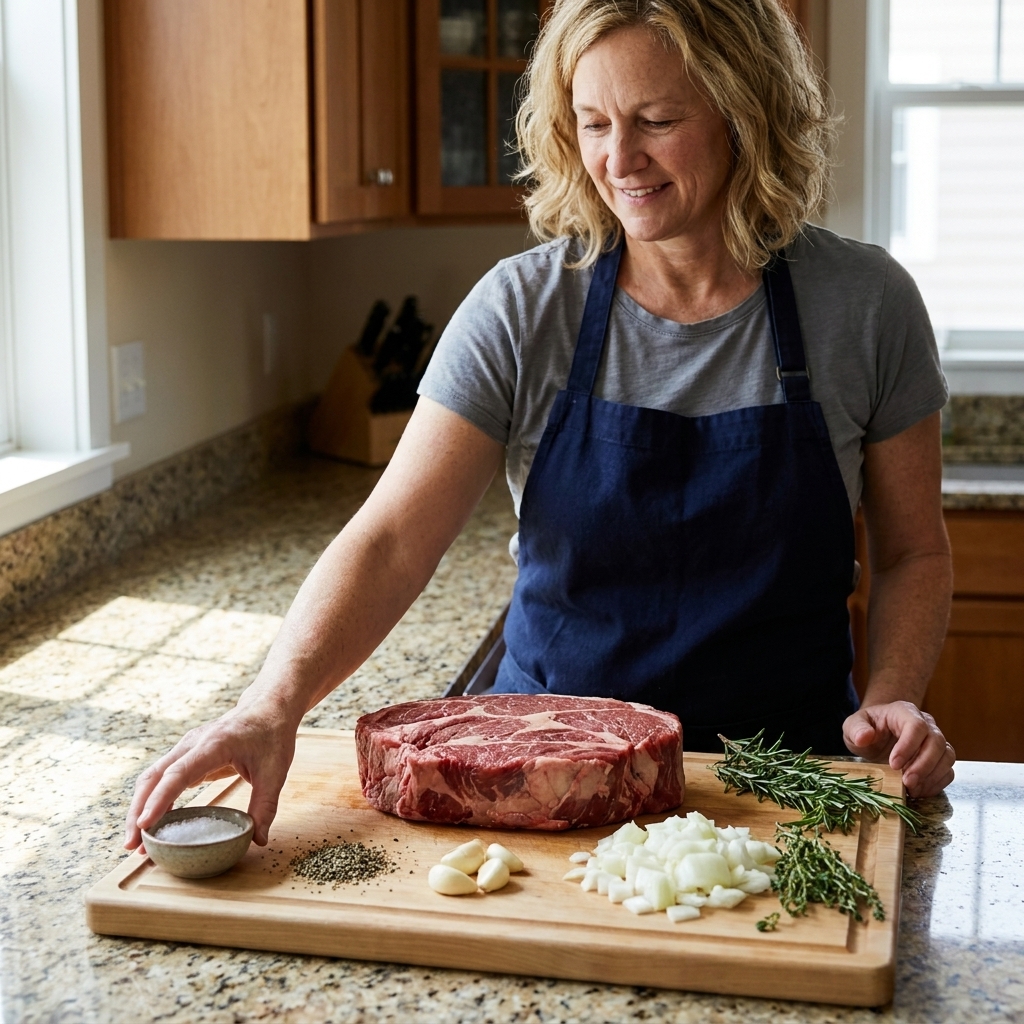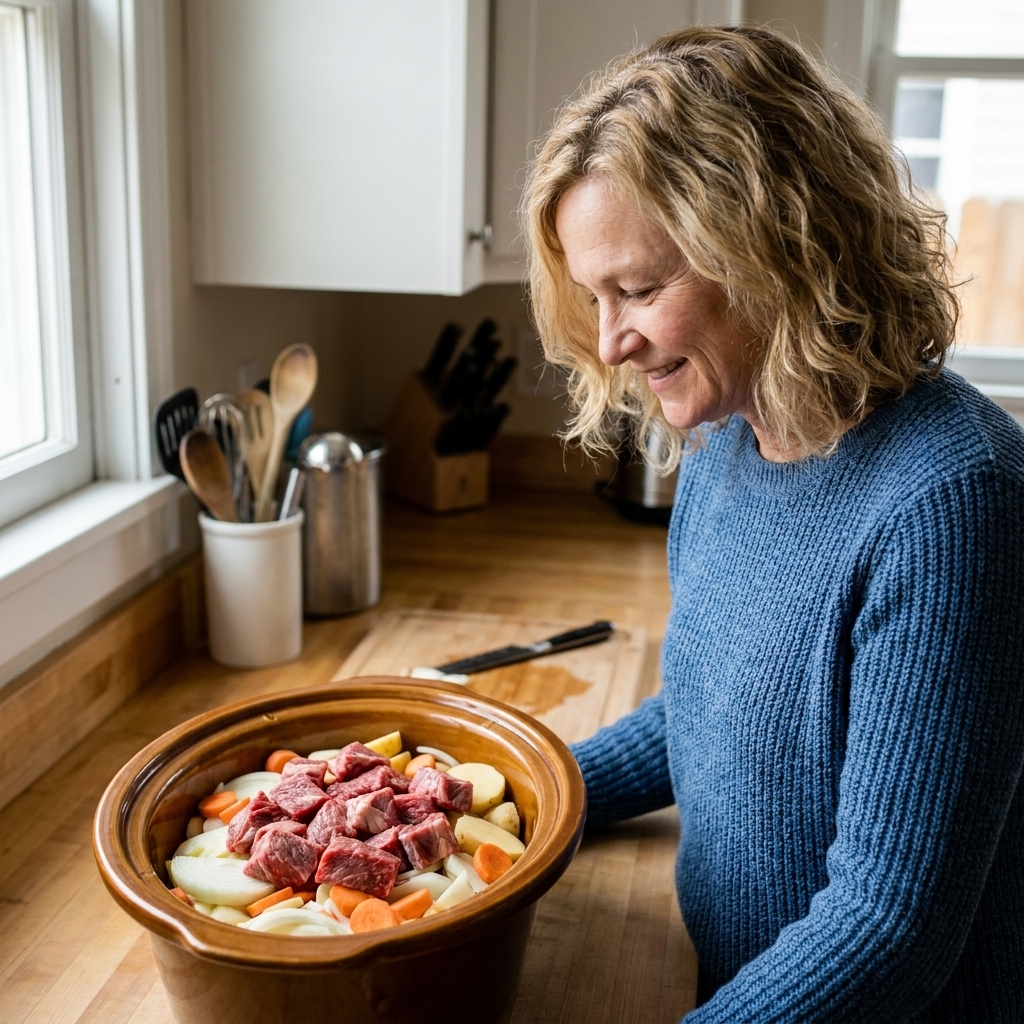
If your slow cooker meals taste great but your potatoes are falling apart and your carrots are basically purée, you are not alone. I taught middle school for years and I swear my slow cooker has seen the same chaos as my classroom: everyone ends up in a pile if you do not set boundaries.
The good news is that mushy vegetables is often about where you put them in the crock. In most crock-style slow cookers, heat concentrates near the bottom and around the sides, and that heat pattern matters. With a simple layering strategy (plus a couple timing tweaks), you can get tender meat and vegetables that still have that perfect, cozy bite.
Why layering matters
Slow cookers are gentle, but they are not always even. Many models heat strongest near the bottom edge where the crock meets the heating element, and some run hotter on one side than the other. That means ingredients sitting low and close to the walls can cook faster and longer than the ingredients in the center.
- Root vegetables (potatoes, carrots, parsnips, turnips, beets) are dense and need more direct heat to soften.
- Meat benefits from moist heat and time, but it does not have to sit at the very hottest point to get tender.
- Quick-cooking vegetables (peas, zucchini, bell pepper, mushrooms) can overcook fast and turn soft, watery, or rubbery.
So the goal is simple: put slow-cooking, sturdy ingredients where the heat is strongest, and protect delicate ingredients from the hot zones.
Best layering order
Here is the order I use for most one-pot weeknight dinners like pot roast, beef stew, chicken and potatoes, and pork shoulder with veggies.
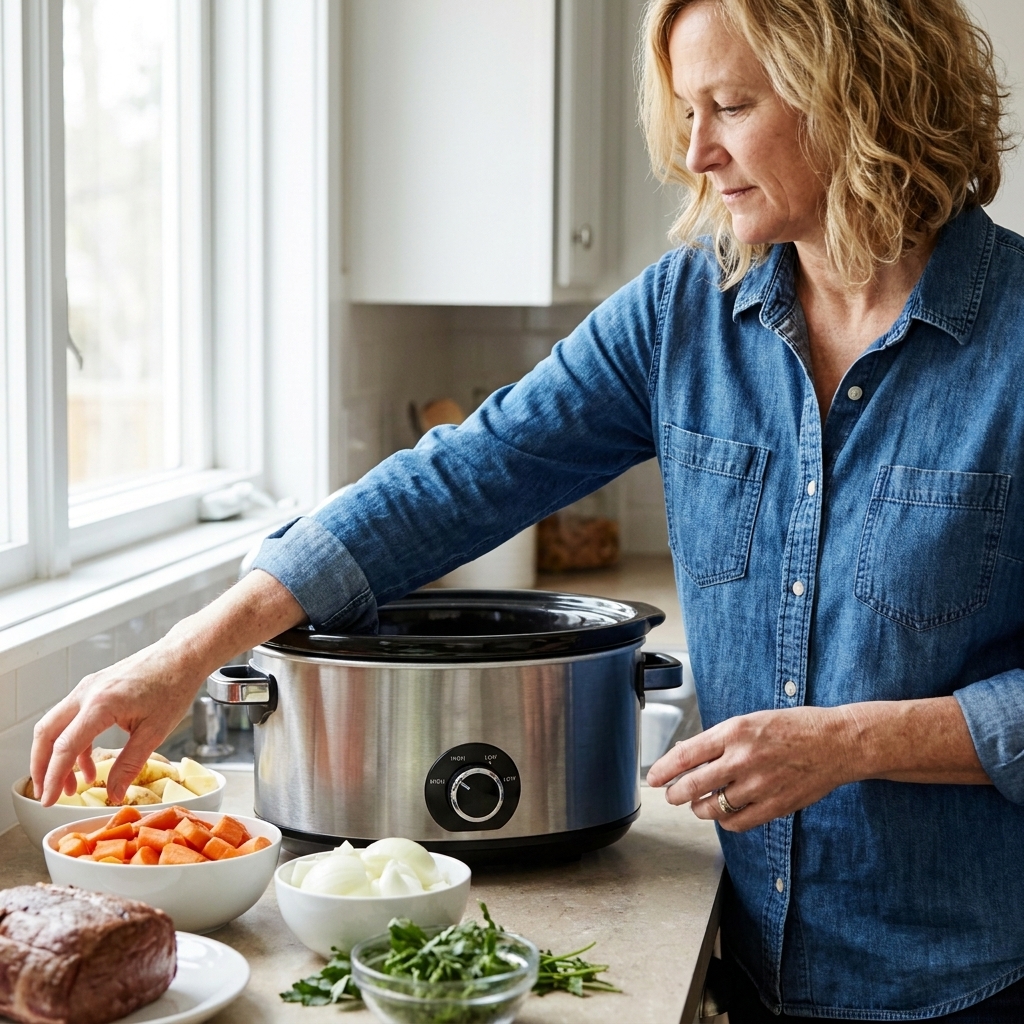
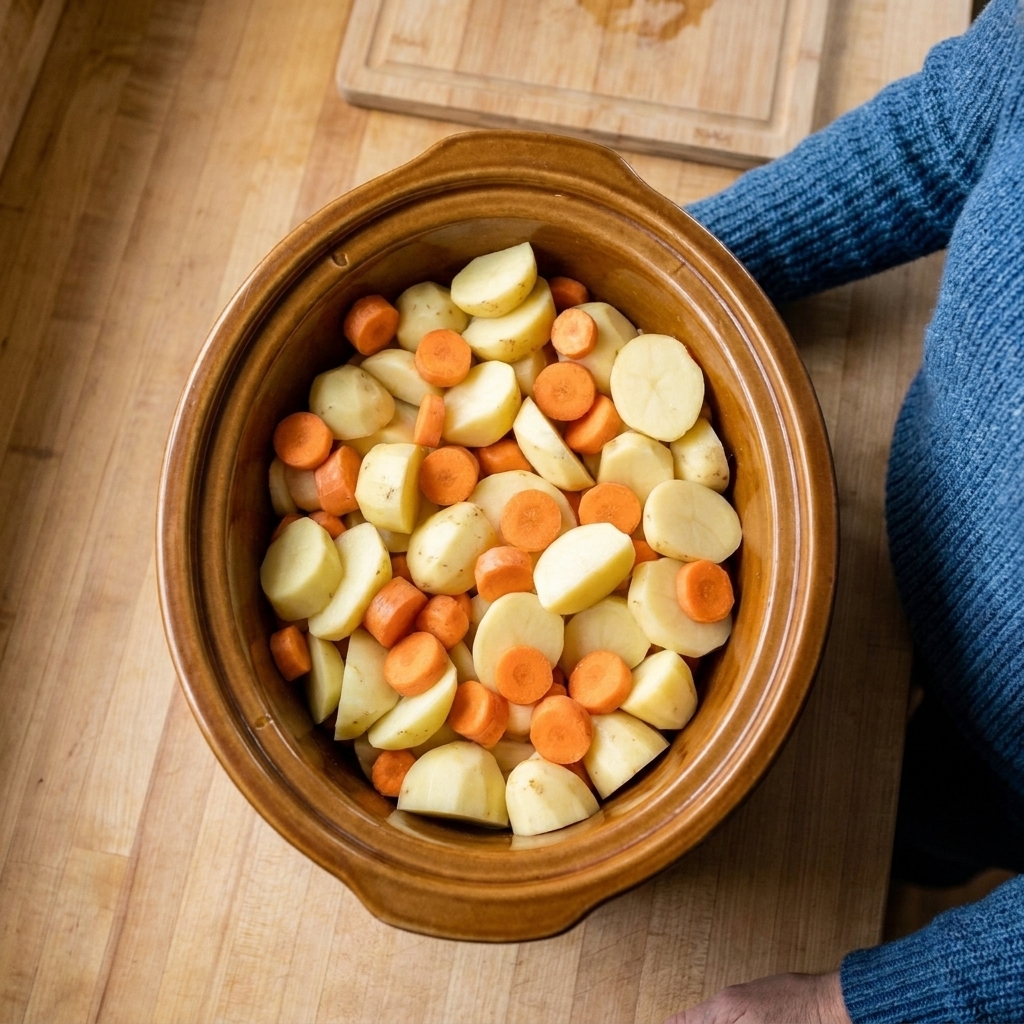
1) Root vegetables on the bottom
Start with a sturdy base. This does two things: it gives roots the heat they need, and it keeps meat slightly elevated so it braises instead of boiling.
- Best bottom-layer veggies: potatoes, sweet potatoes, carrots, parsnips, rutabaga, turnips
- Cut size tip: aim for 1 to 1 1/2 inch chunks for potatoes and thick coins or batons for carrots. Tiny pieces equal mush.
2) Aromatics next
Onions can go near the bottom or mid-layer. I like them just above the roots so they melt into the sauce, but do not sit pressed against the hottest edge.
- Onion wedges, sliced onions, shallots
- Garlic (whole cloves or minced)
- Celery (optional, but great in beef dishes)
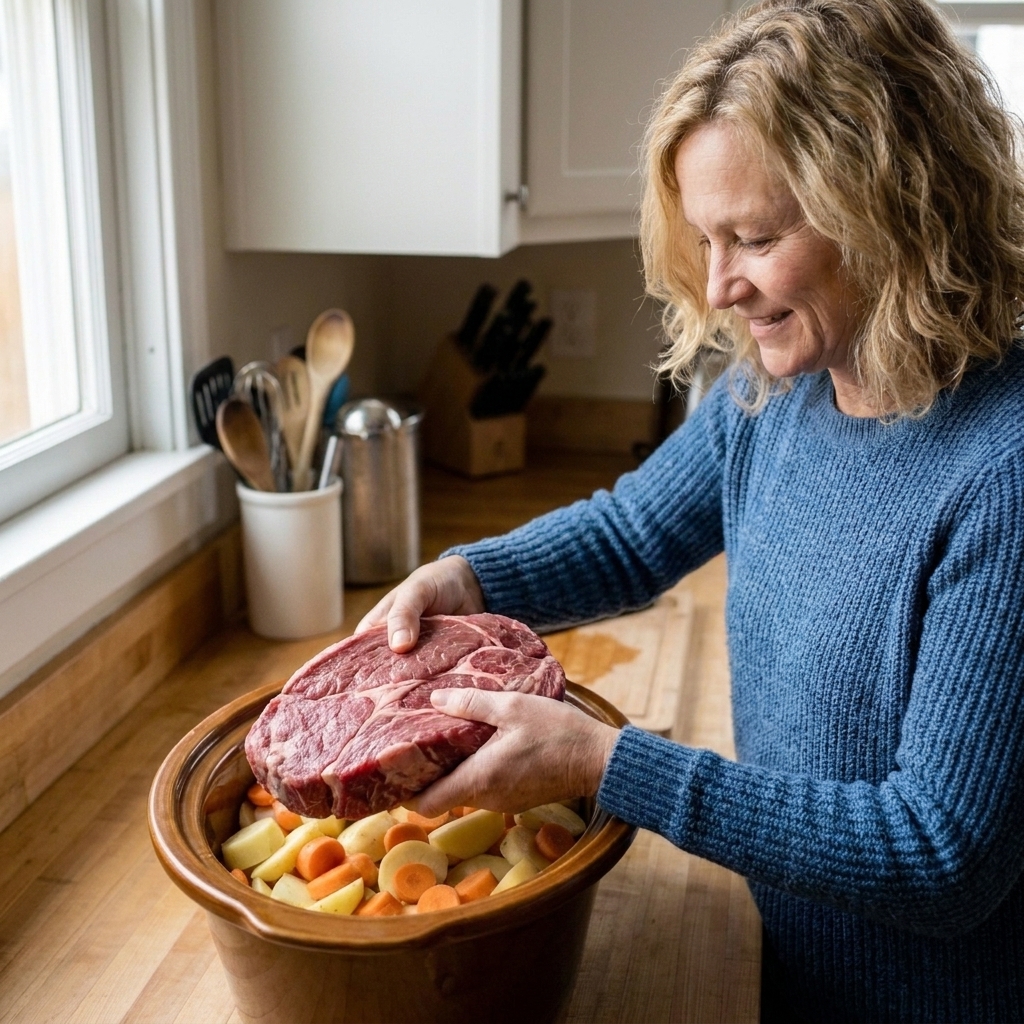
3) Meat on top of the vegetables
This is the piece that surprises people. In a slow cooker, meat does not need to sit on the bottom to get tender. Placing it on top helps it braise in steam and juices while the vegetables below take the direct heat.
- Pot roast: set the roast right on the veggie bed
- Stew meat: pile it in the center so it is not pressed against the hot sides
- Chicken thighs: skinless thighs do great on top, and you can finish under the broiler if you want browning
4) Seasonings and sauces over the meat
Pour your broth, tomatoes, wine, or sauce around the edges and over the top. This helps distribute flavor without washing all the seasoning off the meat immediately.
- Keep liquid moderate: slow cookers trap moisture, so you usually need less broth than you think.
- Do not drown the vegetables: too much liquid plus a long cook time is a fast track to softer vegetables.
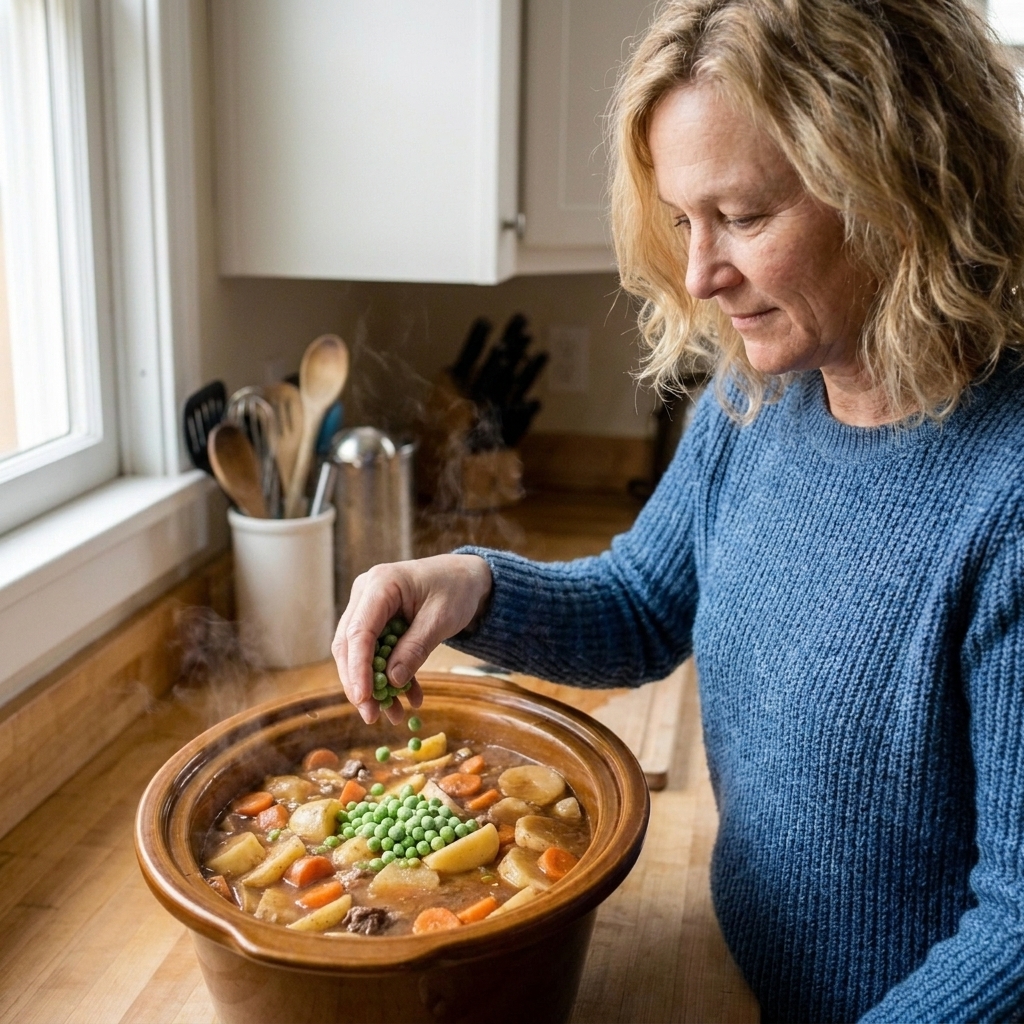
5) Tender vegetables last
Save fast-cooking vegetables for the final stretch so they stay bright and intact. If you are cooking on High, use the shorter end of these ranges.
- Add in the last 30 to 60 minutes: peas, corn, thin green beans
- Add in the last 45 to 60 minutes on High, or 1 to 2 hours on Low: bell pepper, zucchini
- Add in the last 1 to 2 hours: mushrooms (they can handle a little more time)
- Greens: stir in spinach or kale in the last 5 to 15 minutes until just wilted
Quick rules
If you just want the cheat sheet, here is how I think about it on real weeknights.
Root vegetables
- Bottom layer, largest pieces.
- Do not overfill: for the most even cooking, aim for about 1/2 to 2/3 full, and avoid going above about 3/4 full.
- Waxier potatoes (Yukon Gold, red) hold shape better than russets.
Onions
- Bottom or middle is fine.
- If you want onion pieces to stay more distinct, cut into wedges and place them higher, not pressed to the sides.
Meat
- Top of the veggie bed.
- Try not to press it tight against the crock walls.
- If you sear first, great. If you do not, dinner will still be dinner. I promise.
Delicate vegetables
- Top layer or add late.
- If you must cook them all day, keep them in larger chunks and place them toward the center, away from the edges.
Dairy and thickeners
- Dairy: add cream cheese, sour cream, or heavy cream at the end so it does not split. This matters even more in tomato-based or wine-based sauces.
- Flour or cornstarch: thicken at the end for better texture. Mix slurry separately, then stir in and cook 10 to 20 minutes on High.
Timing matters too
Perfect layers will not save you from a 10-hour cook time on a recipe meant for 6. Vegetables break down from both heat and time.
My realistic timing guide
- High: typically 3 to 5 hours for many stews and chicken dishes
- Low: often 7 to 8 hours is plenty for roasts and tougher cuts, but very large roasts can take longer
- If you are gone 10 to 12 hours: use bigger veggie chunks, choose waxy potatoes, and consider adding some vegetables later if you have a chance when you get home.
One more small thing that can throw you off: acid. Tomatoes, wine, and vinegar can slow down softening in some vegetables and beans, which is great for structure but can change your expected timing. It is another reason I do not treat any slow cooker timeline like a law of physics.
Mistakes that make mush
- Putting potatoes on top: this often leads to uneven results. Depending on your model, potato type, and cook time, they can stay undercooked or break down while everything else turns soft.
- Cutting vegetables too small: half-inch potato cubes do not stand a chance in a long cook.
- Too much liquid: more broth does not equal more tenderness. It often equals softer vegetables.
- Cooking on High all day: High is great, but not for 8 hours unless a recipe specifically calls for it.
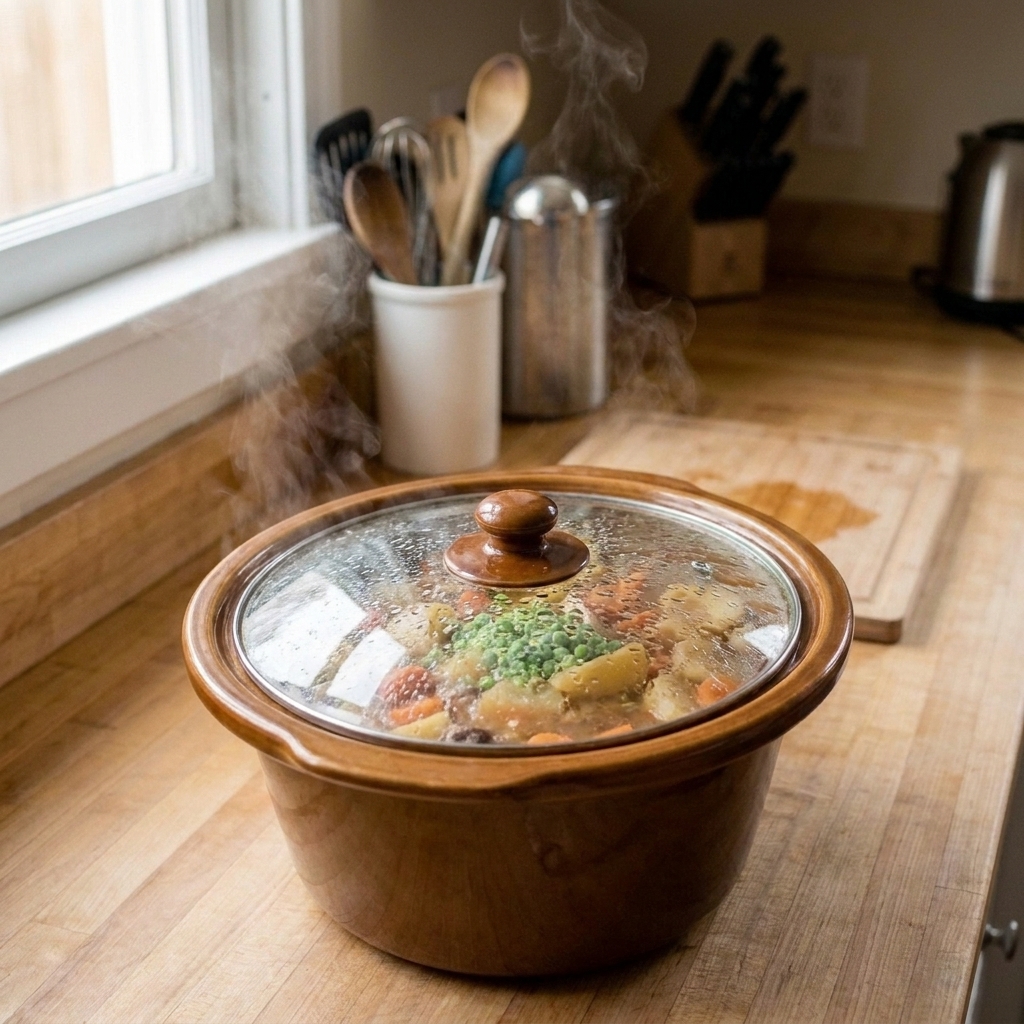
- Lifting the lid repeatedly: every peek drops the temperature and stretches cook time, which can leave you with unevenly cooked veggies that turn to mush by the time the meat is ready.
Fixes that help
Use a veggie buffer
If your model runs hot, line the bottom with onion wedges or thick celery pieces, then put potatoes and carrots on top. That little buffer can protect against overcooking at the hottest point.
Choose sturdier vegetables for long cooks
Carrots and parsnips usually hold up better than zucchini or bell pepper. Sweet potatoes can go either way depending on variety and size, so keep them in larger chunks if they will cook longer than 6 hours.
Add some vegetables later
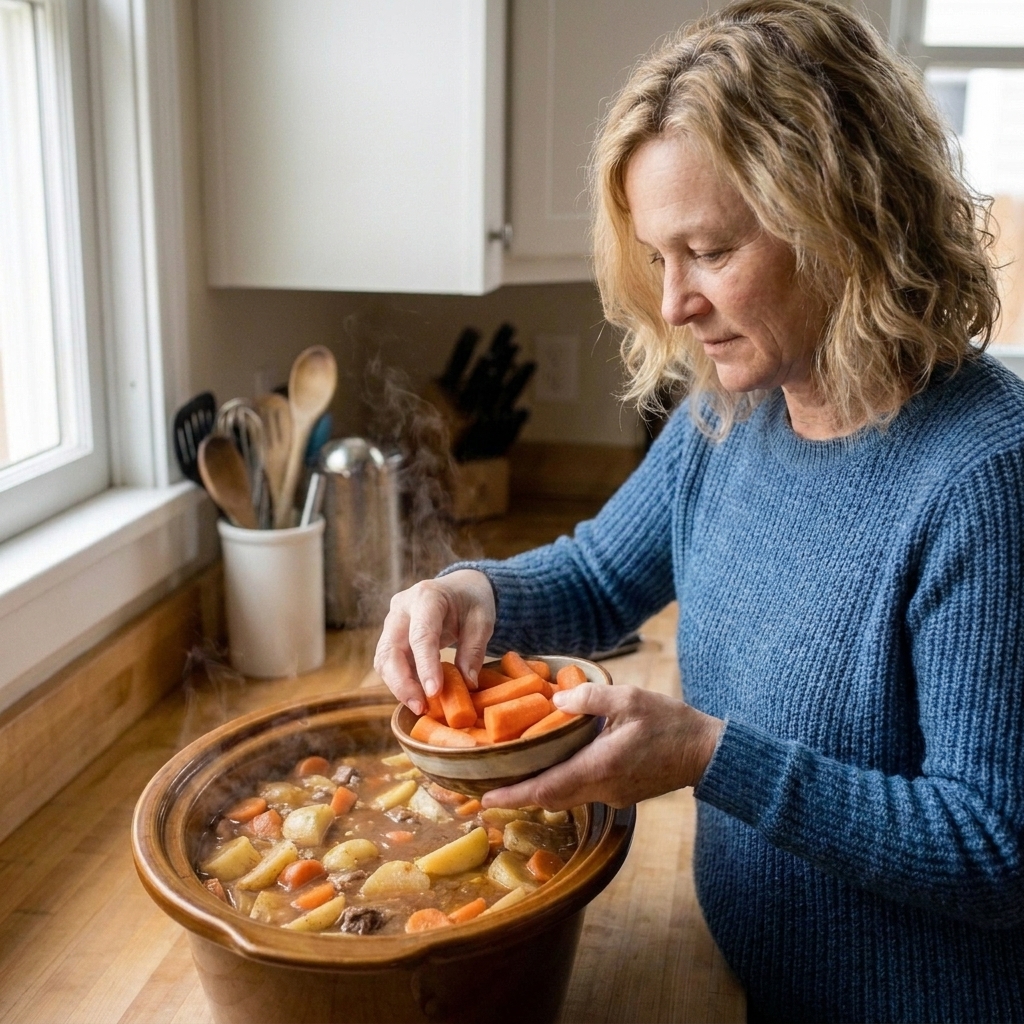
If you can swing it, stir in a second batch of carrots or potatoes for the last 2 to 3 hours on Low. You will get that mix of tender and toothsome that makes a stew feel special.
Real dinner examples
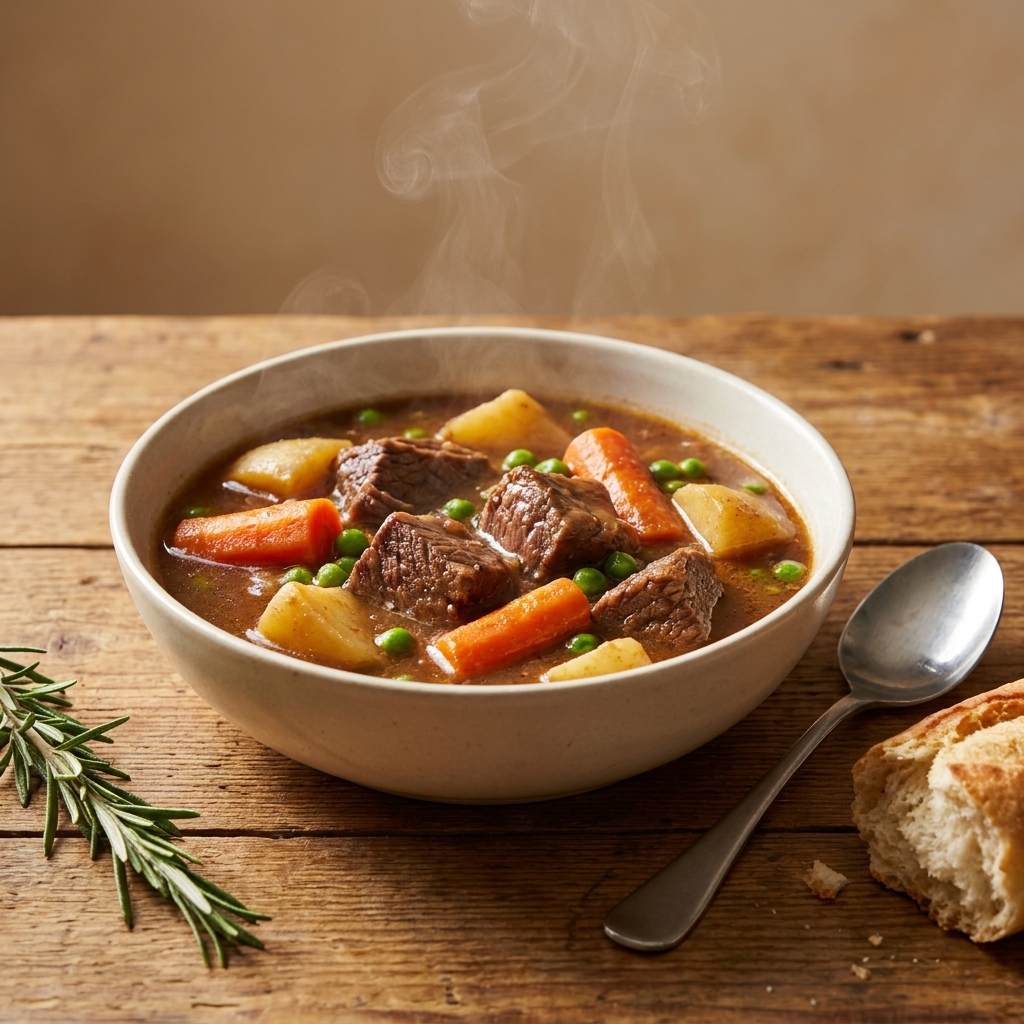
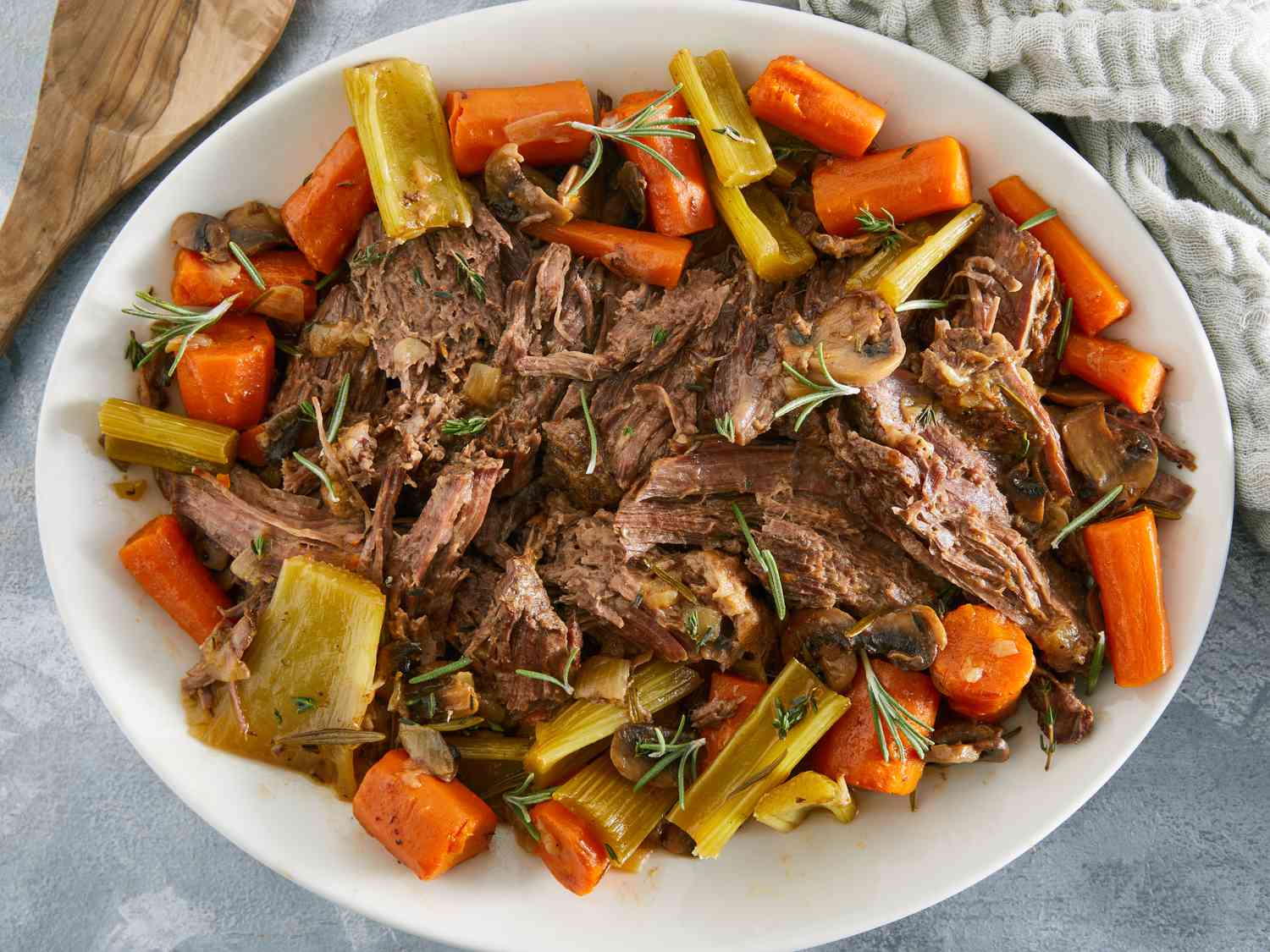
Pot roast with potatoes and carrots
- Bottom: potatoes and carrots (large chunks)
- Middle: onion wedges, garlic
- Top: chuck roast
- Pour around: beef broth and seasonings
- Finish: add mushrooms in the last 1 to 2 hours if using
Chicken stew
- Bottom: potatoes, carrots
- Middle: onion, celery
- Top: chicken thighs
- Finish: frozen peas and spinach right at the end
Pork carnitas (with onions)
- Bottom: onion wedges and garlic (acts like a flavorful rack)
- Top: pork shoulder
- Finish: crisp the shredded pork under the broiler, then serve with fresh toppings instead of slow-cooked vegetables
FAQ
Should vegetables go on the bottom?
For sturdy vegetables like potatoes and carrots, yes. In many slow cookers, the bottom and sides are the hottest zones, so dense vegetables do best there. Put meat on top so it cooks gently while the vegetables take the direct heat.
Why are my carrots mushy but my potatoes are fine?
It is usually a combo of cut size, potato type, and placement. Thin carrot coins turn soft faster than thick chunks. Russet potatoes break down more than waxy potatoes. And anything pressed against the side wall tends to overcook first.
Do I need to stir?
Usually no, and stirring can actually push vegetables into the hotter zones along the sides. I only stir at the end when I am adding quick-cooking vegetables or thickening the sauce.
Can I use frozen vegetables?
Yes, but add them near the end. Frozen peas, corn, and mixed vegetables are perfect for the last 30 to 60 minutes, just long enough to heat through without getting dull and soft.
What size slow cooker is best?
A 6-quart slow cooker gives you the most flexibility. You can keep layers shallow enough to cook evenly without packing ingredients tightly, which can lead to uneven vegetable texture.
The bottom line
If you remember nothing else, remember this: roots on the bottom, meat on top, delicate veggies late. That one change solves a lot of mushy-vegetable problems without adding extra steps or dirtying another pan.
And if you do end up with a too-soft potato one night, you are still feeding people you love. Stir, thicken the broth a bit, and call it “rustic.” That is what I do.