If you have ever stood in the meat aisle staring at labels that say pork shoulder, pork butt, Boston butt, and maybe even picnic roast, you are not alone. The names are confusing, and when you are trying to get dinner in the slow cooker before school drop-off or work, confusion is not the goal.
Here is the good news: both pork shoulder and pork butt make excellent slow cooker pulled pork. The even better news: once you understand what each cut brings to the crockpot, you can choose the one that fits your budget, your timeline, and how juicy you want the final shred.
The quick answer (my weeknight pick)
If you want the safest, juiciest slow cooker pulled pork, buy pork butt (Boston butt). It has generous marbling, stays moist, and forgives longer cook times, which matters when life runs late.
If you want slightly leaner pulled pork with great pork flavor, pork shoulder works beautifully. Just know that labels vary, and some “pork shoulder” packages are actually the same cut as Boston butt.
- Most foolproof for the slow cooker: Pork butt (Boston butt)
- Leaner option: Pork shoulder (often picnic roast)
- Either one will shred well: Yes, as long as you cook to tenderness
What are these cuts, really?
Even though the names sound like they come from totally different animals, pork butt and pork shoulder both come from the shoulder area.
One important shopping note: “Pork shoulder” is sometimes used as an umbrella term. If the label says Boston butt, butt roast, or blade roast, you are looking at the upper shoulder (the classic pulled pork cut). If it says picnic or picnic roast, that is the lower shoulder.
Pork butt (Boston butt)
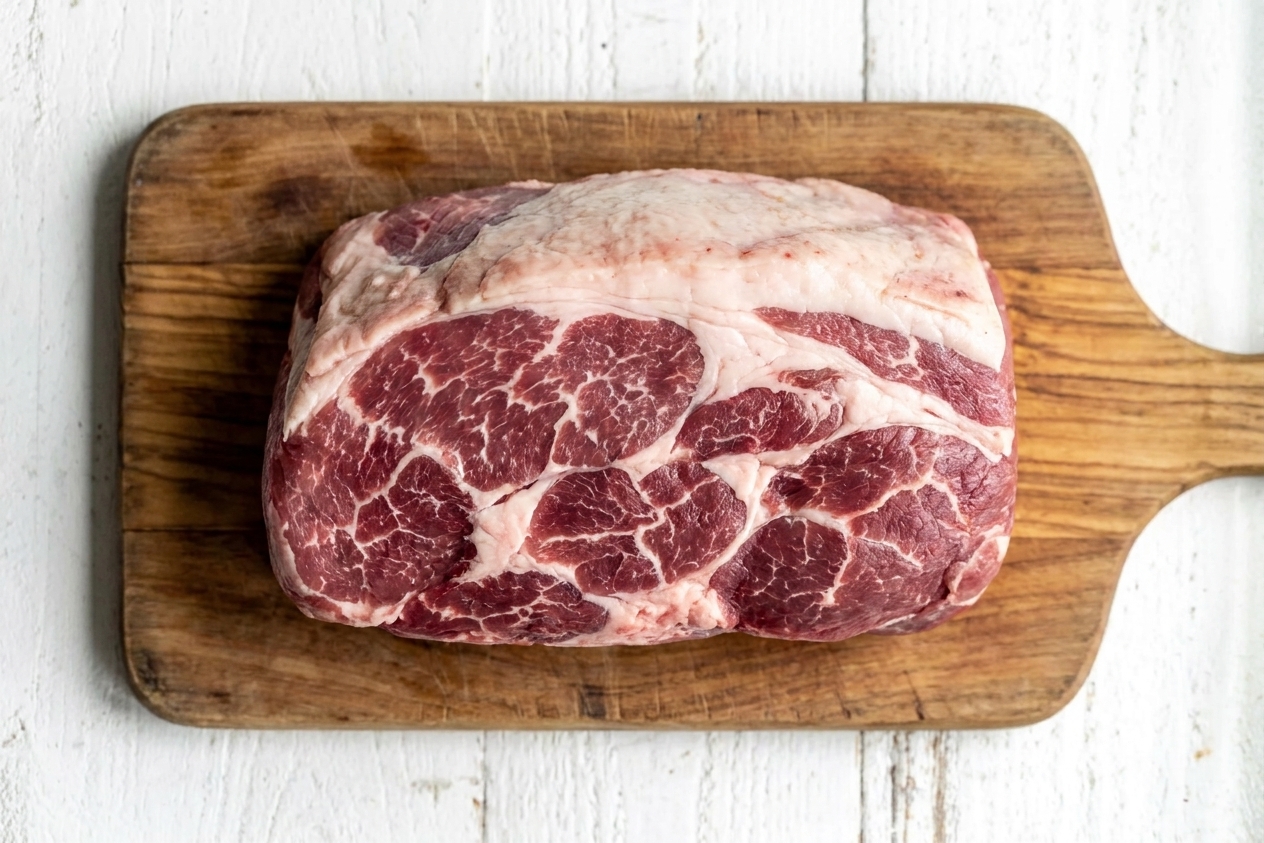
This is the upper part of the shoulder (often called the blade end). It is usually well-marbled and more evenly shaped, which makes it especially friendly in a slow cooker. Many stores label it as “Boston butt,” “pork butt roast,” “butt roast,” or “blade roast.”
Pork shoulder (often picnic shoulder/roast)
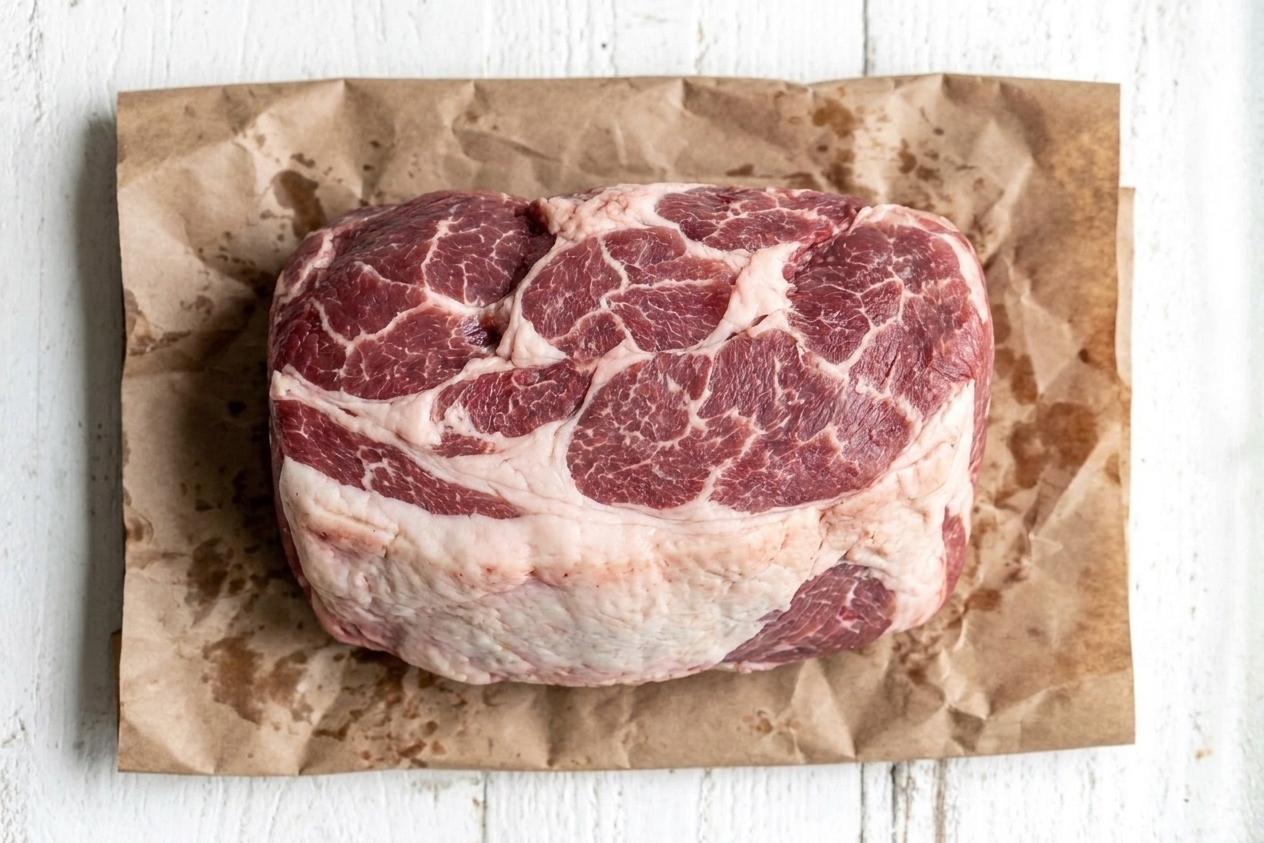
This is typically the lower part of the shoulder and may be labeled “pork shoulder roast,” “picnic roast,” or “picnic shoulder.” It can include more connective tissue and sometimes skin, depending on how it is cut and packaged.
Pork butt vs. pork shoulder
1) Fat and marbling
Pork butt usually has more intramuscular fat, meaning marbling throughout the meat, not just a fat cap on the outside. In a slow cooker, that marbling is your best friend. It melts slowly and helps the meat stay succulent even if it cooks a little longer than planned.
Pork shoulder is often a little leaner (and sometimes less evenly marbled), so it can still be tender and shreddable, but the final pulled pork may be slightly less rich unless you keep some of the fat cap or mix the shredded meat with some cooking juices.
2) Connective tissue and shredding
Both cuts have connective tissue and collagen, which is exactly what you want for pulled pork. Low, slow heat turns collagen into gelatin, and that is where the silky, moist mouthfeel comes from.
- Pork butt: typically shreds easily and evenly
- Pork shoulder: can shred beautifully, but may have a few more chewy bits if it needs more time
3) Shape and size
Pork butt roasts are often compact and round, which is perfect for a 6-quart slow cooker. Pork shoulder, especially picnic roasts, can be longer, flatter, or irregular, and sometimes includes bone or skin that makes it awkward in smaller crockpots.
4) Bone-in vs. boneless
You can use either bone-in or boneless for both cuts.
- Bone-in: great flavor, often a better value, and the bone should pull cleanly when the meat is done
- Boneless: easier to fit in the slow cooker and easier to portion
5) Price and availability
Prices vary by region, but pork butt is often the go-to “pulled pork” roast and can be easier to find on sale. Pork shoulder, especially picnic roasts, is also common and can be a bargain, especially bone-in.
Which one is best?
Choose pork butt if you want:
- Maximum juiciness with minimal babysitting
- Rich, classic BBQ flavor
- Consistent shredding across the whole roast
Choose pork shoulder if you want:
- A slightly leaner bite (still tender when cooked properly)
- A good deal, especially if picnic roasts are on sale
- Bold pork flavor, often with bone-in picnic roasts
Maggie’s real-life tip: If you are cooking while juggling work, school stuff, and all the surprise schedule changes, pick pork butt. It is the low-effort champ.
What to buy at the store
For slow cooker pulled pork, this is what I look for:
- Weight: 3 to 5 pounds is the sweet spot for most 6-quart slow cookers
- Fat: look for visible marbling and do not choose the most trimmed roast
- Label words: “Boston butt,” “butt roast,” or “blade roast” are great picks; “picnic roast” is also fine
- Boneless vs. bone-in: choose what fits your pot and your comfort level
If the only option is an 8 to 10 pound roast, ask the butcher to cut it in half, or slice it at home into two large chunks. It will cook more evenly and fit better.
Slow cooker tips that matter most
Even the perfect pork butt can turn out disappointing if a few key details are off. These are my non-negotiables for tender, shreddable meat.
Cook to tenderness, not the clock
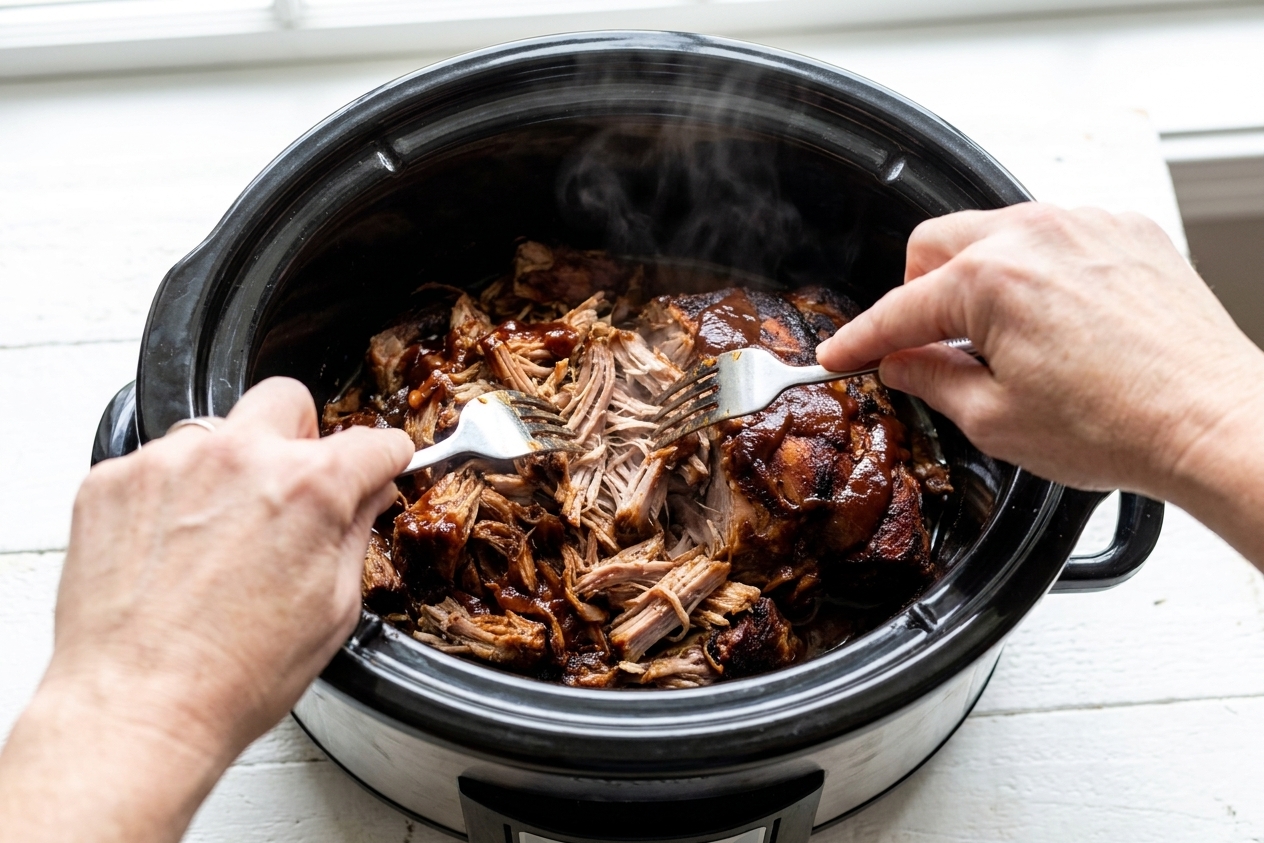
Pull-apart pork happens when the connective tissue fully breaks down. In practical terms, that means: it should shred with a fork with very little effort. If it feels tough, it is usually undercooked and needs more time.
If you like a number for confidence, pulled pork is often at its best when the thickest part is around 195 to 205°F and a fork or probe slides in with little resistance.
Do not drown it in liquid
A slow cooker does not need much added liquid. Pork releases a lot of juices as it cooks, and BBQ sauce thins out as it heats. Too much liquid can wash out flavor.
- For a 3 to 5 pound roast, I usually add 1/2 to 1 cup of flavorful liquid (broth, a splash of apple cider vinegar, or a mix with BBQ sauce).
- Whatever you add, aim for some liquid at the bottom, not a submerged roast.
Keep some fat
If your roast has a fat cap, you can trim it down, but do not remove it all. A thin layer helps protect the meat and adds richness.
Rest, then shred and re-season
Resting the roast for 10 to 20 minutes helps the juices redistribute. Then shred, and toss the meat with a little of the cooking juices and your sauce or rub to wake the flavor back up.
Cook times (ballpark)
Slow cookers vary, and thickness matters as much as weight, but these ranges usually get you in the right neighborhood. Start checking early, and keep going until it shreds easily.
- 3 to 4 pounds: LOW 7 to 9 hours, HIGH 4 to 6 hours
- 4 to 5 pounds: LOW 8 to 10 hours, HIGH 5 to 7 hours
- 6 pounds: LOW 10 to 12 hours, HIGH 6 to 8 hours
LOW is more forgiving and tends to give you a more consistently tender texture. HIGH can absolutely work, just watch doneness closely and do not stop as soon as it is “cooked.” Keep going until it is truly tender.
Best practices by cut
If you are using pork butt
- Ideal for: long, hands-off cooking
- Easy flavor boost: rub it well, then add onions underneath to keep it lifted slightly
- Finish: if there is a lot of fat in the juices, skim it before tossing juices back with the shredded meat
If you are using pork shoulder (picnic)
- Check for skin: some picnic roasts come with skin. For slow cooker pulled pork, you can remove it before cooking, or peel it off after. It will not turn crisp in the slow cooker.
- Watch the lean spots: if one side looks very lean, position that side down toward the juices
- Plan a little extra time: connective tissue can be stubborn, especially on bone-in picnic roasts
Defatting the juices (worth it)
If your slow cooker has a noticeable layer of fat on top, you can remove it so the pork tastes rich, not greasy.
- Quick skim: let the juices sit 5 minutes, then spoon off the fat from the top.
- Chill and lift: pour juices into a container, refrigerate until the fat solidifies, then lift it off in one piece.
After that, spoon a little of the defatted juices back into the shredded pork before adding sauce. This keeps it moist and porky, not watery.
Frequently asked questions
Is pork butt actually from the butt?
Nope. Pork butt (Boston butt) comes from the upper shoulder. The name is an old butchering term.
Can I use picnic roast for pulled pork?
Yes. Picnic roast is a type of pork shoulder cut and it absolutely works in the slow cooker. Expect a slightly different shape, sometimes more connective tissue, and occasionally skin.
Do I need to sear the meat first?
You do not have to. Searing adds extra flavor, but for true dump-and-go pulled pork, I skip it on busy days. If you have 5 to 8 minutes, a quick sear in a hot skillet can deepen the flavor.
Should I cook on LOW or HIGH?
LOW is best if you want the most forgiving path to tender pulled pork. HIGH can work, but you will want to keep an eye on tenderness and keep cooking until it shreds easily.
How do I keep pulled pork from drying out?
- Do not over-trim the fat
- Cook until it shreds easily (tough usually means it needs more time)
- Rest, then shred
- Mix shredded pork with a bit of cooking juices or sauce before serving
How long do leftovers last?
Store pulled pork in an airtight container in the refrigerator and use within 3 to 4 days. Freeze for up to 2 to 3 months for best quality.
What is the best way to reheat it?
Warm it gently with a splash of reserved juices, broth, or sauce. The microwave works for quick lunches, but a covered skillet on low heat gives you more control and keeps it from drying out.
My bottom line
Pork butt (Boston butt) is my top choice for slow cooker pulled pork because the marbling makes it consistently juicy and forgiving. Pork shoulder, especially picnic roast, is a close second and can be fantastic, especially when you find a good one with decent fat and you give it enough time to fully tenderize.
If you are staring at two packages and they cost the same, I would grab the pork butt. If the picnic roast is on a great sale and you have a little extra time to let it get truly fall-apart tender, go for it. Either way, you are on track for that walk-in-the-door-to-a-house-that-smells-amazing kind of dinner.