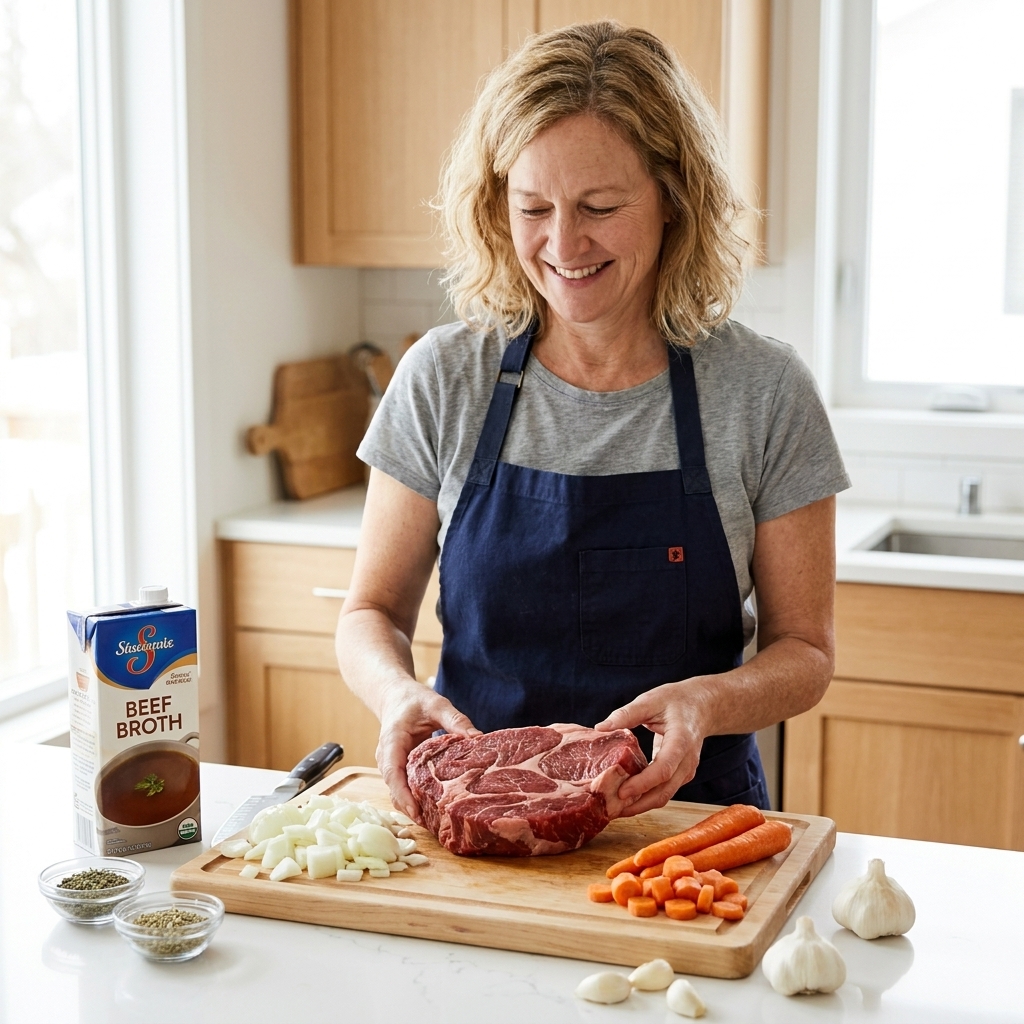
If you have a beloved oven roast recipe that feels like a “Sunday-only” project, I’m here to tell you it can absolutely become a weeknight-friendly slow cooker dinner. The best part is you do not need a brand-new recipe. You need a few reliable conversion rules so the meat turns out tender, the vegetables are not mush, and you still get that cozy, roast-y flavor.
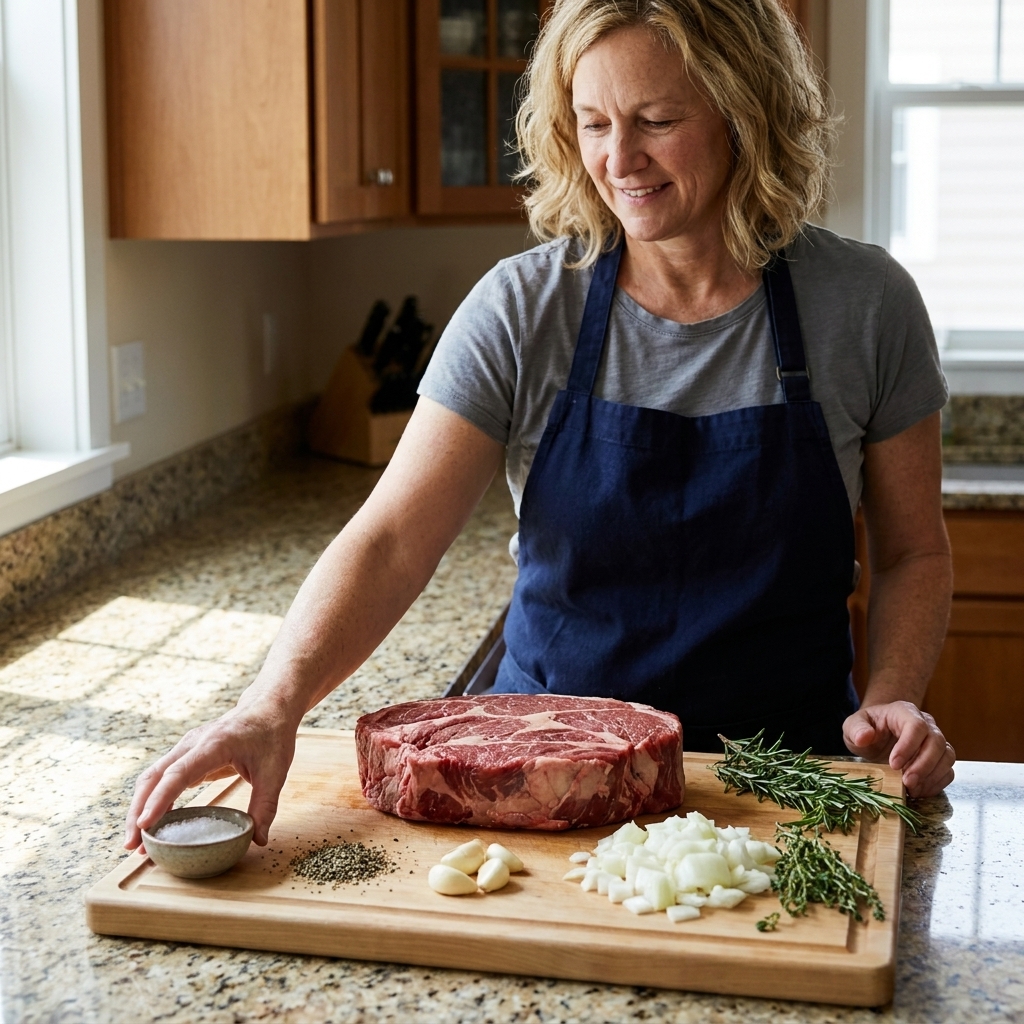
Below is my teacher-style checklist for converting oven roasts to the crockpot, plus quick fixes for the most common problems (watery sauce, bland flavor, dry meat, and overcooked veggies).
Oven vs. slow cooker
Most oven roast recipes rely on three things the slow cooker does differently:
- Dry heat vs. trapped steam: Ovens roast and reduce. Slow cookers trap moisture, so liquids do not evaporate much.
- High heat browning: Ovens brown surfaces well. Slow cookers rarely create deep browning on their own.
- Timing: Ovens finish a roast in a few hours. Slow cookers take longer and are more forgiving, but texture can tip from tender to shreddy if cooked too long.
Once you plan for those differences, your favorite roast translates beautifully.
Conversion rules
1) Use less liquid
This is the number one reason slow cooker roasts turn out watery. In the oven, that cup or two of broth often reduces into something rich. In the crockpot, it mostly stays a cup or two of broth.
Rule of thumb:
- If an oven recipe calls for 1 to 2 cups liquid, start with 1/2 to 3/4 cup in the slow cooker.
- If it calls for 1/2 cup liquid, you can often use 1/4 cup (or none if your roast is well-marbled and you are adding onions).
- If you are adding lots of juicy vegetables (onions, mushrooms, tomatoes), reduce liquid even more.
Important caveat: Slow cookers vary a lot by brand, age, and how hot they run. Some manufacturers also recommend a minimum amount of liquid. If your cooker has ever scorched food, or your recipe has very little veg, start closer to 3/4 to 1 cup. Also, onions release liquid, but not instantly, so a totally dry pot can be risky.
2) Think “simmer level,” not oven temperature
Slow cookers do not map neatly to oven temperatures. A better way to think about it is what the liquid is doing once the pot is fully heated:
- LOW: a gentle simmer, ideal for collagen-heavy cuts and the widest tenderness window.
- HIGH: a stronger simmer, faster, but with a narrower window between “sliceable tender” and “falls-apart shredded.”
Most classic pot roasts are happiest on LOW.
3) Convert time by cut
Two roasts that weigh the same can cook very differently depending on the cut and how much connective tissue they have. These ranges work in most 6-quart slow cookers (give or take depending on your model, how full the pot is, and how cold the ingredients started):
- Chuck roast (classic pot roast): LOW 8 to 10 hours or HIGH 4 to 6 hours
- Brisket (flat or point): LOW 9 to 12 hours (thicker pieces often need the longer end)
- Round roasts (top round, bottom round, eye of round): LOW 6 to 8 hours (lean, can dry if pushed too far)
- Pork shoulder (Boston butt): LOW 8 to 10 hours (pulled pork texture)
- Pork loin (not shoulder): LOW 4 to 6 hours (do not overcook, it gets dry)
- Lamb shoulder: LOW 7 to 9 hours
My doneness trick: For pot roast-style beef, it is “done” when a fork twists easily and the meat feels tender, not when the clock says so. If you like numbers, many tough cuts land in the 195 to 205°F range when they turn shreddy-tender, but texture is the real test.
4) Pick sliceable vs. shreddable
Oven roasts are often designed to slice. Slow cookers naturally push you toward braised, shreddable tenderness.
- Sliceable goal: Choose a roast that can stay sliceable (top round, sirloin tip, pork loin) and keep the cook time on the shorter end. Use a thermometer so you do not dry it out, then rest before slicing.
- Shreddable goal: Choose chuck, brisket, or pork shoulder and plan for the longer LOW cook. These cuts get better as collagen melts.
5) Vegetables: build a heat shield
In the slow cooker, the bottom and sides run hottest. That is why carrots can go mushy and potatoes can cook unevenly.
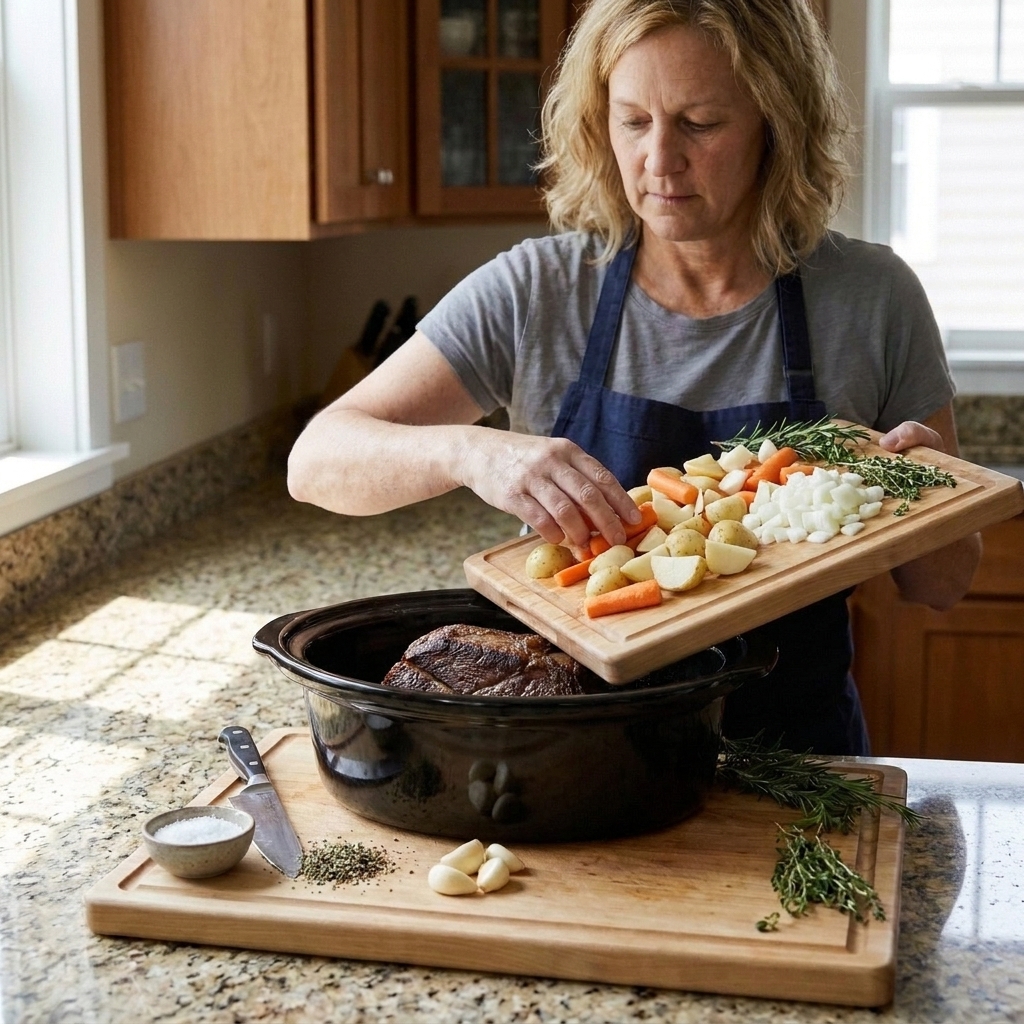
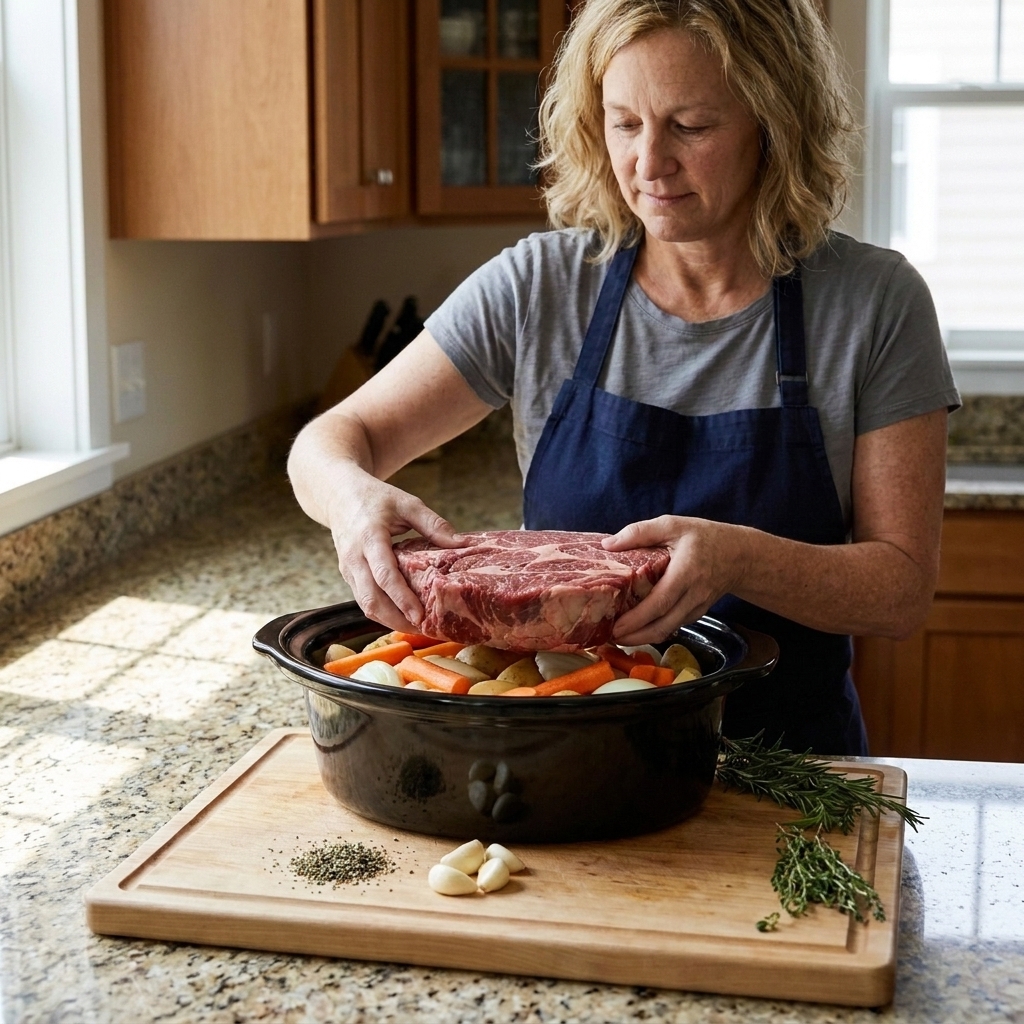
- Put sturdy vegetables on the bottom: potatoes, carrots, parsnips, turnips
- Then the roast: meat sits on top of the veggies so it braises gently
- Quick-cook vegetables later: peas, green beans, zucchini, bell peppers (add in the last 30 to 60 minutes)
One more reality check: if you cut potatoes into very large chunks, or your slow cooker is not very full, they can stay firmer than you expect. If you want them butter-tender, cut them a bit smaller and keep them near the bottom.
6) Add aromatics, not just salt
Because you are using less liquid and not reducing as aggressively, flavor can taste flatter in the crockpot if you just follow the oven recipe as-is.
Instead of automatically adding more salt, boost the slow cooker-friendly flavor builders:
- Onion (or onion soup mix if that is your comfort-food vibe)
- Garlic
- Tomato paste (1 to 2 tablespoons adds “roastiness”)
- Worcestershire, soy sauce, or fish sauce (1 to 2 teaspoons for savory depth)
- Fresh herbs added at the end (parsley, thyme leaves)
- A splash of acid at the end (lemon juice, red wine vinegar, or balsamic)
7) Do not overfill the crock
For best results and safe, even cooking, aim to fill your slow cooker about 1/2 to 2/3 full. Packed to the brim, it heats slowly and can cook unevenly. Too empty, and some models run hot and reduce less predictably.
Searing: yes or no?
Need? No. Highly recommended when you can manage it? Yes.
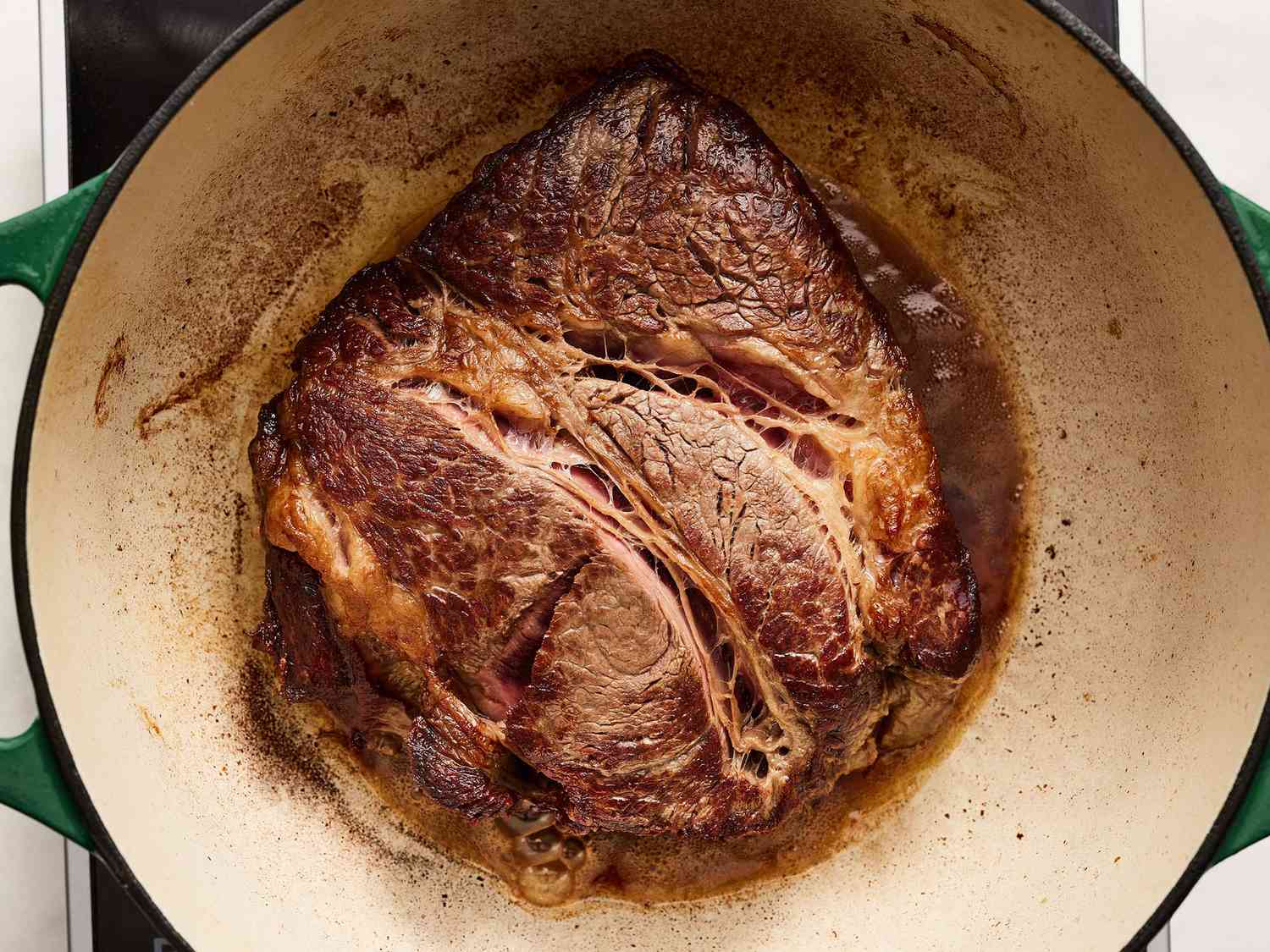
Searing creates browning that a slow cooker cannot reliably produce, and that browning translates to deeper flavor in both the meat and the gravy.
My realistic weeknight approach:
- If you have 8 extra minutes, do a quick sear in a hot skillet with a little oil: 2 to 3 minutes per side.
- If you do not, skip it and add one extra flavor booster: tomato paste, Worcestershire, or 1 teaspoon smoked paprika (depending on the recipe’s vibe).
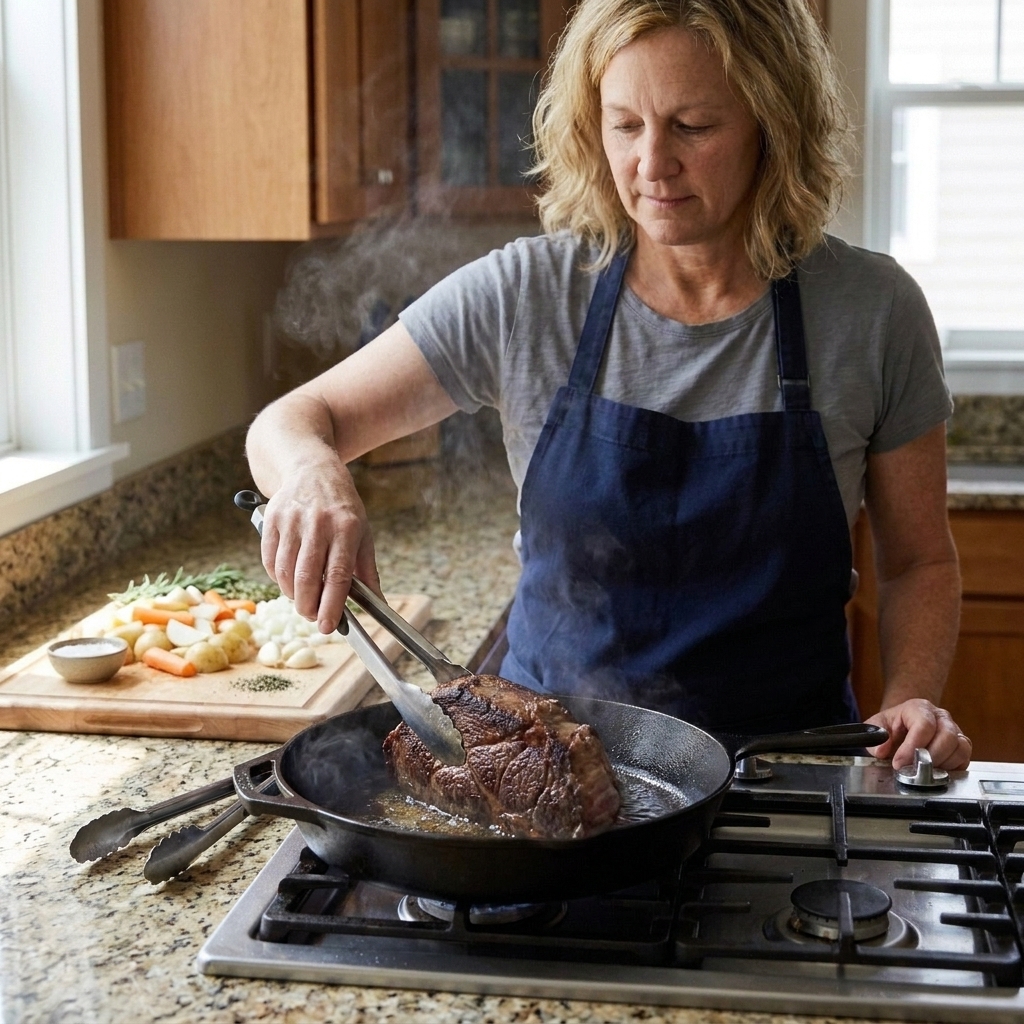
Home-cook tip: If you sear, also sear the onions for 2 minutes. It adds a surprising amount of flavor for almost zero extra effort.
Fix watery gravy
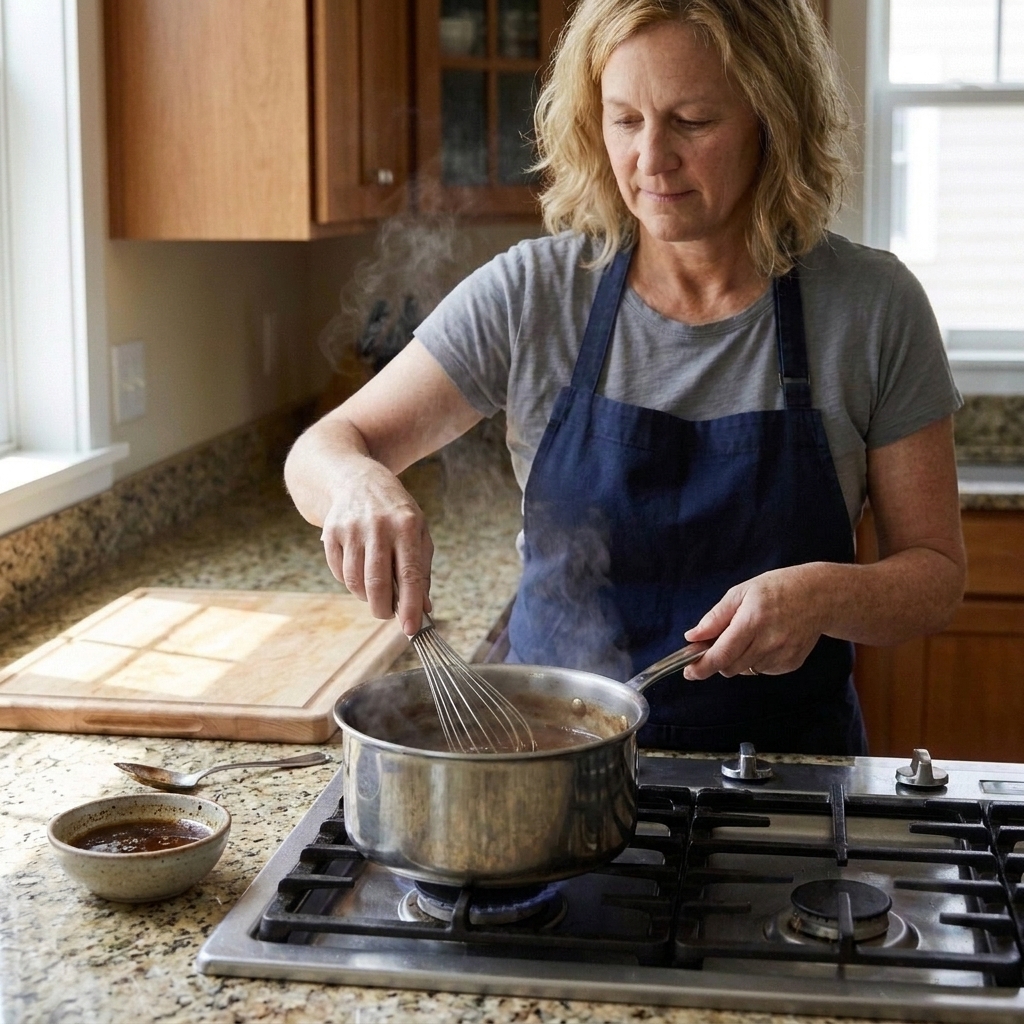
Oven roasts often finish with a reduced pan sauce. Slow cooker roasts usually finish with a flavorful, thinner braising liquid. You can absolutely turn that into a proper gravy, you just do it at the end.
Option A: Cornstarch slurry
- Remove the meat and veggies to a platter and tent with foil.
- Pour cooking liquid into a saucepan (or use the slow cooker on HIGH if you prefer, it just takes longer).
- Scaling guide: For each 1 cup liquid, mix 1 tablespoon cornstarch with 1 tablespoon cold water. Use a little more for a thicker gravy.
- Bring liquid to a simmer, whisk in slurry, and simmer 1 to 2 minutes until glossy.
Option B: Flour roux
- Melt 2 tablespoons butter in a saucepan.
- Whisk in 2 tablespoons flour and cook 1 to 2 minutes.
- Slowly whisk in 1 1/2 to 2 cups of the cooking liquid and simmer until thick.
Option C: Reduce, then thicken
If your liquid is very thin, simmer it uncovered for 10 to 15 minutes to concentrate flavor, then thicken with slurry or roux.
If it is already “soupy”
If you overdid the liquid, you are not stuck. Pull the roast and vegetables out, then either:
- Reduce: simmer the liquid on the stove until it tastes richer, then thicken, or
- Ladle: spoon off some liquid, then thicken what remains for a more concentrated gravy.
Recipe red flags
“Roast uncovered”
Slow cookers are typically kept covered. Expect less reduction and plan to thicken later.
“Add 2 cups wine or broth”
Start with 1/2 to 3/4 cup. You can always add more later, but you cannot un-soup your roast. If your cooker tends to run hot or you are working with a lean cut, start closer to 3/4 to 1 cup.
“Cook at 450°F for 15 minutes, then lower”
That high-heat blast is about browning. Replace it with a quick sear, or add a flavor booster like tomato paste.
“Use a lean roast and cook until tender”
Lean cuts do not love long slow cooking. Either shorten the time and monitor with a thermometer, or choose a more braise-friendly cut (chuck for beef, shoulder for pork).
Quick checklist
If you only save one part of this guide, make it this.
- Pick the right cut. Chuck, brisket, and shoulder are the easiest wins.
- Reduce liquid. Start with 1/2 to 3/4 cup for many roasts, more if your cooker runs hot or your recipe is lean with few vegetables.
- Layer smart. Potatoes and carrots on bottom, roast on top.
- Add aromatics. Onion, garlic, herbs, plus one “depth” ingredient (tomato paste or Worcestershire).
- Choose LOW when possible. It buys you time and tenderness.
- Do not peek. Every lid lift drops heat and adds time.
- Check doneness the right way. Tough cuts: fork-tender. Lean cuts: thermometer so they stay juicy.
- Finish the sauce. Thicken with a slurry or roux, and add a splash of acid to brighten.
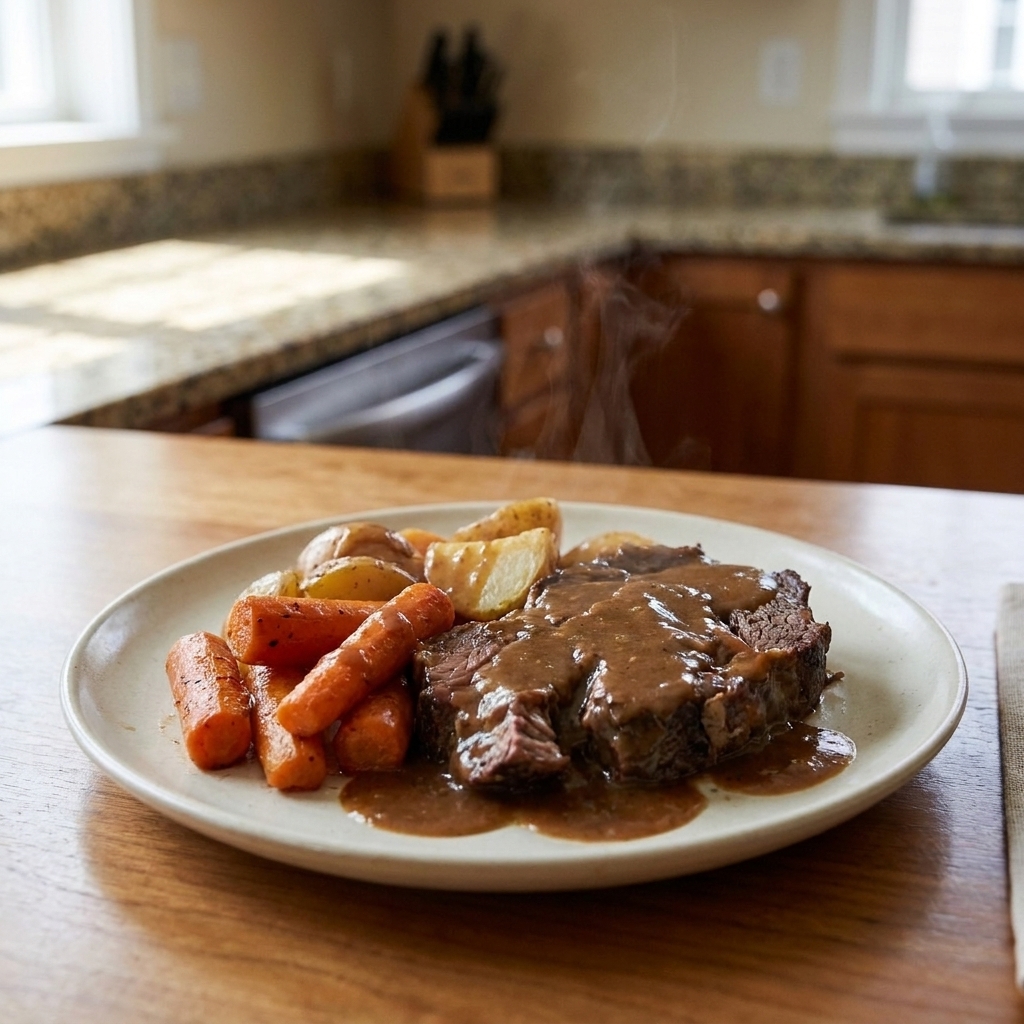
My forgiving rule: If your roast is tender but the sauce is thin, you did not fail. You are one quick simmer away from a restaurant-worthy gravy.
Food safety notes
A slow cooker makes it easy to cook to tenderness, but safety still matters.
- Do not start from frozen. Frozen meat can stay in the temperature danger zone too long. Thaw in the fridge first, or use a pressure cooker if you truly need to start from frozen.
- Use a thermometer for lean cuts. They can overcook and dry out before they ever feel “fork-tender.”
- For tough cuts, tenderness is your sign. They often need time to break down connective tissue, and they can be safe but still chewy if pulled too early.
- Rest before slicing. Even 10 minutes helps juices settle so you do not lose them to the cutting board.
Common questions
Why is my slow cooker roast tough?
Tough usually means under-cooked for collagen-heavy cuts like chuck or brisket. Give it more time on LOW. If it is a lean cut, it may be overcooked and dried out, so next time shorten the cook time and use a thermometer.
Do I need a rack?
Nope. For pot roast, sitting in a little liquid and on top of veggies is exactly what you want. Elevating is more for roasting, and the slow cooker is a braiser at heart.
How do I keep potatoes from turning to mush?
Use waxy potatoes (Yukon Gold or red potatoes), cut them into large chunks, and place them on the bottom. If your slow cooker runs hot, add potatoes in the last 2 to 3 hours on LOW.
Can I convert a recipe with lots of butter or oil?
You can, but consider reducing the added fat a bit since it will not cook off like it might in the oven. You can always stir in a pat of butter at the end for richness.
Example conversion
Let’s say your oven recipe says:
- 3 to 4 lb chuck roast
- 2 cups beef broth
- Cook covered at 325°F for 3 hours
- Add carrots and potatoes for the last hour
Here is the slow cooker version that usually nails it:
- Sear roast (optional but recommended).
- Add 1/2 to 3/4 cup broth to the slow cooker (not 2 cups). If your cooker has scorched food before, start with 3/4 to 1 cup.
- Add onions plus carrots and potatoes on bottom, roast on top.
- Cook on LOW 8 to 10 hours, then test for fork-tender.
- Thicken the juices at the end for gravy.
One last pep talk
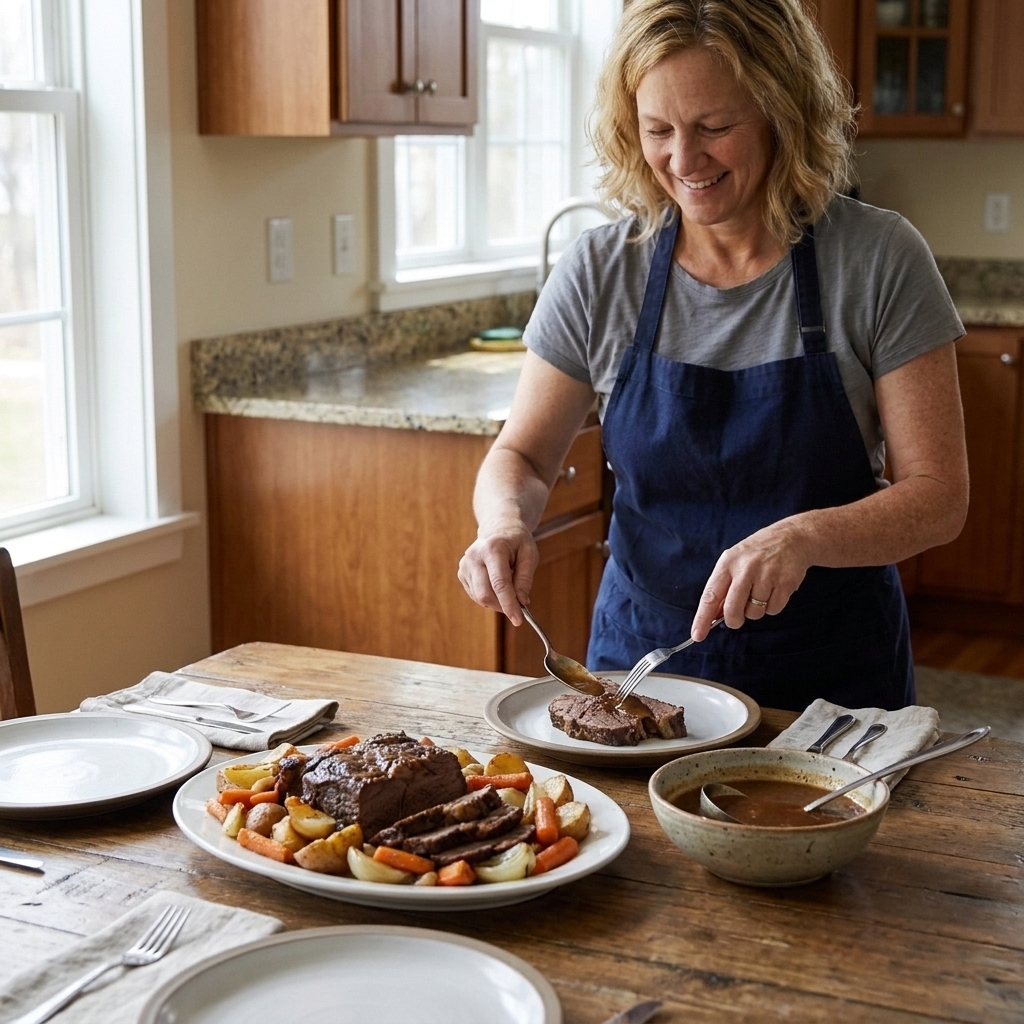
If your first conversion is not perfect, you are still doing something wonderful: feeding people you love with a warm, real dinner. Take a quick note for next time (less liquid, shorter time, add veggies later), and you will have that oven classic dialed in for the slow cooker before you know it.
And if you find a vintage crock at a thrift store that still works, grab it. Those old workhorses know what they are doing.