If you have ever lifted the slow cooker lid and found chicken breasts that are oddly dry, stringy, or chalky, you are not alone. Chicken breast is lean, which means it goes from tender to disappointing fast if we overcook it or let the texture get pushed too far.
After a decade of leaning hard on my crockpot through teaching years and kid schedules, I have landed on a handful of reliable rules. This guide pulls them all together so you can walk in the door to juicy chicken breasts and a one-pot dinner that actually tastes like you meant it.
The 3 secrets to juicy chicken
1) Cook to temperature, not the clock
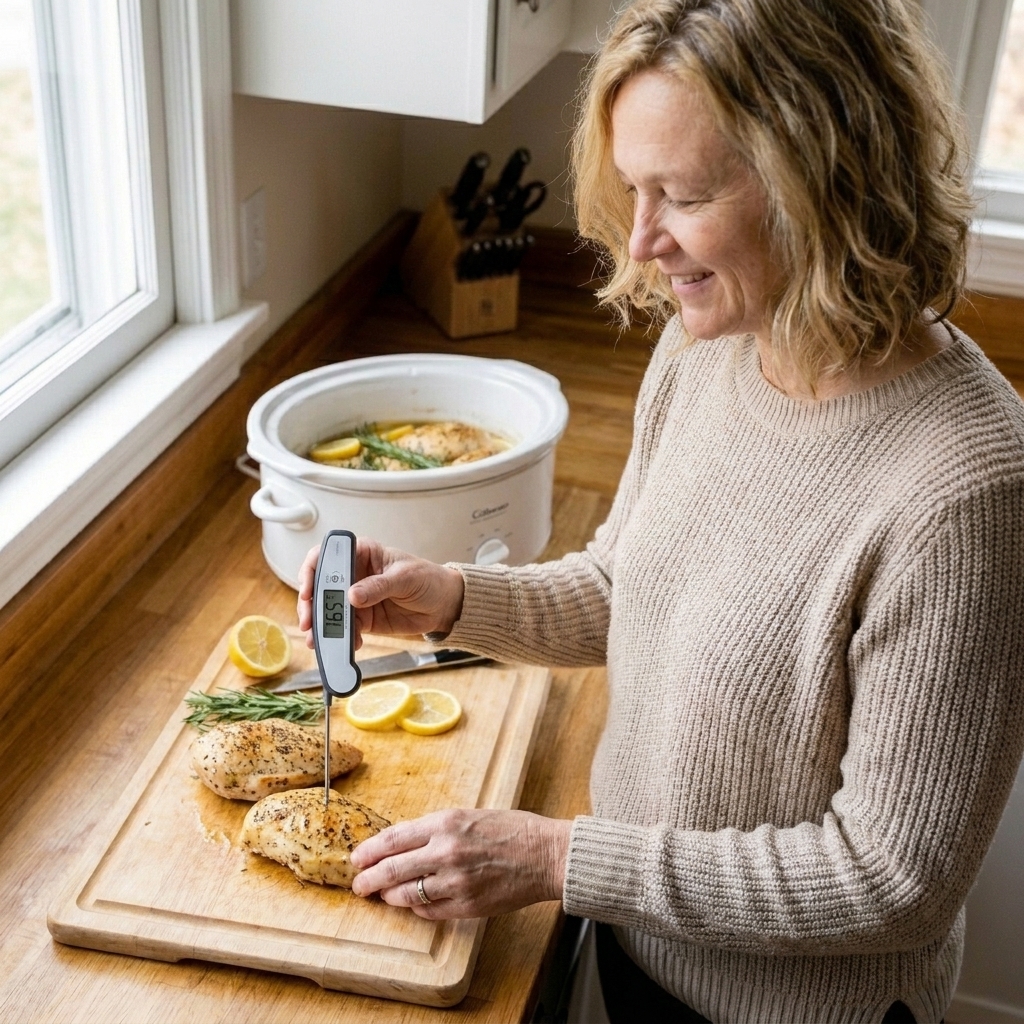
Chicken breast dries out when it spends too long past the point of doneness. The simplest, most reliable target is 165°F in the thickest part for instant safety and a tender bite.
One nuance (because it helps): chicken can also be safe at slightly lower temperatures if it is held there for a bit, but slow cookers are not great at precision timing. So for real-life weeknights, 165°F is the cleanest “pull it now” number.
- Best tool: an instant-read thermometer
- Where to temp: the thickest part of the largest breast, not touching the crock
2) Use enough liquid, not a bath
This is the biggest misconception. Slow cookers trap moisture, so you do not need much thin liquid to keep chicken juicy. Too much liquid usually makes chicken taste bland and watery, and if it stays cooking too long, the texture can tighten up.
My go-to liquid ratio:
- Boneless skinless chicken breasts: 1/2 cup liquid per 1.5 to 2 pounds
- Bone-in breasts: 3/4 cup liquid per 2 pounds (they take longer, and the extra liquid helps carry flavor)
That liquid can be broth, salsa, a jarred simmer sauce, or even water with bouillon. The key is keeping it modest.
Quick scorch insurance: If your slow cooker runs hot or you are using a very thick or sugary sauce (BBQ, some teriyaki), add a splash of broth and make sure there is some thin liquid in the bottom so it does not stick and burn.
3) Layer for flavor
Dump-and-go is my love language, but chicken breast needs a little strategy.
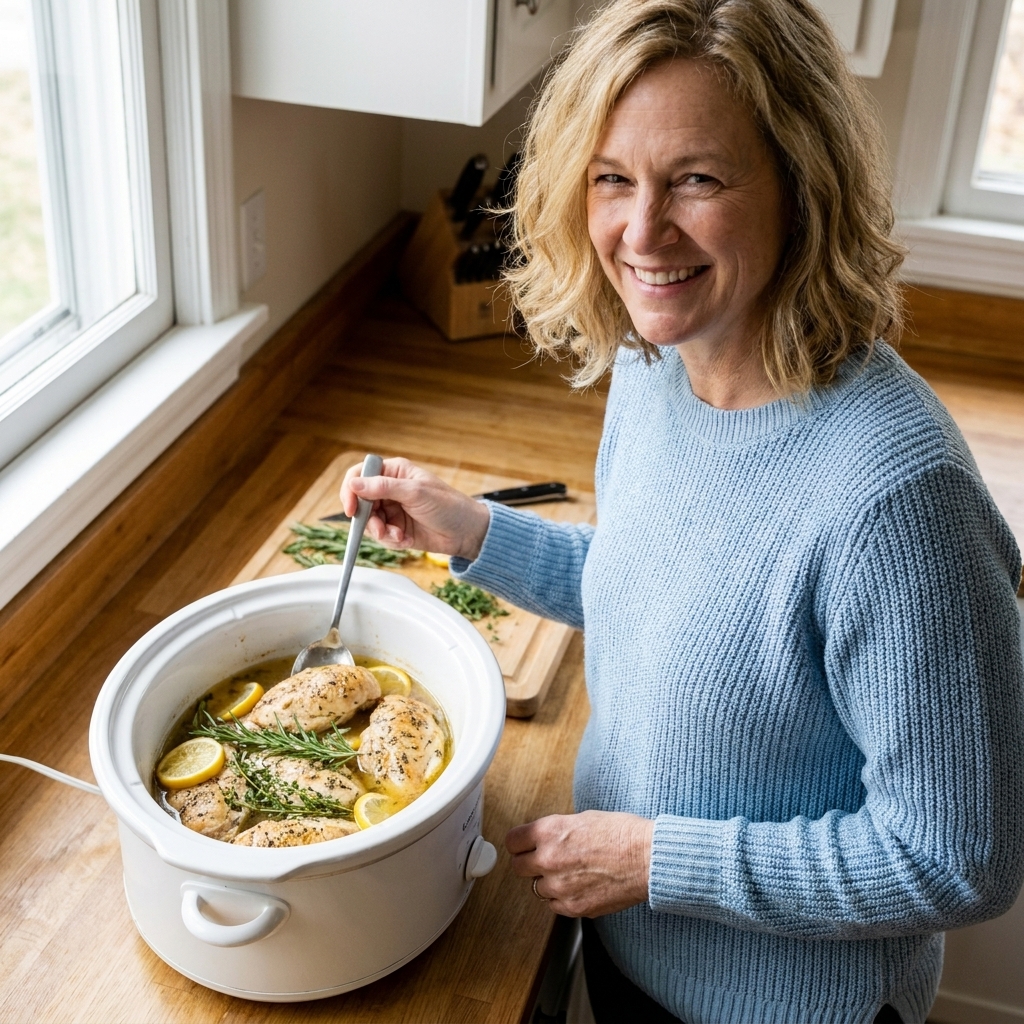
- Put aromatics on the bottom: sliced onion, minced garlic, a spoonful of pesto, lemon slices
- Chicken goes on top: it cooks gently and stays more tender
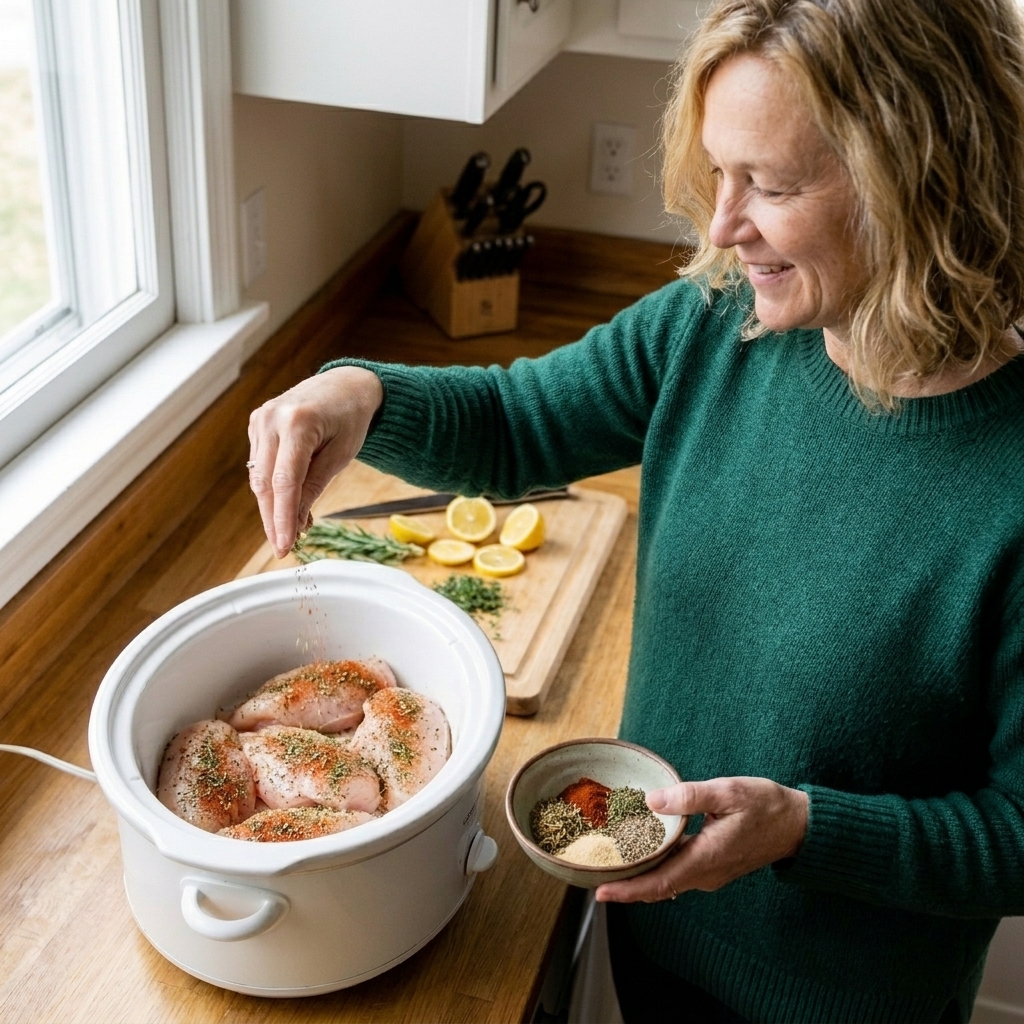
- Season the top generously: salt, pepper, paprika, Italian seasoning, taco seasoning, you pick
Best cook times
Slow cookers vary a lot, and newer models often run hotter than older ones. Treat the times below as a reliable range, and start checking early. Breast size matters too: small pieces cook faster, and extra-thick breasts cook slower.
Slow cooker tip: For best performance, most slow cookers do better when the crock is roughly 1/2 to 2/3 full. Very small batches can finish sooner than you expect.
Boneless, skinless breasts
- LOW: 2.5 to 4 hours
- HIGH: 1.5 to 2.5 hours
Sweet spot: Start checking early and pull as soon as the thickest part reaches 165°F. If your breasts are on the smaller side (5 to 6 ounces each), they can be done closer to the low end of the range.
Bone-in breasts
- LOW: 4 to 6 hours
- HIGH: 2.5 to 3.5 hours
Note: Bone-in stays juicy more easily, but it still can overcook. Temp it and pull when it reaches 165°F.
Frozen chicken
I know it is tempting, but do not cook frozen chicken breasts in a slow cooker. It can sit in the temperature danger zone too long and cook unevenly.
Do this instead: thaw overnight in the fridge, use a cold-water thaw (sealed bag, change water every 30 minutes), or use a faster method like a pressure cooker when you truly need to start from frozen. Never thaw chicken on the counter.
Juicy base recipe
This is the simple starting point I use when I want versatile chicken for bowls, wraps, pasta, salads, or a quick one-pot dinner.
Ingredients
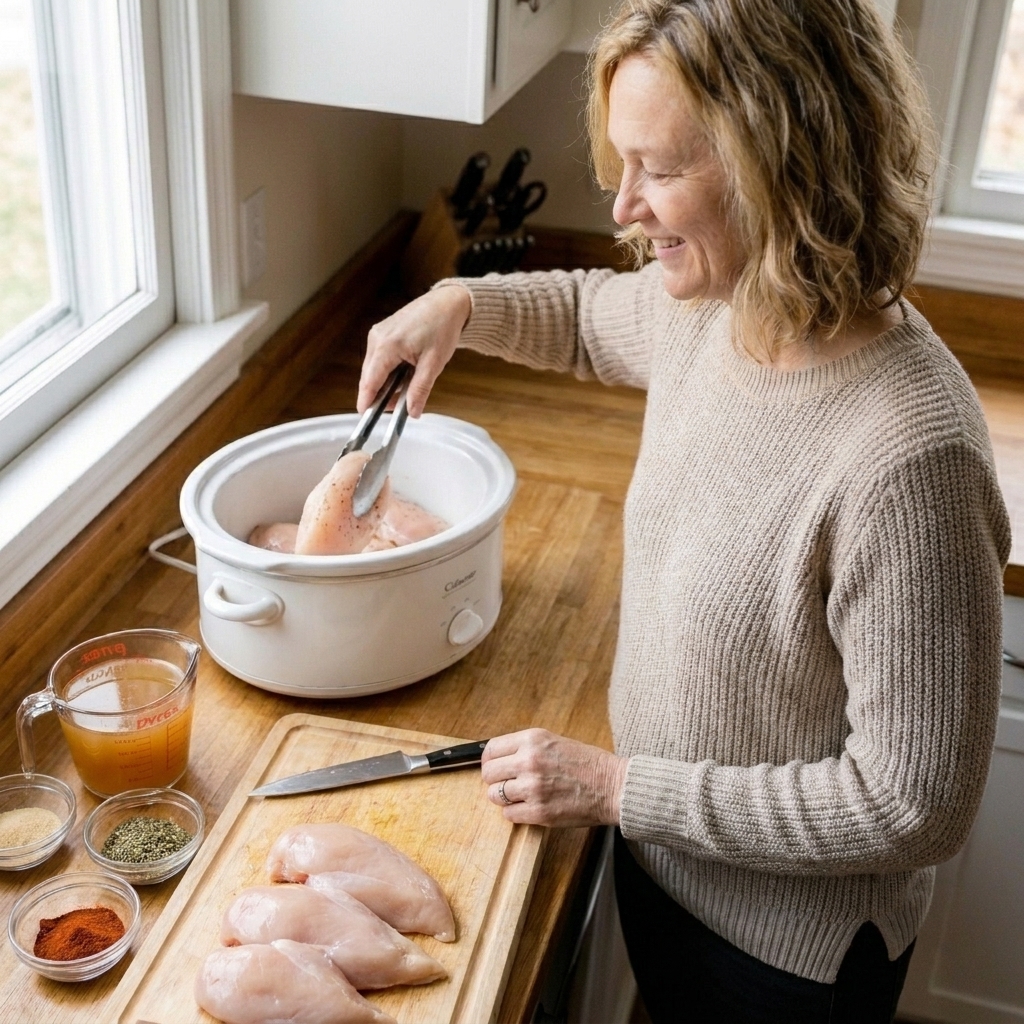
- 1.5 to 2 pounds boneless skinless chicken breasts (about 3 to 4 medium)
- 1/2 cup chicken broth (or water plus 1 teaspoon bouillon)
- 1 tablespoon olive oil or butter (optional, but helpful for mouthfeel)
- 1 teaspoon kosher salt
- 1/2 teaspoon black pepper
- 1 teaspoon garlic powder (or 2 cloves minced garlic)
- Optional: 1/2 teaspoon paprika, Italian seasoning, taco seasoning, or lemon pepper
Steps
- Add liquid: Pour broth into the slow cooker. Add oil or butter if using.
- Add chicken: Place chicken breasts in a single layer if possible.
- Season: Sprinkle salt and seasonings over the top.
- Cook: Cover and cook on LOW for 2.5 to 4 hours, or on HIGH for 1.5 to 2.5 hours.
- Temp and rest: When chicken reaches 165°F, remove it to a plate and rest 5 to 10 minutes before slicing or shredding.
- Optional quick sauce: If you want a thicker sauce, whisk 1 tablespoon cornstarch with 1 tablespoon cold water, stir into the hot liquid in the crock, cover, and cook 10 to 15 minutes on HIGH.
Tip: Resting is not fussy. It is how the juices redistribute so you do not lose all that moisture on the cutting board.
3 fast flavor riffs
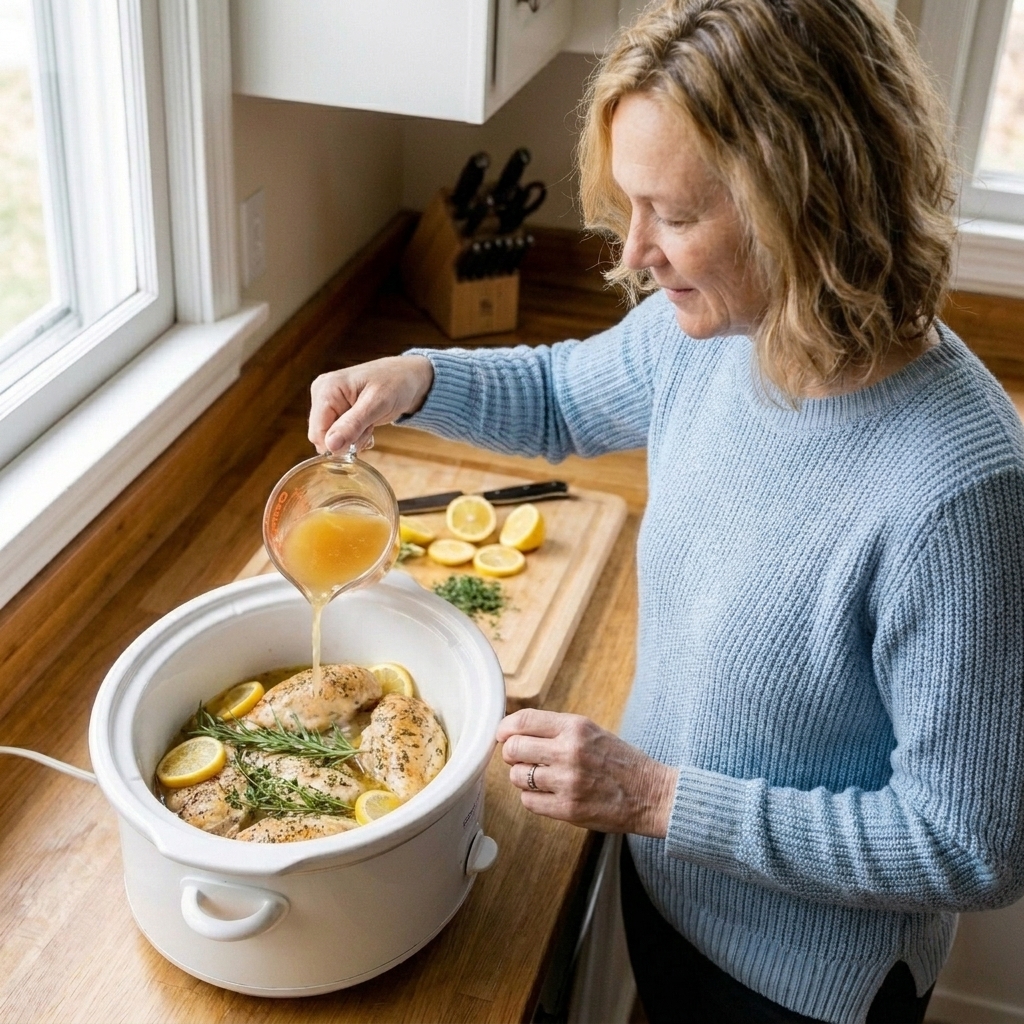
- Lemon herb: Add lemon slices and 1 teaspoon Italian seasoning. Finish with fresh parsley.
- Taco: Use 1 cup salsa instead of broth and add 2 teaspoons taco seasoning. Stir in corn for the last 30 minutes.
- Italian: Use marinara for the liquid and add a pinch of red pepper flakes. Serve over pasta with basil.
Liquid rules
If you take nothing else from this guide, take this: chicken breast does not need to swim.
Quick liquid guide
- Just chicken + seasonings: 1/2 cup broth for 1.5 to 2 pounds
- Adding watery vegetables (mushrooms, zucchini, tomatoes): reduce to 1/3 cup broth
- Using salsa, marinara, BBQ sauce, teriyaki sauce: you often need no extra thin liquid, but if the sauce is very thick or sugary, add 2 to 4 tablespoons broth to prevent scorching
- Adding rice or pasta: that changes everything. Add liquid according to the grain and add it later if possible. (More on this below.)
Why chicken turns dry even with lots of liquid
It is usually not “lack of moisture,” it is overcooking. Liquid cannot save chicken breast that has cooked too long past doneness. The fix is shorter cook time and checking early.
One-pot dinner ideas
Once you have the juicy chicken part down, the rest is simply building a complete meal in the same crock. Here are my most reliable formulas.
Formula 1: Chicken + sauce + quick vegetable
Best for: tacos, sliders, rice bowls, salads
- Chicken breasts
- 1 to 1 1/2 cups sauce (salsa, enchilada sauce, marinara, butter chicken sauce)
- Add quick-cooking veggies near the end: spinach, frozen peas, corn (last 20 to 30 minutes)
Example: Salsa chicken breasts + frozen corn stirred in at the end. Serve with tortillas or rice.
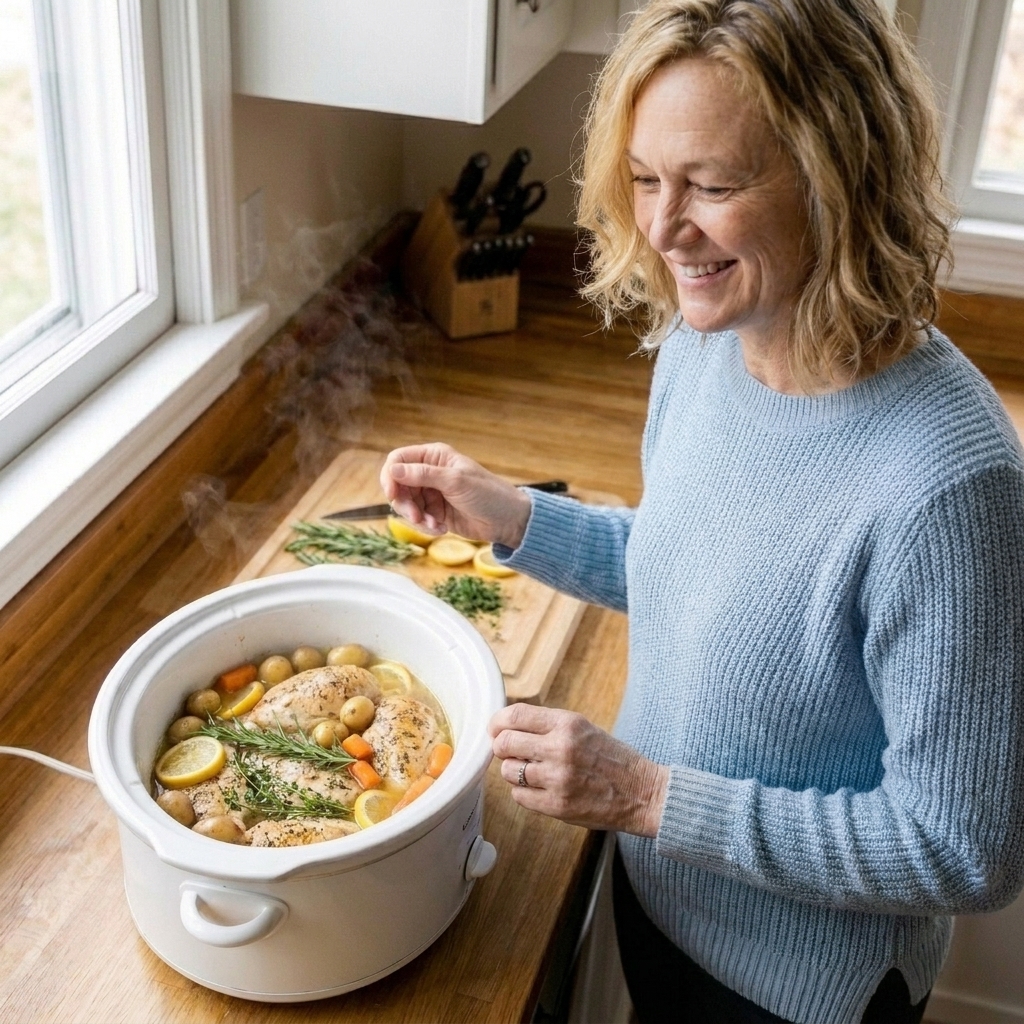
Formula 2: Chicken + potatoes (or carrots) + broth
Best for: true one-pot comfort meals
- Layer potatoes and carrots on the bottom (they take longer)
- Chicken on top
- 1/2 to 3/4 cup broth plus seasonings
Timing note: Potatoes take time. If your chicken breasts are small, they may finish before the potatoes. Two fixes: cut potatoes smaller, or let the potatoes cook first (60 to 90 minutes on LOW), then add the chicken.
Formula 3: Chicken + beans + seasoning blend
Best for: meal prep and high-protein dinners
- Chicken breasts
- 1 can drained beans (black beans, cannellini)
- 1/2 cup broth or 1 cup salsa
- Seasoning blend (taco, chili-lime, Italian)
Serve: with a bagged salad kit, microwaved rice, or toasted buns.
If you are gone all day
This is the real-life problem. Sometimes you cannot be home at 2:30 PM to pull chicken at the perfect second. Here are options that actually work.
Use a buffer
- Cook chicken in a sauce: salsa, marinara, creamy soup plus broth, or coconut milk based curry sauce can protect texture better than plain broth.
- Choose bone-in: bone-in breasts buy you a little extra margin.
Stick with LOW and plan for the window
LOW is more forgiving than HIGH. If your schedule will push you past the cook-time range, consider:
- Cooking ahead and reheating gently in sauce later
- Switching to thighs on long days (they handle extended cooking better)
Use WARM only briefly
WARM is meant for short holding. Depending on the model, it can keep nudging chicken past doneness over time. If you need to hold for longer, pull the chicken when it is done, shred or slice it, then return it to the sauce so it stays moist.
30-second flavor boosts
Chicken breast is a blank canvas. These tiny add-ins make it taste like you worked harder than you did.
- Acid at the end: a squeeze of lemon or lime, or 1 teaspoon apple cider vinegar
- Fresh herbs: parsley, cilantro, basil (stir in right before serving)
- Better salt: kosher salt is easier to control, and it seasons more evenly
- Onion powder plus garlic powder: the combo tastes more finished than garlic alone
- A pat of butter: stir into the hot cooking liquid after the chicken comes out
Common mistakes
Mistake: Cooking too long
Fix: Chicken breast is not a roast. Start checking at the early mark and pull as soon as it reaches temperature.
Mistake: Lifting the lid repeatedly
Fix: Every lid lift drops heat and extends cook time. Set a timer for the first check, then check quickly with a thermometer.
Mistake: Skipping salt
Fix: Salt is not just for taste. It helps the chicken stay juicy. If you are sensitive to salt, start with less, but do not skip it completely.
Mistake: Over-shredding
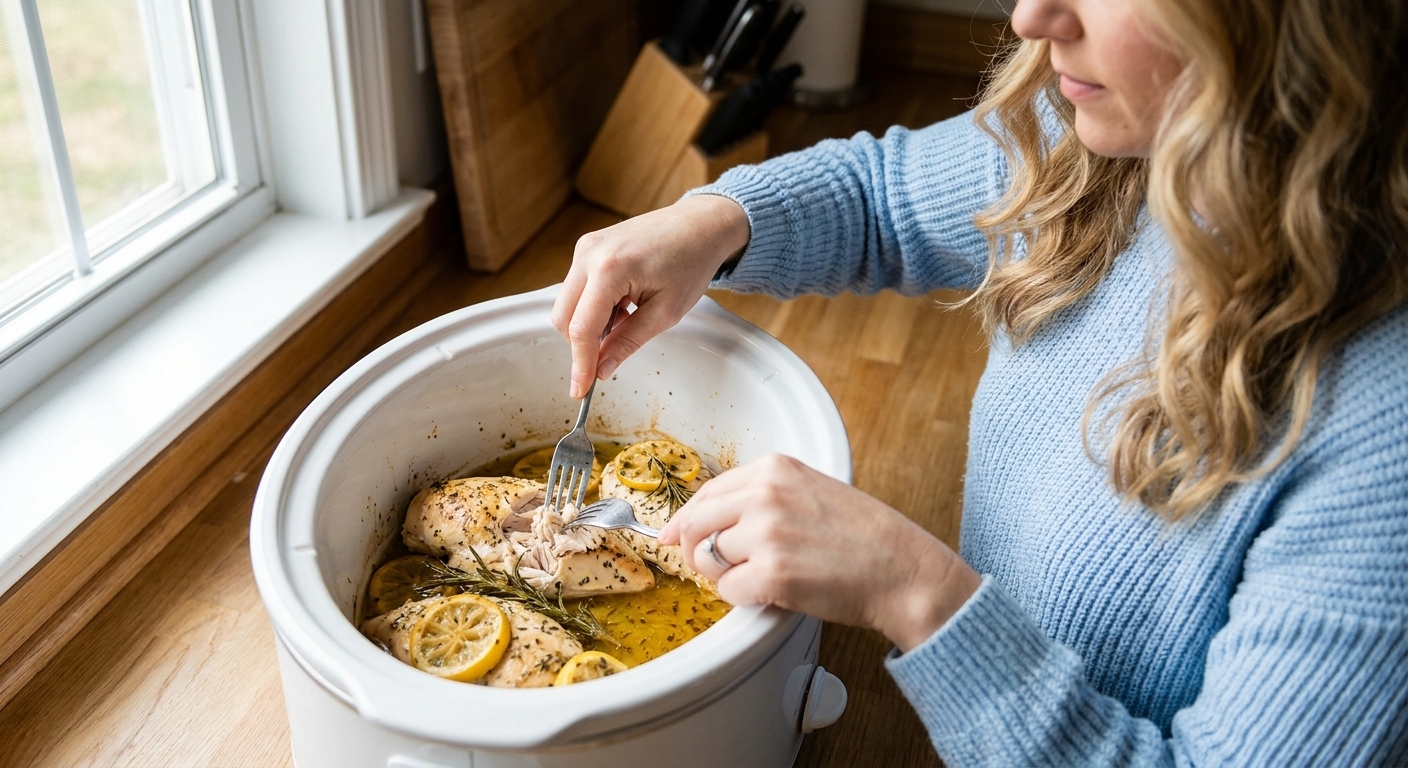
Fix: Shred gently. Chicken breast can go from tender strands to dry fluff fast. If you plan to shred, cook in a sauce and stir the shreds back into it.
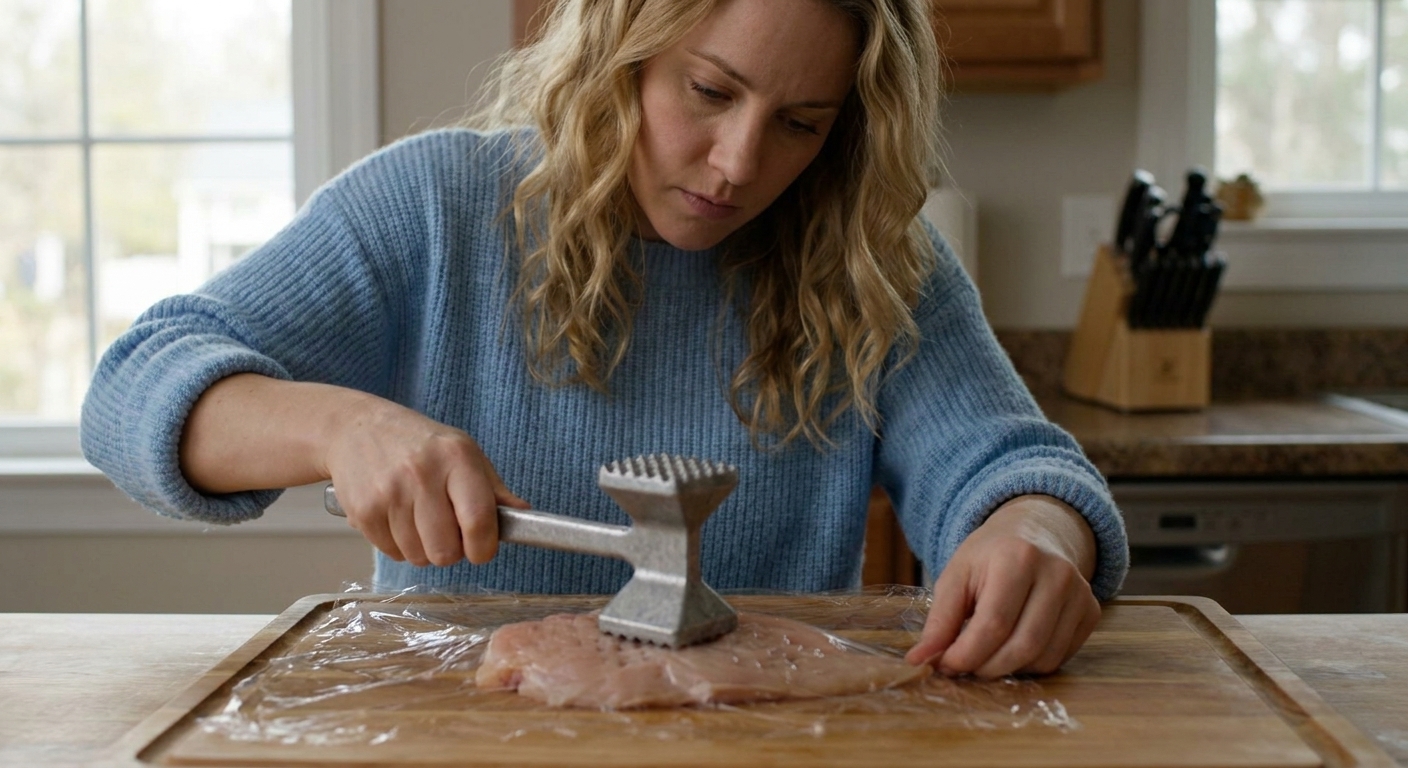
Mistake: Using extra-thick breasts
Fix: If breasts are very thick, pound to an even thickness or slice horizontally into cutlets so everything cooks evenly.
Troubleshooting
- Dry, stringy chicken: Usually overcooked. Fix: check earlier, pull at 165°F, rest, and slice against the grain.
- Rubbery or tight texture: Overcooked, sometimes in too much thin liquid. Fix: shorten cook time, use LOW, and keep liquid modest.
- Bland chicken: Not enough salt or too much liquid. Fix: season more boldly, use a sauce, and finish with acid.
- Sauce too thin: Normal slow cooker condensation. Fix: thicken with a cornstarch slurry or reduce on HIGH with the lid slightly ajar if your model allows.
- Sauce scorched on edges: Cooker runs hot or sauce is thick and sugary. Fix: add a splash of broth, avoid very high sugar sauces on HIGH, and check once midway if you can.
Storage and reheating
Storing
- Cool chicken and cooking liquid, then store together when possible.
- Refrigerate in an airtight container for up to 4 days.
- Freeze for up to 3 months. Slice or shred first for easier thawing.
Reheating
- Best method: warm chicken in its sauce or a splash of broth, covered, on the stovetop over low heat.
- Microwave tip: slice chicken, add a spoonful of liquid, cover loosely, and heat in short bursts.
Quick FAQ
Do I need to brown chicken first?
No. Browning adds flavor, but it is not required for juicy chicken. If you want more depth without extra steps, use a bold seasoning blend and finish with citrus or a knob of butter stirred into the sauce.
Should chicken be covered by liquid?
No. For chicken breasts, you want a shallow pool of liquid in the bottom and some steam. The slow cooker environment is moist already.
Can I cook chicken with rice?
You can, but I prefer adding cooked rice at the end or cooking rice separately. Rice needs a precise liquid ratio, and chicken breasts do best when we can pull them right when they are done. If you want a true one-pot meal, use par-cooked rice and add it for the final 45 to 60 minutes with the correct liquid, while watching the chicken closely.
Why are my chicken breasts rubbery?
Usually overcooking. Start checking earlier, use LOW when possible, and keep liquid modest.
What size chicken breast works best?
Medium breasts (about 6 to 8 ounces each) cook evenly and stay tender. Extra-thick breasts do better if you pound them a bit or slice into cutlets.
Weeknight checklist
- Use 1/2 cup thin liquid for 1.5 to 2 pounds chicken (unless your sauce counts as liquid).
- Season like you mean it. Chicken breast needs help.
- Cook on LOW when you can.
- Start checking early and pull at 165°F.
- Rest 5 to 10 minutes before slicing or shredding.
- Stir chicken back into the sauce to keep it juicy for serving and leftovers.
Tell me in the comments what flavors you are craving, and I will help you turn it into a one-pot slow cooker dinner that fits your schedule.